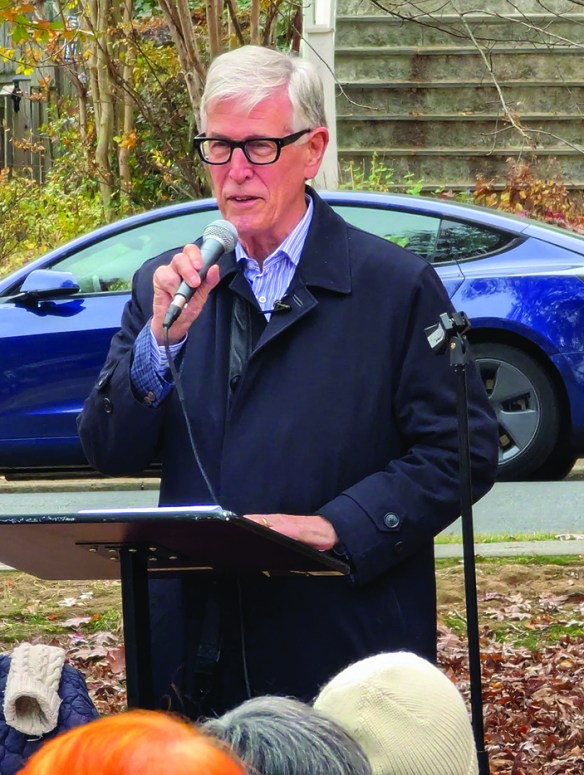
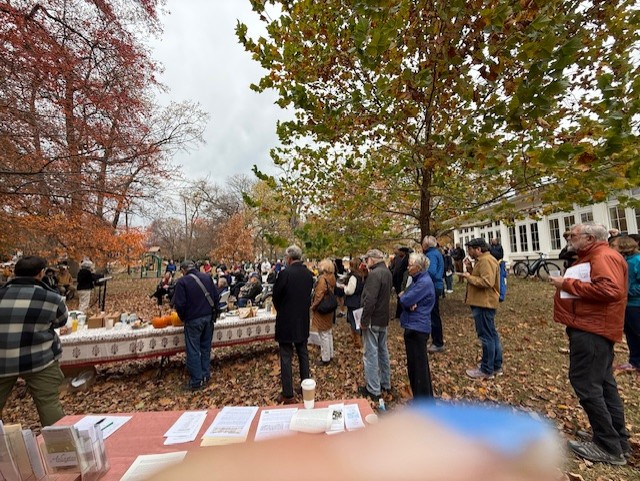
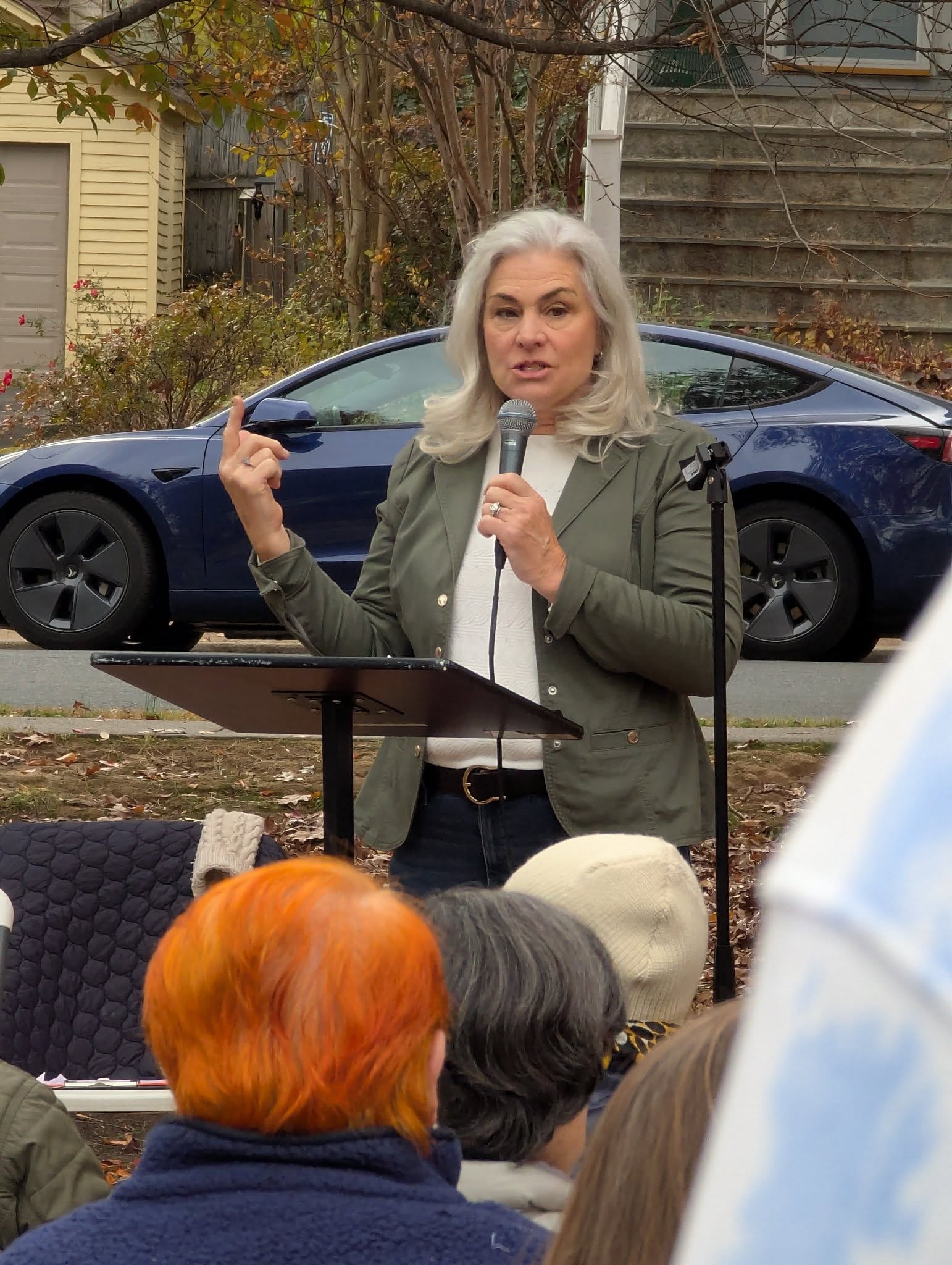
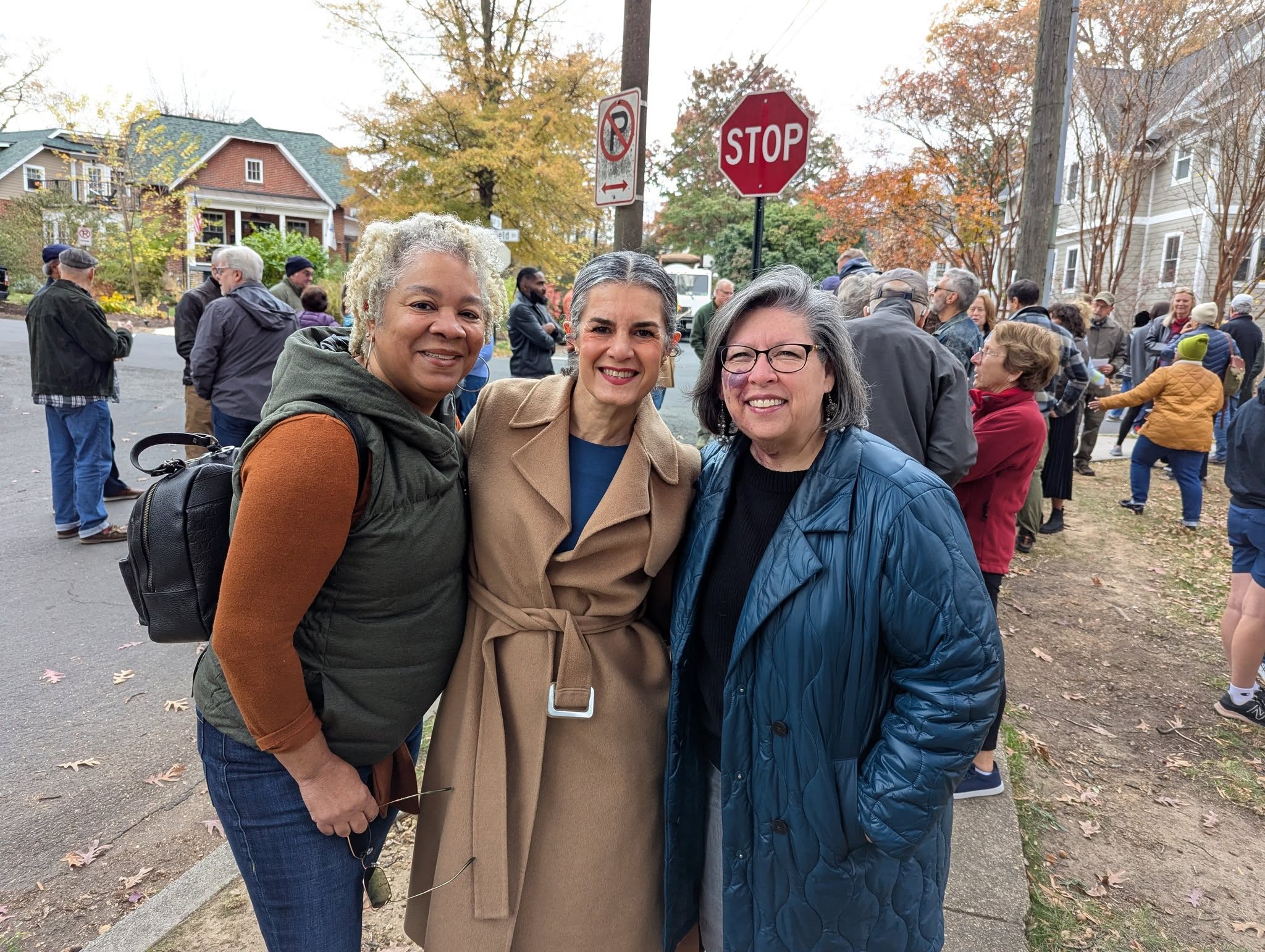
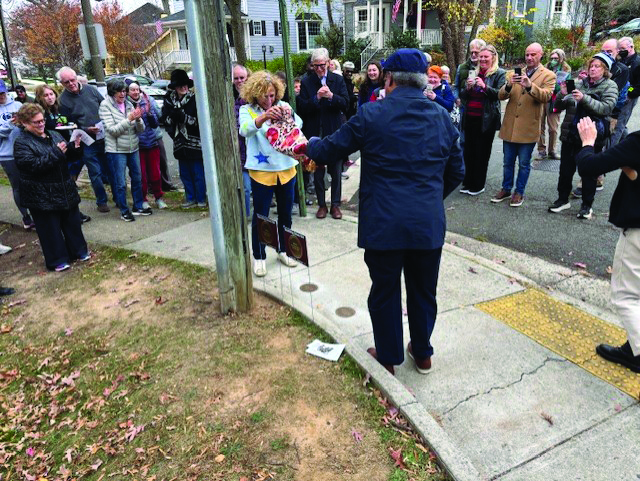
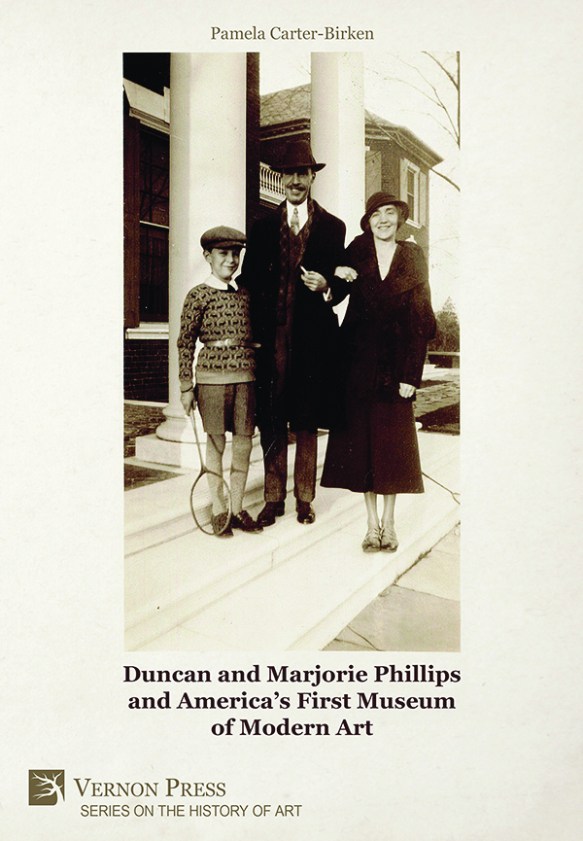
Please come celebrate the placing of two bronze stumbling stone plaques (like the one shown here) honoring Orville and Jackson, enslaved by Bushrod Hunter on his Brookdale Estate, a part of which is modern day Lyon Park. On Saturday, November 15, the dedication begins at 10:00 a.m. at the corner of North Garfield and 4th Street North, and will be followed by an outdoor reception. All are welcome!
“The Board of Governors of the Lyon Park Community Center applauds the “Memorializing Enslaved in Arlington” initiative, a project sponsored by the Arlington Historical Society and the Black Heritage Museum of Arlington, and the marking with bronze plaques of locations where enslavement occurred, described as “stumbling stones,” placed in public rights of way. The Board is honored to recognize the placement of two stumbling stones at the southwest corner of our park, at the intersection of N. Garfield and 4th Street North.”
Last month I wrote about ArNAC — the Arlington Neighborhoods Advisory Committee — and the types of projects it has funded for the Lyon Park neighborhood and others around Arlington. There have been great examples of beautification and pedestrian safety improvements all across the County. As your neighborhood representative, it’s my job to support project ideas from Lyon Park, see them grow from ideas into plans, and shepherd them through the process of review and selection by ArNAC. But where do those project ideas come from in the first place? That’s where you come in!
We, the members of the Lyon Park community, get to decide what projects we want to pursue for the good of the neighborhood. That’s one of the best things about the ArNAC program — it’s neighborhood-driven. But it also puts the burden of responsibility on us. If we want to make use of this program and its funding, we have to put forward ideas and be willing to do the follow-up work to turn them into plans. ArNAC has County staff standing ready to help us, but the work begins with us.
Fortunately, several of our wonderful neighbors have begun a fair amount of this work already. The Lyon Park Neighborhood Plan, filed with ArNAC in 2019, lays out a 10-year plan for the community, describing the neighborhood we want to create and maintain over this period. It highlights goals, preferences, and areas for improvement, based on significant surveying done at the time. ArNAC prioritizes funding for projects that align with a neighborhood’s plan — this is a great place to start.
ArNAC follows a specific rules and pointing system to weight project ideas across the various neighborhoods, so we’ve adopted a similar set of criteria to help us prioritize ideas for Lyon Park:
Size, scope, and cost of the project — priority to ideas with less effort required
Level of impact — priority to ideas benefitting the highest number of neighbors
Proposed champion — priority to ideas with a “block champion,” a neighbor ready to lead the charge and champion the project with me
Neighbor support — priority to ideas that already have significant support or goodwill from the neighbors most directly impacted
Additional funding sources — priority to ideas that can tap into multiple funding sources
Sidewalk or park project — priority to ideas for pedestrian safety or County park improvement. (Note that Lyon Park and our community center are owned by us, the neighborhood; that is not a County-owned or maintained park.)
These criteria are guidelines, not limits. They will help us prioritize our time and energy to be efficient within the ArNAC system. But all ideas are welcome!
Are you ready to get started? Reach out to me at tabitharicketts@gmail.com with your thoughts on how we can better our neighborhood, and let’s turn our dreams into actions!
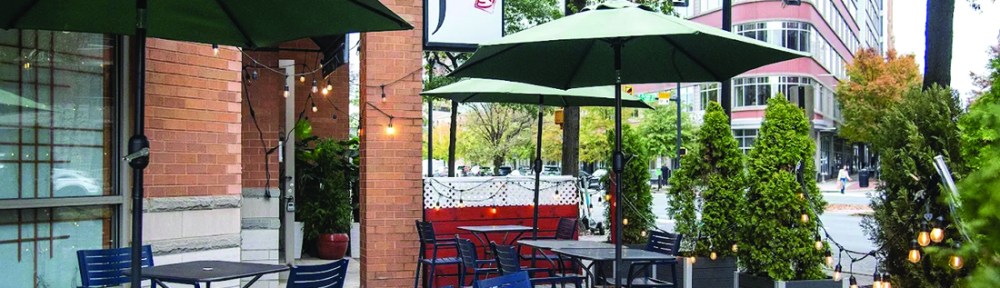
Many people are familiar with Sushi JIP because of its prominent location at the busy intersection at the corner of Washington Boulevard and 10th Street. They’ve seen the sign as they’ve walked past, or the lovely outdoor seating area, but maybe never been inside the spacious dining room. Still others are familiar with the Japanese restaurant that occupied this spot before its current incarnation as Sushi JIP.
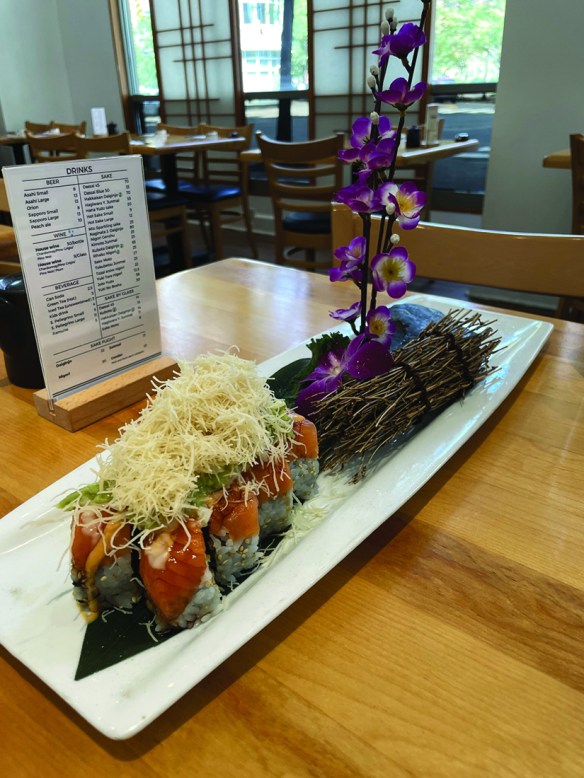
In September 2024, a local Virginia family took over the management. Their new website proclaims, “Our story begins with a profound love for authentic flavors and a vision to redefine sushi dining.” That new definition includes some unusual Signature Rolls (like the Too Too Funky (with mozzarella cheese, cream cheese, crab, avocado, bacon bits, sour cream and cinnamon honey)) and what my neighbor, who joined me there for lunch last week called, their “flair.” Beautifully decorated dishes arrive adorned with rocks, branches, flowers, and, in the case of my sashimi platter, flashing lights.
At lunch on a Wednesday, my neighbor and I, at first, had the large indoor space (about 50 seats) to ourselves, though more people trickled in as we ate. Weekdays are not busy here, we were told, but weekends, especially for dinner, are more crowded and a reservation is a good idea.
Tables are set with cute chopstick holders and a buzzer that can be used to summon wait staff when you are ready to order or need something. Though, even without the buzzer, staff was very attentive and food was delivered quickly.
The menu for rolls, sushi, sashimi, poke, and combination platters is extensive – almost overwhelming. And if raw fish isn’t your thing, you can order from the Kitchen/Noodles, Hibachi (food grilled over an open flame), or Vegetable Roll sections of the menu. We tried Shrimp Shumai as an appetizer, Bulgogi Fried Rice, and one of their Signature Rolls, the Double Salmon (The aforementioned flashing sashimi dish was from a prior visit). There was a special lunch menu because we happened to be there during Restaurant Week, but there aren’t usually the more traditional Japanese lunch options, like a bento box.
The fish was definitely the standout, even if, as my companion pointed out, there is no elegant way to eat some of the towering rolls (so maybe not the best place for a first date). Portions are large and the fish fresh and delicious. The manager explained that they are committed to keeping the fish fresh by only ordering a certain amount daily and having it delivered by a local trading distributor.
It’s on the expensive side, but that seems par for the course for this cuisine. They also provide catering and host private parties. If you are a sushi lover, Sushi JIP will not disappoint.
Sushi JIP (3000 Washington Blvd): Hours of operation are 11:30 a.m.–9:30 p.m. Tuesday through Thursday; 11:30 a.m.–10:00 p.m. Friday and Saturday; 11:30 a.m.–9:00 p.m. Sunday. Phone number is 703-243-7799. Visit the website: https://sushijip.com/ for more information.
The LPCC Board of Governors has created a new Grounds Committee to oversee the natural environment of the park exclusive of the playground areas and the community center. The committee is currently composed of Bill Anhut, Deborah Barber, Ann Bodine, and myself, but we are looking for others within the community who would wish to join and help us maintain the park. Please let me know (miscsteve@comcast.net) if you would like to be a part of this committee.
The Grounds Committee performs various functions:
We apply mulch to the trees every spring, supervise a professional arborist to check the health of the trees, conduct tree pruning when necessary, provide for emerald ash borer treatment of the two Arlington County Champion White Ash trees located in the center of the park, and oversee the mowing of the lawn.
Deborah is doing a fantastic job in creating and maintaining the extensive gardens surrounding the community center, maintaining the rain garden located to the south of the community center, and preparing plants for the annual Lyon Park Plant Sale. She currently is looking for volunteers to help with these tasks. Please contact Deborah (deborah.barber@gmail.com) if you wish to help keep the gardens looking great.
Last Friday night, my husband and I had a delicious meal – and a brief insight into the history of downtown Clarendon – at Nam Viet. An old school Vietnamese restaurant on North Hudson Street, half a block from the metro station, Nam Viet has been a staple in the neighborhood since the 1980’s.
As its menu states: “What began as a humble 15-seat eatery on Highland Street in Arlington in 1986 has grown into one of the longest-standing Vietnamese restaurants in the region—and one of the last remaining from Clarendon’s historic “Little Saigon” era.” The Nguyen Van Thoi family, has operated the restaurant since its opening.
On the corner of Hudson Street and Wilson Boulevard, a plaque commemorates Clarendon’s past as one of the many “Little Saigons” in the U.S., where refugees settled after the Fall of Saigon in 1975. According to Wikipedia, “the Washington metropolitan area was a desirable choice for Vietnamese immigrants to settle for several reasons. Many of the first-wave Vietnamese immigrants had ties to the U.S. government or the embassy… Once the first wave of immigrants settled in Arlington, existing family and social ties established the network for future immigrants to join this population.”
They were also arriving at an opportune moment: Clarendon center was in decline, with many vacant storefronts, due to competition from regional shopping or strip malls. Disruptive construction of the Metro station created conditions conducive to cheap, short-term commercial leases, some as low as $1.50 to $5 a square foot, and Vietnamese refugees took this opportunity to open businesses and support their families.
From the late 70’s to early 80’s, a variety of Vietnamese-owned shops and restaurants flourished, until the opening of the Metro station led to new development and higher rents. Many of the businesses closed or moved, often to Eden Center in Falls Church. Nam Viet is one of the few that remains.
The atmosphere at Nam Viet is pretty low key. When you walk in, you’ll be face-to-face with a wall of photographs of former POWs and dignitaries who have eaten here, including three U.S. Presidents. Supporting POWs is part of the history of Nam Viet, whose founder was an interpreter in the U.S. Army and became a POW himself.
What the décor lacks, the food more than makes up for. Nam Viet boasts an extensive menu of chef specialties, grilled entrees, soups, and a robust vegetarian section, which we’re always looking out for, for my husband. The food is made from recipes passed down generations using local, seasonal ingredients.
We ordered Fresh Garden Rolls, Five Spiced Tofu, and Stir-Fried Eggplant with beef. We’d had some of the more traditional dishes, like the Vietnamese Crepe, on a prior visit. Each dish was fresh and delicious. Portions are huge, so we ended up taking home about half of what we were served. Walking home, I was already excited to enjoy my leftovers the next day.
Service is fast and welcoming. The owners of the restaurant are very transparent and communicative, from signs on the front door alerting people that the AC is strong in the summertime, to an explanation on their website of why they stopped taking orders over the phone (you can order for pick up or delivery on their website).
Walk-ins are welcome. On a Friday night, about half of the restaurant’s 80 seats were taken. Reservations are recommended if you have more than five people in your party. The price of our meal, including tip – and abundant leftovers – was $63.
We will definitely be back to Nam Viet, for a terrific meal and a slice of Clarendon history.
Nam Viet (1127 N. Hudson St.): Hours of operation are 11:00 a.m.–8:00 p.m. Tuesday through Saturday, Sunday from 11:00 a.m.–7:00 p.m. Phone number is 703–522– Visit the website: www.namvietva.com for more information.
The Arlington Neighborhoods Advisory Committee (ArNAC) advises the Arlington Neighborhoods Program, which allows the neighborhoods of Arlington to leverage Arlington County funding for self-chosen projects to benefit our communities. These projects can be capital improvements such as updates to streets, streetlights, sidewalks, and other pedestrian safety measures. There are also an increasing number of beautification projects, especially to improve the appeal and usefulness of County-owned parks and to add green space where concrete would otherwise prevail.
As a participating member of ArNAC, Lyon Park has actively benefitted from neighborhood projects supported and funded through ANP. The Lyon Park Neighborhood Plan filed with ArNAC lays out Lyon Park’s 10-year plan, describing the neighborhood we want to create and maintain for ourselves and our community.
Between 2000 and 2017 alone, Lyon Park received $2.3m in funding across different neighborhood projects. Each project went through several rounds of design and review within ArNAC and the neighborhood itself, building up points in the ArNAC system based on completeness, breadth of impact, and other factors. Twice a year, once in the spring and once in the fall, ArNAC votes on projects that are fully designed and ready for execution. The projects that pass vote in the ArNAC funding rounds are put forward to the Arlington County Board for final approval.
In the fall 2016 funding round, Lyon Park was funded for a street improvement project. To improve pedestrian safety on North Highland Street between Arlington Boulevard and 1st Road North, a 4-foot continuous sidewalk was added on the west side of the street, with ADA-compliant ramps at each intersection, and connection to the existing asphalt trail alongside Arlington Boulevard. A 3-foot utility strip was added next to the new sidewalk along with curbs and gutters on both sides of the street. On-street parking was maintained on both sides of the 28-foot-wide street.
In the fall 2020 funding round, sidewalk improvements were approved for the stretch of North Oakland Street from North Pershing Drive to Arlington Boulevard. A new 5-foot sidewalk was constructed along the east side of the street, with a utility (grass) strip located adjacent. Stormwater drainage improvements were added as part of this project as well, including some bioretention areas at two locations within the project limits. The street was narrowed slightly to facilitate these additions but maintained on-street parking on both sides. While not in the Lyon Park neighborhood directly, this project benefits Lyon Park residents through increased pedestrian safety and improved walkability of our interconnected community.
Lyon Park residents also benefit from the recent 11th Street park renovation put forward by the Clarendon-Courthouse Civic Association ArNAC representatives. This project, approved in the spring 2021 funding round, includes updated gravel walkways to ADA-compliant concrete paths, adding new site furnishings and trees as well as path lighting and signage, and general renovation and improvement of existing lawn areas. The park is now open to the community in its new and improved state – only the installation of new birdhouses is still pending.
Neighborhood associations across Arlington are continuing to identify, propose, and define improvement projects across a range of areas. Many are focused on safety, adding street lights and traffic calming measures to busy areas with a high amount of foot traffic, such as near bus stops and crosswalks beside school pickup zones. Lyon Park has benefited from similar improvements in the past, but I’m sure there’s more to be done – more ways to increase safety for pedestrians and cars alike, to add beauty and function to our streets and paths, and to support neighborhood connectivity and utility. It’s up to us to identify any and all of those ways and to drive the changes we want to see! Let me know what thoughts you have already and keep an eye out for the next newsletter update, where I’ll share the consideration criteria and the next steps to take a project from idea to success..
Here’s the development issues that were discussed at last month’s LPCA meeting:
ARVA (on the Days Inn site): The site is currently pretty rough, with fencing up, but no demolition progress. The developer is still working on financing, and there is no clear schedule for moving forward. Please let the LPCA know if you have specific concerns during this limbo period.
Joyce Motors: This project is also delayed pending financing decisions, though they are moving forward with deconstructing the building. LPCA will coordinate with Ashton Heights Civic Association leadership to monitor activity and hold the demolition and constructions team accountable to county regulations.
The NCACU building at the corner of 9th Street North and North Irving Street: The building will be demolished and a storage facility is planned to replace it. Anne Bodine is coordinating communications with concerned residents and will be attending the upcoming (in September) county meeting.
EHO update: The Arlington Civic Federation (also known as CivFed) held a ZOOM call on September 18 to discuss changes to the Expanded Housing Option (EHO) strategy. There is an EHO planned for the corner of North Highland Street and 7th Street North, so this is definitely a neighborhood concern. Classic Cottages plans to construct an EHO in Ashton Heights at 629 North Monroe Street. Both will be 3-plexes.
Other CivFed Updates: 22 civic associations signed a petition requesting the county to look closely at Lot Coverage. The county leadership is well aware many residents are upset about the extreme tree loss. They originally agree to study building height and set-backs, but now are limited to studying impervious surfaces which ties to storm water runoff concerns.
Additionally, auditors are reviewing community benefit agreements made by the county with developers, identifying sites where the County has backtracked on agreed upon benefits.
If you were on the Mall September 19-21, you could not help but notice the National Mall of Pickleball event.
A dozen temporary pickleball courts attracted thousands of people from across the country and around the world.
Center Court featured pickleball pros showing off their skills, as well as opportunities for the amateurs to compete.
Throughout the weekend, Lyon Park’s very own Helen White, official U.S. Pickleball Ambassador, coached pickleball enthusiasts, many of them first-time players.
Pickleball is a fabulous sport for young and old, as well as the fastest growing sport in America! Helen will be happy to share her addiction with you!.
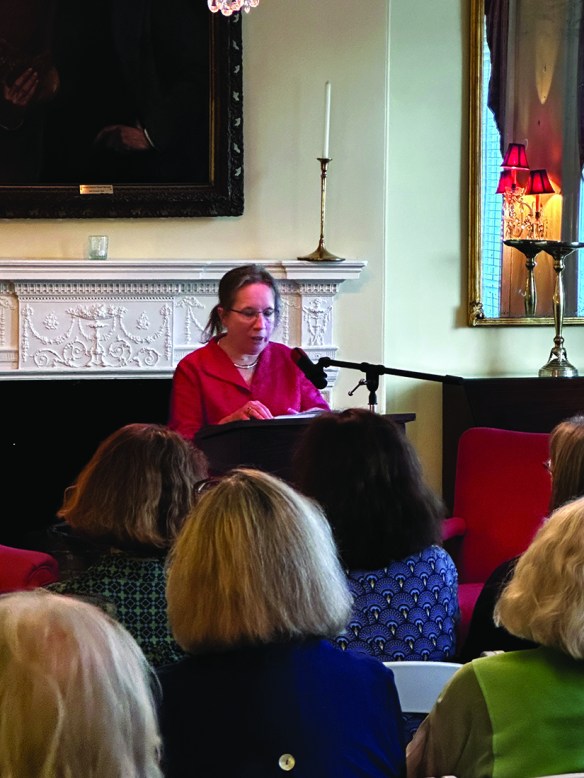
On Saturday July 26, Lyon Park friends celebrated the 100th anniversary of the laying of the cornerstone of the Lyon Park Community House. Despite the monsoon rains, a good time was had by all. The sun came out just in time for Arlington County Board member Susan Cunningham to read an official proclamation and Peter Vaselopulos from the Arlington Historical Society to say a few words. The evening continued as the Mandoleers and Jelly Jammers performed from the finally-dry patio, a perfect ending to a memorable community event.
Those of us in Lyon Park and Ashton Heights who used to go for Whitey’s Broasted Chicken know it’s now Texas Jack’s Barbeque Restaurant. Do you know where the name comes from? If you’re looking for a good read, try Matthew Kern’s Texas Jack, America’s First Cowboy Star for a lot of exciting answers to that question.
“Texas Jack” was a native-born Virginian, born in Palmyra, July 27, 1846 as John B. Omohundro and he lived fast, made a lot of spectacular splashes, and died way too young. His family farm was in Fluvanna County (near where Cunningham Creek runs into the Rivanna River). He tried to enlist in the Confederate Army at age 14. He was rebuffed several times, but later lied his way past the age limit and served as a scout and spy until the end of the war. Just weeks after the end of hostilities, at the ripe old age of 18, he headed to Florida and then west to the Taylor Ranch in Brazos,Texas where he hired on as a cook. He soon started working his way up to being a cowboy which was more exciting and suited his personality much better.
As he became more experienced, he drove cattle over the famous Goodnight-Loving and Chisholm trails to provide beef for states left with diminished larders due to the long war. It was on one such drive herding cattle to Tennessee where he received his nickname “Texas Jack.”
Punching cows must have surely provided less excitement than he wanted in his life. By 1869, he drifted into Hays, Kansas, where he met up and befriended Wild Bill Hickok. Later that same year, he met and began a life-long friendship with William F “Buffalo Bill” Cody. He soon joined Cody who was working as a scout and guide for the 5th US Cavalry. Cody convinced the cavalry to hire Jack even though he was a confederate veteran. He soon earned the cavalry’s respect and became a popular guide.
Since the job was only part-time, he began hunting and guiding affluent sportsmen—both American and foreign.
In 1872, he and Buffalo Bill were persuaded by Western author Ned Buntline to put on a Wild West Show—Scouts of the Prairie—in the fashion of the dime comics that were so popular at that time in the US and Europe. They chose Chicago to open and Buntline was to write all the scripts for the event. Four days before the event, he had not produced anything more than a promise.
Being amateur actors, Cody and Texas Jack inevitably flubbed their lines and soon reverted to just brawling with each other and the Native American cast members. Instead of turning out to be a disaster, the audience loved it. It became the standard format for wild west shows which soon sprung up in the US to wildly popular success. They were joined the following year by Wild Bill Hickok, who was perhaps the least qualified of them as an actor. They had to fire him after less than a year because he refused to learn his lines, quarrelled way too much, and even shot out the annoying spotlights on one occasion! Jack left the show soon after marrying the dancer in the show, Giuseppina Morlacchi. They remained married until separated by death.
Cody, Hickok and Jack remained good friends the rest of Jack’s life. He died of pneumonia in Leadville, CO, in 1880, just shy of his 34th birthday.