“A nonprofit is as strong as the community that holds it up. Together, we can do more than we can do alone.” This quote is on the website of the We See You Foundation, the brainchild of 19-year-old Nick Ruge, a resident of Lyon Park.
When thinking about what inspired him, Nick recalls this incident as the catalyst for the creation of the Foundation: “During a visit to New York City, I was affected by a homeless gentleman sitting on the sidewalk with a sign that read “I feel invisible.” I crouched down so I’d be on his eye level, so he knew I saw him, and offered some food, chatted for just a moment, and touched his shoulder. I wanted him to know that he matters. After that and other similar encounters, I knew we needed to do something to make the homeless feel valued, and the We See You Foundation was born.”
Nick’s concern led him to begin volunteering with local non-profit PathForward (formerly Arlington Street People’s Assistance Network) serving meals on Sunday evenings for several years while he was in middle school and high school. At 17, he decided to create a non-profit to continue the work. He still collaborates with PathForward, often partnering with them to make bagged meals and bed bundles for distribution to people who need them.
The effort is a family affair—Nick’s brother Jake serves as the President; his mom, Lisa, is the Treasurer; and his dad, Andy, is one of the Board members. Lisa notes that she loves the work because it is another way the family can spend time together. “The Foundation really is about being kind and showing respect. That’s something everyone can do.”
If you would like to support the Foundation, you can see their Amazon Wish List, make donations, and more by visiting the website: https://weseeyoufoundation.org.
The sudden storm that walloped Arlington in late July will not soon be forgotten. Violent downbursts felled some of our most magnificent trees, many of which were oaks that came up by the root ball. This may leave some people wary of trees, but the benefits of large, healthy trees far outweigh the risks. Trees mitigate flooding, hold onto soil to reduce erosion, lower our utility bills, improve air quality—and of course are aesthetically pleasing. With the right trees properly planted and cared for, we can enjoy them more and worry about them less.
Our Extension Agent, Kirsten Ann Conrad, provided expert advice on increasing trees’ resiliency to storms. Trees should be under the regular care of a certified arborist, who will look for weak or damaged limbs and ensure proper, regular pruning. You should avoid construction and other soil-compacting actions near the roots and keep mowers and trimmers away from the tree.
Trees with deep, wide spreading root systems are less likely to blow over, so don’t plant a shade tree in an area confined by structures or pavement. In smaller areas, plant smaller native trees such as fringe tree, dogwood, American holly, and redbud. Trees planted in groups, rather than as single specimens, are more likely to weather high winds. Consider planting new trees in a grove, with several different types of trees grouped together. If you have existing single trees, plant additional trees and shrubs close by and mulch the entire area to create a landscape bed.
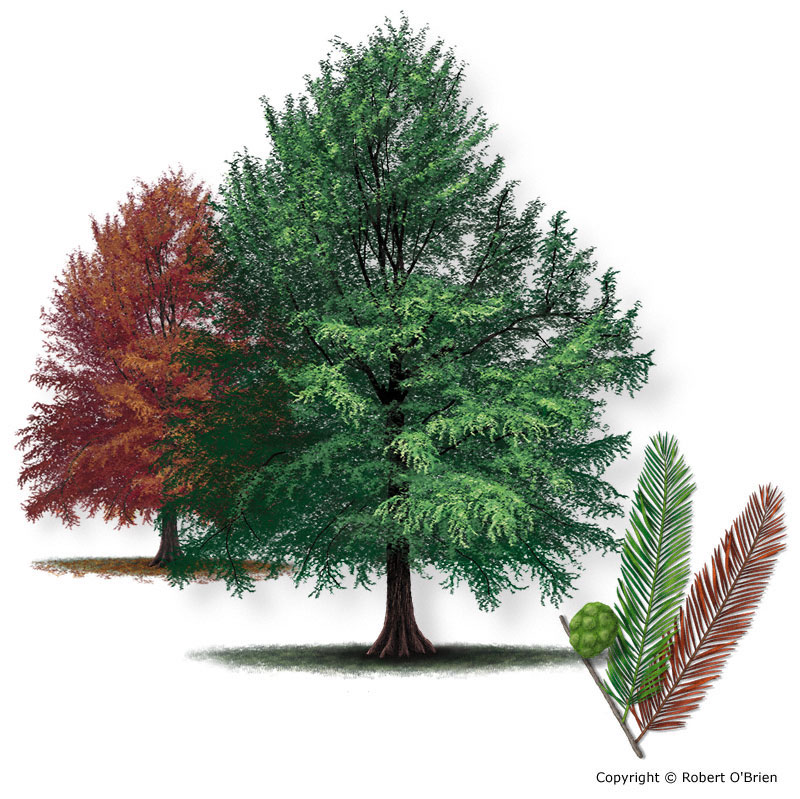
Some shade tree species are better able to withstand strong winds than others. Trees that are best at surviving hurricanes in southern states include southern magnolia and bald cypress. Other large maturing trees that prove moderately to highly wind-resistant are hickory, persimmon, shumard oak, river birch, and black gum, also known as tupelo. All these species thrive here, but consult Lyon Park tree stewards for the best trees for your yard.
I love all these trees but if I had room for one more, I would plant an oak because oaks support more life-forms than any other North American tree genus and we desperately need to save native habitat in our neighborhood.
The LPCA History Committee is excited to share that Lyon Park has been awarded a $25,000 Historic Preservation Fund (HPF) grant through Arlington County’s Historic Preservation Program. The funds will support the “Lyon Park History Preservation and Education Centennial Project.”
This project has three primary goals:
digitizing Lyon Park historical documents and installing a display case at the Community House
designing and fabricating exterior historical markers in Lyon Park
supporting educational research and QR code signage in Zitkála-Šá Park
We are pleased to be partnering with the Arlington Historical Society and Arlington Library’s Center for Local History. They will provide guidance with best practices to safeguard Lyon Park’s artifacts and documents once they are scanned. We will also benefit from the expertise of the Historic Preservation Fund team, which will provide advice as we move forward. The HPF supports the Lyon Park project as it “will help strengthen the community’s understanding of historic preservation, Arlington’s history, built environment and/or cultural heritage….it will contribute to a stronger community by providing a link to the past, present, and future.”
The project is intended to be completed within 12 months, just in time for the launch of the Centennial Celebration of the Lyon Park Community House, which opened in 1925. From the start, the vision for the Community House was to create “A social, civic, and recreative center; so democratic as to attract the humblest; so wholesome as to appeal to the exclusive; so broad in scope as to bring youth, maturity and old age into closer companionship to the benefit of all.” That’s an inspiring mission to guide Lyon Park for the next hundred years.
And a big THANK YOU to Thora Colot and Toby McIntosh who have been instrumental in moving this project forward. This project provides wonderful opportunities for community participation. Some tasks require just a few hours to complete, while others are more detailed. If you are interested in volunteering to help, please contact me at elizabeth.r.sheehy@gmail.com. There is something for everyone!
On June 10, 2023, Alexandria-based non-profit Vélocity Bike Co-op cut the ribbon on their new Lyon Park location at 2647 N. Pershing Drive. They replaced the Old Bike Shop, which had operated out of that space for at least 10 years before closing their doors earlier this year.
The co-founder of Vélocity, Christian Meyers, thanked the Old Bike Shop owner, Larry Behery, for “…providing a home for quality used bike service and sales. Vélocity will build on this legacy and make safe, reliable bicycles more affordable to everyone.”
“Opening our second location provides a unique opportunity to realize our mission to grow and empower an inclusive biking community through education and affordability,” noted Joe Davison, the organization’s Board Chair. “We are honored to carry on and serve the biking community at this location while seeking continued synergy among the area’s cycling organizations, including Arlington-based non-profit Phoenix Bikes.”
While the two volunteer-driven organizations have similarities, volunteer John McClanahan differentiated the services between his non-profit and the work of Phoenix Bikes and emphasized they are not trying to compete but rather complement the work that Phoenix Bikes does in the community. Both organizations give away bikes to kids and adults, accept bike donations, and recycle and resell donated bikes and bike parts. The main difference is that while Phoenix works primarily with youth to build skills while earning a bike, Vélocity focuses chiefly on bike education and repair. They host public do-it-yourself repair workshops, offer bike repair services, and run a bicycle scholarship program to provide a safe and reliable means of transportation to low-income individuals.
Mike Pattisall, shop manager, will introduce himself at our September 13th LPCA meeting. Vélocity is always looking for volunteers. Visit their website for store hours and volunteer opportunities at https://velocitycoop.org.
After 18 months of delays, supply chain disruptions, and ostensible labor supply shortages, we’re back home. The paintings and pictures have been hung, salvageable furniture has been restored, and most crucial lost items replaced. Yes, we’re back in our home that was saved by the Arlington County Fire Department (ACFD), for which we are eternally grateful.
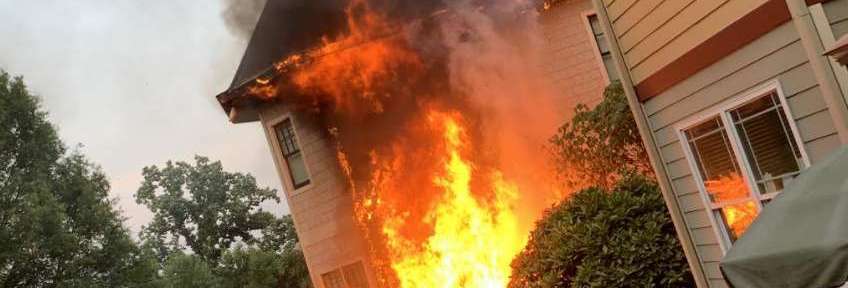
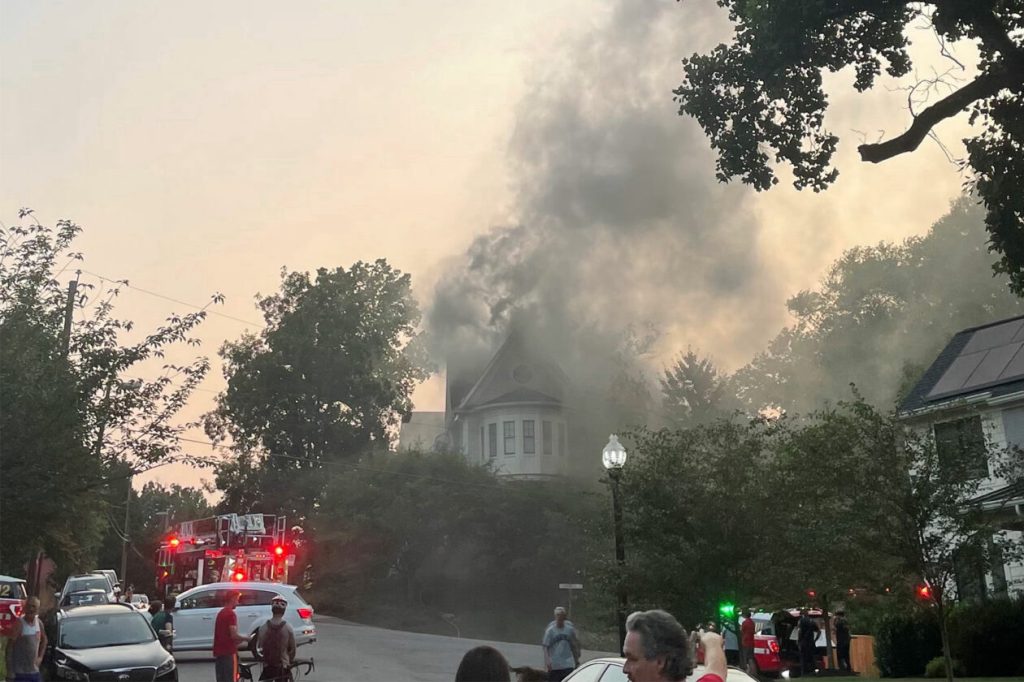
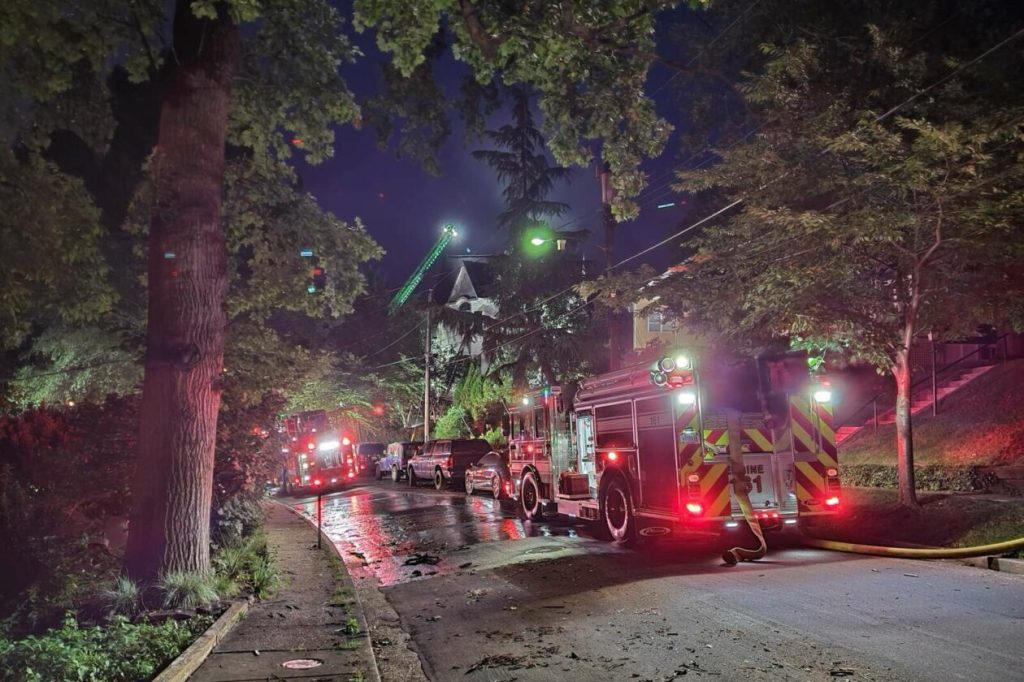
On July 6, 2021, our home in Lyon Park caught fire. The first sign of fire was at 8:02 p.m., right below the back door stoop, in the hardwood mulch. By 8:10, flames had reached the soffit. We frantically grabbed wallet, purse, and car keys, and ran shoeless to the garage to move our cars to the street. We could already hear the sirens, thanks to neighbors Ron and Kate’s instinctive 911 calls. By 8:15, ACFD was onsite to fight the flames and contain the conflagration. Because of the extreme, dry heat that day, a light but steady breeze, and the proximity of residences in the neighborhood, contingency planning warranted a large response. And boy did the ACFD come prepared! There were 5–6 engines and around 70 personnel engaged in the effort, including a “command” vehicle from which an officer coordinated the battle and monitored progress with walkie-talkie and a large whiteboard. In addition, well over a dozen vehicles were stationed on N. Fillmore Street, ready to swing into action in the worst of circumstances should the flames spread to adjacent homes.
Several dozen curious and compassionate neighbors gathered to witness the event. Their sympathy was not only for our prospective plight of losing our home, but also for the brave firefighters struggling to contain a potentially explosive situation. Many neighbors sprang right into action, some distributing water, and others even burgers, to the firefighters. The combination of very dense smoke under the eaves and in the top floor loft, the high and rising inside temperature, and the flow of oxygen posed a serious risk of spontaneous combustion, and therefore a possibility of injury (or worse) to the firefighters in the house. Luckily, there were only 2 minor injuries among the firefighters: dislocated shoulders, I think. Our triangular 4–level house, situated on a knoll at the corner of two descending streets, posed special challenges to the firemen. Fortunately, the well-equipped department was able to reach the roof and pierce a hole to enable them to flood the house. By 12:30 a.m., the final spark and other threats had been eliminated, and the house was “secured,” pending the start of urgent remediation services 7–8 hours later.
We were amazed not only by ACFD’s mastery of firefighting, but also its sensitivity to our own worries and emotional state. It’s hard to describe the emotions and thoughts that overwhelm you watching your home going up in flames. At one point early in the battle, one of the firemen asked if there was anything important that we needed urgently from the house. Yes! A cell phone had been left behind. Despite the risks, he immediately entered the home to search for the phone. Although he was unable to find it, he did not emerge empty-handed; he returned with our laptop computer, a pair of reading glasses, and a pill box. To boot, the Fire Marshall dropped by the next day to confirm everything was ok.
How did the fire start? We may never know for sure; the department’s assessment is neither made public nor released to us. There was hardwood mulch under the stoop, and it can apparently combust spontaneously. I wish I could say I hadn’t charcoal grilled that day, but I had. By 1:45 p.m., my brief cookout was finished, and I closed the grill. At 5 p.m. or so, the grill totally cold to the touch, I moved it a few feet away for storage. A bit more than six hours after grilling, the glow of flames appeared under the stoop, as captured by our security camera.
Some forms of education are costly, not only in dollar terms; this fire was instructional. Beds of hardwood mulch abutting one’s home should be avoided, or at a minimum warrant extra precaution. Having a security camera, even an inexpensive one, can be a very helpful forensic device. Flame-retardant siding is evidently well worth the extra expense. Of course, having adequate insurance is essential.
We remain in awe of ACFD’s response. We should all be grateful for their bravery and expertise. We are also extremely grateful to live among such wonderful Lyon Parkers. And we are of course thankful to neighbor Deb for letting us crash in her home at nearly 3 o’clock in the morning once all the activity on the street had quieted.
Laundry and dishwasher pods have quickly become consumer favorites. People love the convenience of the pre-measured packets for the dishwasher or washer. I used them for about a year until I realized that the laundry pods’ film wrapping—the part that supposedly dissolves—is made of polyvinyl alcohol (PVA), a plastic that several sources said is not fully biodegradable.
One study showed that over 75% of intact plastic particles from laundry and dishwasher pods can be released into oceans, rivers, canals, and soil. In wastewater, this plastic film has the potential to absorb dangerous chemicals or contaminants, antibiotics, or heavy metals at high concentrations and then work their way up the food chain.
Be aware that companies that make PVA pods often tout their environmental credentials, such as using plastic-free containers and avoiding harsh chemicals. There is debate over whether PVA completely dissolves under normal water treatment conditions but, as a layperson, I think the “no” side had a stronger argument.
Thus, I stopped using pods and hope others will do the same. So now I only use tablets or powder. Blueland makes both laundry and dishwasher tablets with no PVA wrapper and I am happy with their products. There are other good options. According to the website Sustainable Jungle (www.sustainablejungle.com), the following brands are totally plastic-free, in terms of the container and the lack of PVA: etee, Bestowed Essentials, Ethique, Meliora, Dr. Bonners, Zero Co., and Dirty Labs.
Maintaining a thick, green lawn is a potent symbol of the American dream, but these lawns are an environmental wasteland, polluting ecosystems and producing greenhouse gasses.
Grass fertilizers, which typically contain large concentrations of nitrogen and phosphorous, release compounds like nitrous oxide, a greenhouse gas almost 300 times more potent than CO2. Fertilizers also wash off lawns, into storm sewers, and eventually flow into the Chesapeake Bay, where they poison animals and create algal blooms that result in oxygen free “dead zones.” Weed killing herbicides often contain toxic chemicals that have been linked with cancer; these chemicals also run off into our waterways. Another major polluter is the gas-powered mower, which the EPA says produces 11 times the CO2 emissions of an average new car in a given span of time.
Consider removing at least some of your lawn and, ideally, planting native plants that support butterflies, bees, and birds. You can expand your plant beds yourself or hire a landscaper to do more extensive work. I have done both. To expand my plant beds, I covered the grass with overlapping sheets of newspaper (roughly 4–5 sheets thick) topped with 2–3 inches of compost and leaf mulch. The process is quite easy and within 2–3 months the grass was gone. Alternatively, a landscaper can skim off the grass with a shovel. It took 2 guys about 30 minutes to remove what was left of my front yard turf.
For determining what to plant instead of grass, consult the NovaRegion website. Avoid English ivy, vinca (periwinkle) and pachysandra, which are invasive and will crowd out native species. English ivy is the worst because it kills trees.
Grass-free lawns can be beautiful, as with this property in Lyon Park. Besides esthetics, the benefits are many!
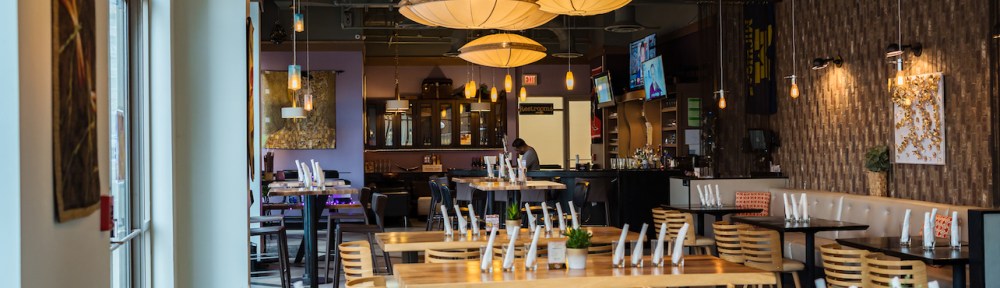
If you’ve been looking for a local restaurant to try, there is a hidden gem you may not have noticed on Fairfax Drive in Virginia Square. Thai Treasure opened Feb 2019 with proprietor Piyarat Bumrungsiri (Nui to us) realizing her dream of owning a Thai restaurant—a dream she’d held since immigrating to the US from Bangkok in 1997.
After weathering the long Covid slog by pivoting to primarily take-out and delivery—including spicy Thai cocktails—Nui is welcoming diners back to indoor and street-side dining (with expanded outdoor seating coming soon). Nowadays, it’s a family affair with Nui (a single mom) and her two college student daughters, Alex and Blaine, typically working at the restaurant.
Thai Treasure offers a variety of menu options from the traditional to the creative. The traditional Pad Thai is, of course, among the most ordered items, but the specialty Thai Treasure Pad Thai offers a twist on the old favorite and includes shrimp, crabmeat, and gouda cheese. Other crowd pleasers include the drunken noodles, stir fried selections, clay pot steak and egg and a variety of curries. And Nui still offers a three-course lunch for under $15.
Looking ahead, Nui is developing a menu that shares with customers the regional flavors of Thailand. Regional cuisines are influenced by neighbor countries, such as Laos and Cambodia, and even China and India. She’s also building a new signature cocktail menu and wine list to feature in her daily happy hour specials.
Despite all the challenges running a restaurant, especially during the pandemic, Nui feels fortunate and says, “We have built a strong community with many regular customers who continue to come in and support us.” Next time you’re looking for a new international dining destination, check out Thai Treasure (located at 3811 Fairfax Drive)!
Some years ago, while traveling for work, I became conscious of the enormous amount of plastic travel sized bath product bottles prevalent in the travel industry. I remember being intrigued upon seeing an online reference to “bar shampoo,” a solid form of shampoo that looks like a bar of soap. Because it offered a solution to the plastic problem, I decided to venture into the world of bar products.
I have tried a few brands—Ethique and J.R. Liggett’s—and could hardly believe I hadn’t done it earlier. They were just as luxurious as liquid shampoos, and the packaging was nothing but a minimal paper wrap. And because they are in a concentrated form, they last longer than liquid products. This makes their use a simple way to reduce environmental impact, considering the emissions of trucks and ships that transport thousands of bottles of products made mostly of water. As a bonus, bar products don’t require the chemical preservatives that some liquid products need to prevent contamination. I used to think recycling bath product bottles was the best I could do but making and breaking down plastic expends energy. Completely eliminating the need for plastics is even better. And why stop with shampoo? My foray into bar shampoo has extended to concentrated bar conditioner and cleaning solutions (just add hot water), shaving bars for my husband, melting detergent sheets, and solid toothpaste bits. And of course, I never stopped using good old bar soap. Who knew that humble bar soap, the original cleaning product, would become the inspiration for so many clever and environmentally friendly bath products?
On March 22, 2023, the County Board voted 5–0 to change Arlington’s Zoning Code and General Land Use Plan (GLUP) to allow “Missing Middle” (MM) or “Expanded Housing Options” for duplexes up to six-plexes on most lots in residential zones that until now have allowed only single-family construction (i.e., zones R-5, R-6, R-8, and R-20). This policy begins July 1, 2023 and changes our existing mixed (old and new, single- and multi-family) neighborhoods to multi-family new home neighborhoods.
First, let’s look at our current housing stock. You might be surprised to learn that in terms of types of dwelling units, Lyon Park is diverse, with single-family homes less than one-third of our existing stock:
Single Family Detached Homes: 926
Apartments – Garden: 1,120
Apartments – Mid-rise: 502
Garden style condos: 175
Duplexes / Side-by-sides: 125
Stacked condos: 120
Townhomes: 27
Total: 2,995
Now let’s discuss what the County Board decided on the new Missing Middle plan. Most of Lyon Park is zoned R-6; countywide, R-6 makes up 66% of the areas that were “rezoned.” The county will now allow property owners in all rezoned areas to:
– build up to 6 units on lots “by-right” (i.e., no County Board review);
– build new MM or convert an existing single-family home into MM units, with an annual cap of 58 permits per year for 5 years, of which 30 may be in R-6;
– erect structures with the same setbacks and height restrictions as single-family homes, but with a 5% “bonus” lot coverage above single-family home projects;
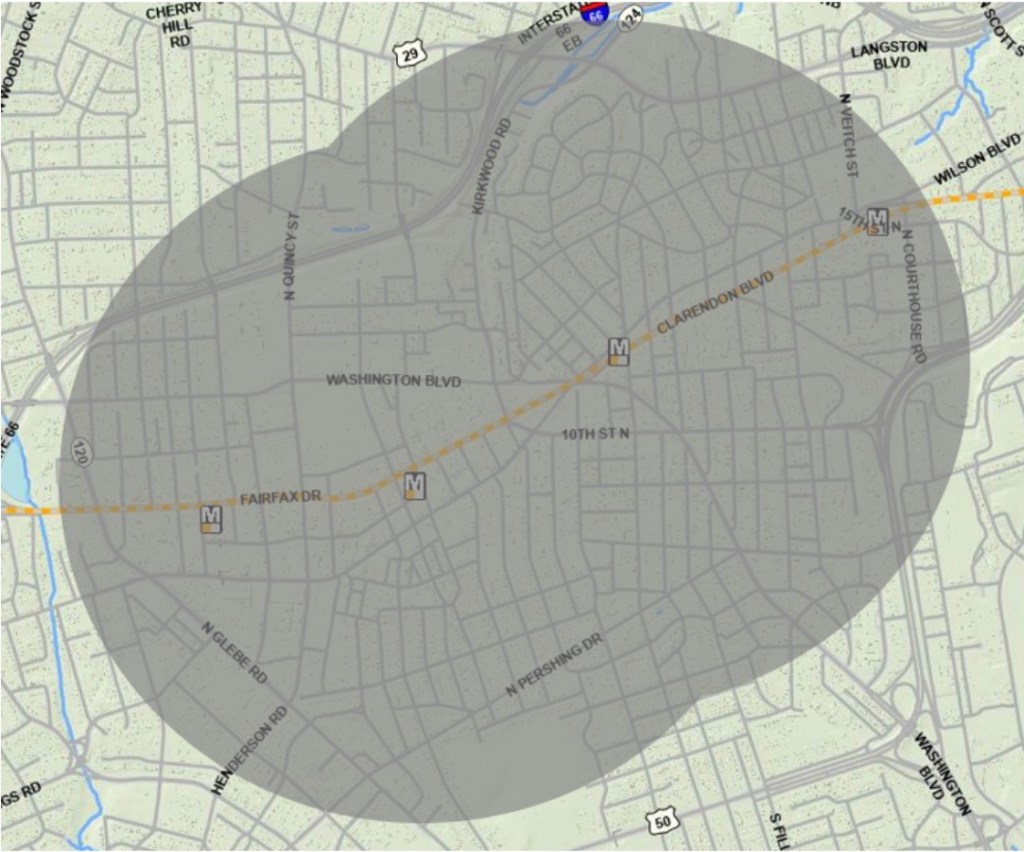
– provide a minimum 0.5 parking spaces per unit if the home is 3/4–mile from a Metro station entrance (shown on the map below) or 1/2–mile from a stop on the Premium Transit Network along Columbia Pike, and provide at least 1 space per unit (the current standard) for other locations and for all lots on a cul-de-sac;
– preserve or plant at least 4 shade trees on properties with new 2–4 unit buildings and at least 8 shade trees for 5- and 6-plexes;
– cap maximum floor area within a range of 4,800 square feet for the smallest MM structure (a combined stacked duplex) up to 8,000 square feet for the largest (5- to 6-plexes);
– add interior accessory dwellings only for the side-by-side two- or three-unit semi-detached homes (e.g., a 3-unit townhome becomes a 6-plex if each townhome adds an accessory dwelling);
– provide zero onsite parking on streets (such as the 100 block of North Edgewood St.) that currently lack onsite parking, meaning that all parking in those blocks spills over to the street.












 lyonpark.org