Centennial Reflections: Building Community Through Consensus

By Elizabeth Sheehy

A new monthly feature, looking back through the archives to better see the future.

In August 1934, with little fanfare (or notice to Lyon Park Community Center membership), the Board of Governors approved “the building of a tennis court, croquet court, and horseshoe courts.” They stipulated that a committee would need to raise the funds and maintain the facilities, and agreed it would be removed if interest waned. A committee immediately set to work raising funds.  By September, opposition to the plan was in full force. A “Mass Meeting” was scheduled to hear both the pros and cons, asking members three questions:

  1. Do you favor the construction of a tennis court on our Park?
  2. Would you agree to have trees felled to make room for a court?
  3. Will you actually use the court if established?

A petition was circulated, signed almost exclusively by those living along the park edge, which compared the scheme to the establishment of an amusement park, likely to become a public nuisance and damaging the park’s natural beauty. Some, in favor of the proposal, suggested that the four trees slated for removal were endangering the Community House. Ultimately, the BoG leadership decided not to move forward with the proposal, resulting in a few resignations.

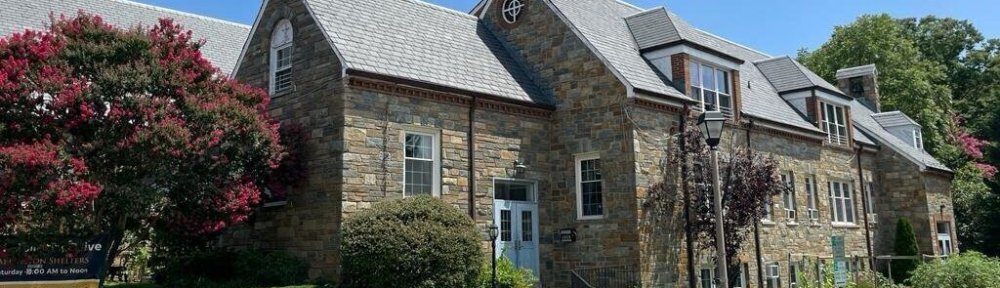
It seems the lesson here is that one neighbor’s recreational vision is another’s nightmare, and that consensus in developing community space is important. That concept came into play during the planning of the Lyon Park Community House renovation, completed in 2015, as all decisions of the renovation committee were made by consensus rather than majority rule. Consensus requires more give-and-take, and a concerted effort to avoid winners and losers. The end result was a beautiful and functional building that works by all accounts for everyone. Just as in 1934, neighbors listened to each other, worked together to find suitable solutions to various concerns, and approved a plan that met the communities needs. And sometimes the correct strategy is to not move forward, as with the tennis courts. Perhaps in another 100 years, Lyon Parkers will look back on the renovation process of the early 21st century, as we can look back on the 1934 membership, to find lessons about building community.

The Return of the American Chestnut Tree

By F. Gray Handley

If you visited Lyon Park about 450 years ago, before the Europeans arrived, you’d be in the middle of a majestic forest that sloped down to the Patawomeck River, the fourth largest along the East Coast.  That forest included giant oaks, maples and hickories—and it was dominated by massive chestnuts which were comparable to the redwoods of California.  These chestnuts, growing at the eastern edge of their range, were a keystone species providing nutritious food for animals and humans, building soil and helping create a remarkably diverse ecosystem.  They dominated and shaped the hills around Lyon Park itself, and you might have rested in the shade of a chestnut to drink fresh-flowing spring water near where our playground is today.  If you sat there quietly you might have been joined by forest bison, elk and wolves stopping by for a cautious sip.   

Of course, all that changed as European settlers moved in to clear fields, build houses and make roads out of native pathways to carry their farm products to ports along the river.  Many of these new settlements used the abundant chestnut, a durable hardwood resistant to rot and insects, for fences and buildings.  In a remarkably short time, the seemingly endless old growth forest was displaced by farms, towns and neighborhoods like ours.  Chestnuts were still welcomed and widely planted for their protective shelter, vigorous growth, high-quality wood and abundant delicious nuts.  Both in the countryside and in remaining mountain forests, the chestnut was still a predominant, critically important species.  

Then, early in the 20th Century, Chestnut Blight (a fatal fungal disease to which American Chestnuts have no resistance) arrived with the commercial import of Japanese Chestnuts.  Within 30 years nearly four billion American Chestnuts died in one of the largest and fastest species extinctions ever recorded.  This loss dramatically altered entire ecosystems.  But there was a glimmer of hope in that the blight did not completely kill the roots of some native chestnuts.  To this day, living stumps send up shoots, some of which survive for years.  In addition, remnant groves and individual trees have been found in pockets of its natural range and in other areas isolated from blight exposure.  Now, with the advancement of genetic technologies, blight resistant Japanese and Chinese Chestnut genes are being experimentally incorporated into the genome of American Chestnuts to increase their blight resistance.  This strategy and others being studied in universities and by the American Chestnut Foundation (TACF) offer hope that the American Chestnut may eventually return to our native forests.   

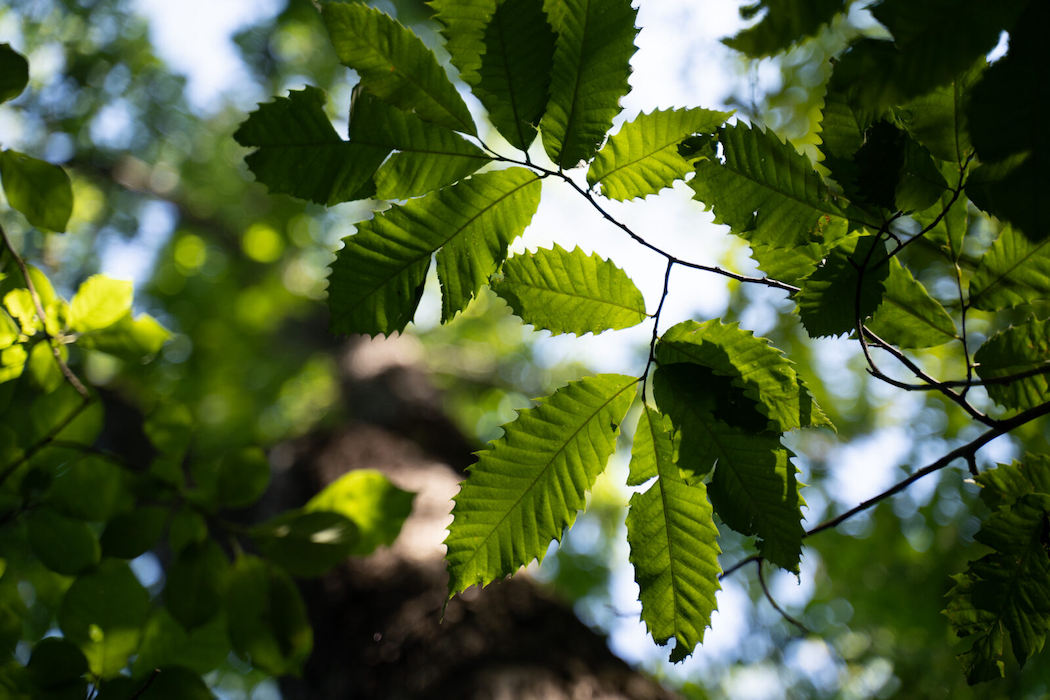
In 2020 and 2021, as part of Lyon Park’s centennial commemorations, members of our community worked with TACF to plant four American Chestnut saplings in our “urban forest” within Lyon Park—which, for the first time, returned the species to this part of its ancestral range while also enhancing our park with a remarkable native that vanished over a century ago.  These saplings, two of which have survived lawn mowers and other threats, are among the first hybrids made available for public planting by TACF.  Soon after our trees were planted, a small grove of their siblings was donated to the National Arboretum.  Over the next decade or so, with a bit of luck, these “returning” American Chestnuts will resist the blight to reach full maturity.  

If you want to say hello to the Lyon Park Chestnuts, they are in the area of the park that is bounded by Fillmore and 4th – one is about 15 feet tall and the other, planted a year later, is two feet tall.  Most exciting, the older one produced nuts in 2023!  Our volunteer arborists hope to see more of this prickly output in 2024 and they may even try to sprout some for others to plant.  Please help us keep these very special trees healthy as our community makes a small but historic contribution to the return of the Patawomack Forest. 

Highlights from the January LPCA Meeting

Two important issues were discussed at the January 10 LPCA meeting, held at 7:00 pm at the Lyon Park Community Center. Members were given a comprehensive review of the work of the Arlington County Police Department (ACPD) and we had an in-depth discussion of the new stormwater fee that took effect 12/31/2023.

First up, representing the Community Engagement Division (CED) of the ACPD, Officer Hicken reviewed statistics for the county over the past year. Though crime stats are up in Arlington, crime is actually down in Lyon Park and its neighboring areas, notably lower in destruction of property and auto break-ins. Officer Hicken stressed the importance of locking your car and not leaving garage door openers or extra house keys where thieves can access them. Seems so basic, but it happens all too frequently. Auto thefts remain higher than in previous years, many involving delivery drivers who leave vehicles unattended. 

The officer opened the floor to questions, and the members present had plenty of them. In response to comments about specific dangerous intersections and/or traffic spots, Hicken recommends citizens request support for a Traffic Accident Reduction Program study, for which it receives grants from the state. Arlington has been quite successful in reducing traffic incidents through this program, which is part of the county’s Vision Zero project. Here is the link to request support: https://arlingtonva.qscend.com/311/request/add
Some issues, such as live/double parking, fall under the jurisdiction of transportation and parking, while ACPD focuses on emergencies. 

In response to questions about smash-and-grab shoplifting incidents, which are certainly on the rise, the officer shared that many retailers choose not to report these thefts, handling them internally, so the data is incomplete. Responding to a question about recent incidents at W-L, Hicken noted that the ACPD has less visibility of the issues as School Resource Officers are no longer on campus. Through the CED, Arlington Police encourage school engagement, including school visits, coffee with a cop, and ride-alongs, which can be requested through the website. 

Our guest speaker from Ashton Heights had to reschedule the presentation on the new stormwater fees until February, but neighbors Elaine Simmons and John Ausink, familiar with the program’s features, were able to step in and answer questions. Most homes in Lyon Park will be assessed at $258 (or one ERU), while homes with oversized footprints will be assessed higher. This fee replaces the Sanitary District Tax. Since it is a fee, the burden will hit tax-exempt entities, such as religious institutions, charities, and even the Lyon Park Community Center, which will now pay $774 per year. You can find your home’s ERU value on the county website here: https://arlgis.maps.arcgis.com/apps/webappviewer/index.html?id=00ea7985a519498ba8da3f2b52bd5b43

Lots of other issues discussed, so join us in February for more great neighborhood updates.

Recap of Lyon Park’s Santa Express

By Paul Showalter

The Lyon Park Santa Express made several runs throughout Arlington County and the Lyon Park neighborhood. Our first run, on Saturday December 16, went through the friendly streets of Lyon Park—where we were joined by four wonderful helper elves, Benton Rosenbaum, Ferdy Walsh, Alexys Linder, and Alejandro Linder, under the watchful eye of Darcy Rosenbaum. Our trip started at the Washington-Lee apartments where Santa and his sleigh were greeted by a huge crowd of kids. Everyone wanted their picture with Santa—and a candy cane! Throughout our run, Santa was greeted by cheering kids, happy parents, and smiling grandparents.

After Santa finished his run through Lyon Park, he took a short break to eat his favorite pizza at Troy’s Italian Kitchen. Energized, Santa directed his sleigh up to the park at Clarendon Crossing and then on to Ballston’s Mosaic Park. At each location, kids and parents were thrilled to see Santa arrive unexpectedly (and many more photos were taken).

Santa had so much fun visiting those two parks that he scheduled two more Santa Express runs in Arlington! Santa and his sleigh visited 8 parks in South Arlington on Friday December 22 and another 8 parks in North Arlington on Saturday December 23. During Santa’s run in South Arlington, he visited his favorite sandwich shop, the “Weenie Beenie,” for a quick bite. After his North Arlington run, Santa had to return to the North Pole to make final preparations for his Christmas deliveries. Judging by the sounds we heard on Christmas morning; Santa had visited many happy children in Lyon Park.

Santa (aka Gary Putnam) and his head elf (Paul Showalter) are taking a much-needed rest. They look forward to seeing everyone next December. Until then, Ho Ho Ho!

View more pictures of the Santa Express!

Neighbors Making a Difference: Darcy and John Rosenbaum

By Kathleen McSweeney

It is hard to speak with Lyon Park neighbor Darcy Rosenbaum on any topic without noting her energy and constant stream of ideas. Asking her about her involvement in Lyon Park brings her enthusiasm to the next level. She reminisces about contacting Jeannette Wick in 2017 to volunteer and it was suggested she chair the annual Spring Fair. To many people, that would not be the ideal entry-level volunteer opportunity. But this is Darcy, who professionally had served for almost two decades as the membership director, development leader, and then Chief Operating Officer of The Arc—a community-based advocacy organization for people with intellectual and developmental challenges—and she was used to organizing big events. She jumped right in.

She has chaired the Spring Fair a few more times since, and each time has introduced improvements to the games and activities. In 2023, she retired the decades-old wooden corrals, and gave the fair a fresh look (and shade for volunteers) by purchasing matching pop-up tents to house the carnival games. She fondly remembers learning how to assemble the old fair corrals from now-deceased neighbor and volunteer extraordinaire Michael O’Connor, and how neighbors Chuck Phillips and Paul Showalter are always on hand to provide their expertise or an extra set of hands.

“When you start volunteering for one thing, it is easy to volunteer for other neighborhood events.” Darcy has
held the many volunteer positions since she started volunteering seven years ago: Spring Fair coordinator, 

LPCA Co-President (with Peter Zirnite), membership chair, prior webmaster, coordinator for the Kids Holiday Party, Centennial Celebration co-chair, assisted with the Santa Express, and continues to update the Teen Services listing for the LPCA newsletter. She also has the clean-up checklist for the community center committed to memory.

Volunteering is a family affair. Husband John is often seen compiling, constructing, hammering, and hauling for events, and famously built the Speakeasy door neighbors used to enter the Lyon Park Centennial Celebration in 2019. Their son Benton has been a volunteer since he was three, when he made his debut as an elf on
Santa’s sleigh.

Darcy loves the rich history of our neighborhood and notes that having volunteers maintain the park and community house is a large part of what makes Lyon Park a special place. Neighbors like Darcy—who orchestrates fun events and implements new ideas to reinvigorate neighborhood traditions—play a substantial role in creating a strong sense of community in Lyon Park. 

Update from Arlington County on the Stormwater Utility and Repeal of the Sanitary District Tax

By Arlington County

At the December County Board meeting, the Board adopted an ordinance to establish a Stormwater Utility, adopted a resolution regarding Stormwater fee relief, and set the Stormwater Utility Equivalent Residential Unit annual rate. The Board’s action also repeals the current Sanitary District Tax, effective December 31, 2023.  

The County’s Stormwater Management Fund is currently supported by the Sanitary District Tax, which generates funding based on property assessments. The tax is currently set at $0.017 per one hundred dollars of assessed valuation of all taxable real estate. This ordinance proposes replacing the Sanitary District Tax formula with a $258 per Equivalent Residential Unit (ERU) Rate. An ERU in Arlington County is calculated to be 2,400 square feet of impervious area. The rationale for using the amount of impervious area on each property, rather than all taxable real estate, is that it directly correlates with stormwater runoff that contributes to the County’s stormwater system. Basing the rate structure on the amount of impervious area provides a nexus between the fee charged to each property and the amount of services provided by the County. 

The approved Stormwater fee relief program will provide 100 percent fee relief for senior and disabled residential property owners, and disabled veterans and surviving spouses, that currently qualify for real estate tax exemptions and deferrals.


Neighbors Making a Difference: Tabitha Ricketts

By Kathleen McSweeney

San Diego native Tabitha Ricketts moved around a lot growing up, which for a child of a Navy dad wasn’t unusual. After graduating from Notre Dame, she took a job as a tech consultant which gave her a list of cities to choose from. With a preference for living on the East Coast, she selected the Washington, D.C. area as her new home. 

She rented in Rosslyn and Courthouse for the first few years. Her younger sister moved to the area when she became a Federal employee and rented a house in Lyon Park. During one of Tabitha’s first visits to Lyon Park, she met Paul Showalter, who invited her to a Danville Street block party. Drawn by the sense of community in Lyon Park and wanting to be nearer her sister, she began renting in Bedford Park. She attended a Woman’s Club lunch and volunteered to help. “I figured I can bake cupcakes—it wasn’t a scary commitment.” She heard that assistance was needed for the Halloween bonfire and has coordinated it for the past two years. Next, when she learned there were openings on the LPCA Board, she volunteered and was elected to represent our community on the Arlington Neighborhood Advisory Committee (ArNAC) and as a representative to the Board of Governors. In 2023, she saw a listserv post from a departing neighbor and is now a Lyon Park homeowner.

Tabitha has enjoyed playing a role in continuing our treasured community traditions. Lyon Park is a perfect blend of big city amenities (for instance, she appreciates the availability of good take-out food options) with a small-town feel. She spoke a bit about her work on the ArNAC, and in the two years she has served has seen a shuffling in County staff working with the committee. She observed that new staff brings new leadership, varied experiences, and fresh perspectives—all positive changes in Tabitha’s view. The ArNAC representatives have been discussing a more equitable point system and prioritization process for project approvals. They look forward to reviewing more art and beautification projects for neighborhoods, along with the more traditional streetlight, signage, and sidewalk fixes which have been staples of neighborhood conservation projects. In this month’s article about the LPCA Neighborhood Tabitha invites neighbors to contact her about priorities and ideas for projects. Although Tabitha has not lived here long, she has emerged as a generous volunteer and leader in our community. 

A Change to Arlington County’s Comprehensive Plan

By Kathleen McSweeney

Did you know that every jurisdiction is required to have a comprehensive plan to guide its current and long-range development? According to Article 3, Section 15.2-2223 of the Virginia code, the Planning Commission in each jurisdiction has the duty to prepare and recommend the comprehensive plan elements, and the governing body—in our case, the Arlington County Board—has the responsibility of adopting the plan for the County. Sections of the code define the required plan elements and outline guidelines for a Transportation Plan that designates a system of transportation infrastructure, and “…shall include, as appropriate, but not be limited to, roadways, bicycle accommodations, pedestrian accommodations, railways, bridges, waterways, airports, ports, freight corridors, and public transportation facilities.” (Source: Code of Virginia, Section 15.2-2223.B.1.) The code also mandates specific elements be included, such as a zoning ordinance, public and private development (including commercial, general residential, and affordable housing development), community services and facilities, historic areas, groundwater and sewer treatment, and consider strategies to address social well-being, health, the economy, and the environment. 

Comprehensive Plan elements are publicly reviewed and updated at least every five years. Prior to December 2023, Arlington’s Comprehensive Plan contained eleven elements: the General Land Use Plan (GLUP), Master Transportation Plan, Historic Preservation Master Plan, Affordable Housing Master Plan, Sanitary Sewer Master Plan, Recycling Program Master Plan, Community Energy Plan, Public Spaces Master Plan (which included three sub-plans: the Urban Forest, Public Arts, and Natural Resources Master Plans), Water Distribution Master Plan, Chesapeake Bay Preservation Master Plan, and the Stormwater Master Plan. Each plan element has a network of commissions and interested citizen advocates that contribute to updates and revisions during the plans’ scheduled public update cycle. 

At the December 2023 Board meeting, the Forestry and Natural Resource Plan (FNRP) became the 12th element of the County’s Comprehensive Plan. This was the result of a three-year process. In 2020, a joint citizen advisory group was formed (with representatives from the Energy commissions) to review and update the Urban Forestry and Natural Resources plan elements. The Advisory Group recommended that the two plans be combined into a single Forestry and Natural Resource Plan (FNRP), the Planning Commission endorsed it, and approval of the FNRP was added to the County Board’s December meeting agenda. Upon approval, the Board commented that “The FNRP is intended to be a holistic long-term planning tool that outlines over 80 policy recommendations organized into four interconnected Strategic Directions: Conservation; Climate Mitigation, Adaption, and Resilience; Biodiversity; and Operations.”

Lyon Park’s Neighborhood Conservation Plan

By Tabitha Ricketts, Lyon Park’s Arlington Neighborhood Advisory Committee Representative

In 2019, a group of dedicated Lyon Park Citizens Association members compiled a 210-page document covering our neighborhood’s history, goals for the future, and areas of both interest and concern directly impacting our residents. This document is the 2019 Lyon Park Neighborhood Conservation Plan.

What is a Neighborhood Conservation Plan? It’s both a snapshot in time and a roadmap for the future, refreshed every 10 years by and for neighborhoods—like Lyon Park—that are members of the Arlington Neighborhood Program (formerly the Neighborhood Conservation Program). These Neighborhood Plans provide the framework for improvement projects neighborhood representatives submit for approval from the Arlington Neighborhood Advisory Committee (ArNAC). Once approved, these projects are put forward to the Arlington County Board for funding. The plan drives the projects, and the projects receive County funding to achieve the neighborhood’s goals—like increasing pedestrian safety measures, improving a County park, or planting more trees.

Lyon Park’s 2019 Neighborhood Plan covers 9 areas of interest to Lyon Park residents, as reported in a 2016 resident survey: Land Use and Zoning, Street Conditions, Transportation and Traffic Management, Housing, Public Facilities and Services, Commercial and Business Areas, Historic Preservation, Urban Forestry, and Schools. These areas roll up to 3 neighborhood goals:

  1. Adapting to growth and change.
  1. Dealing with the challenges that come with density.
  1. Getting Arlington County support for neighborhood initiatives such as traffic management and commercial development.

For a more in-depth breakdown of each of these topics, check out the slide deck I shared on the Lyon Park listserv. For full details, check out the plan itself, available on the Arlington Neighborhood Program website.

There are a number of aspirations laid out in Lyon Park’s plan—for improved drainage, holistic traffic planning, increased street lighting—that would make perfect projects for the County to execute on our behalf. But to get from plan to action we must: 1) break down ideas into tangible projects, with a target, a location, and a design; and 2) gather neighborhood support to send our top priorities for ArNAC review and Board funding. 

Based purely on our Neighborhood Plan, a few things stand out to me as priorities already. But I’m just a representative of the neighborhood—your neighborhood. A lot has changed since the Plan was created in 2019, and certainly since the 2016 survey data. So, what matters to you? What projects would you like to improve which enhance our neighborhood today? Reach out to let me know, and let’s get started!

Children’s Holiday Party 2023

By Paul Showalter

Oh, the weather outside was frightful, but the party inside the community center, held on December 10, was so delightful! Decorations were placed by the chimney with care. Children participated in activities at every table—paint and projects were everywhere. Hot chocolate flowed, mini marshmallows were dunked, and candy canes consumed. Cookies and jelly donuts were eaten by the handful. 

The elves expertly managed the lines of children waiting to visit Santa, who made an early December visit to Lyon Park. And kudos to Darcy Rosenbaum, our holiday party chair, created a magical and enchanting scene in the center—nobody decorates a party like Darcy! Natalie Roy and Kim Franklin added their expertise to ensure the event ran smoothly. Many thanks to the parents and kids who came out to enjoy the party. This is another of our treasured community annual events, which marked a terrific start to the holiday season and once more filled our Community House with the smiles and laughter of happy families.