By Elaine Simmons
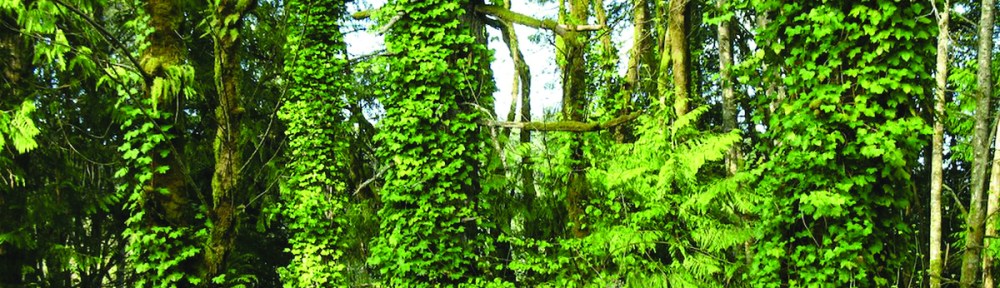
English ivy is a tough, drought-tolerant ground cover found all over our East Coast and Europe. But make no mistake: it is the arch enemy of trees and native plants everywhere. This plant initially spreads on the ground, smothering wildflowers and tree seedlings, but it can climb up to 90 feet on trees, which puts each tree in grave danger. English ivy adds weight and volume to trees, which makes them susceptible to blowing over; it blocks trees’ foliage from sunlight; it steals moisture and nutrients from tree roots; and it encourages trunk rot. Some poor trees look literally strangled by this invasive.
Unfortunately, Virginia has not banned the sale of this harmful plant, though starting in January, retailers must post official warning signs identifying English ivy as an invasive and encouraging alternatives. OK, that helps, but a huge problem is with existing plants that residents have allowed to get out of control. English ivy in yards has spread to forests and roadside trees and once you notice this ugly infestation it is hard to “unsee” it. My husband and I were recently in Ireland, which has quite low forest cover (11% vs 36% in the US). We loved the gorgeous countryside but were heartbroken to see so many of the few trees they have engulfed in English ivy.
What can you do to help? Start by eliminating it from your own yard. Pull out all vines running along the ground and cut the vines running up trees at the base of the tree—without cutting the tree bark! If you google “How to safely cut English ivy off trees” there is plenty of information. The ivy will keep coming back but if you keep fighting it, it will eventually die—and you will feel triumphant!
I am one of several volunteers who have saved trees from this scourge on private, county and federal property so you can also reach out to me on email at elainersimmons@earthlink.net. I am happy to come over and discuss and implement a “war plan.” I also plan to start dropping notes off at homes with nice trees endangered by ivy and offer to get rid of it. As we lose canopy to development, drought, and disease, we desperately need more healthy trees, so please contribute to a better future for Arlington.

