By Anne Bodine
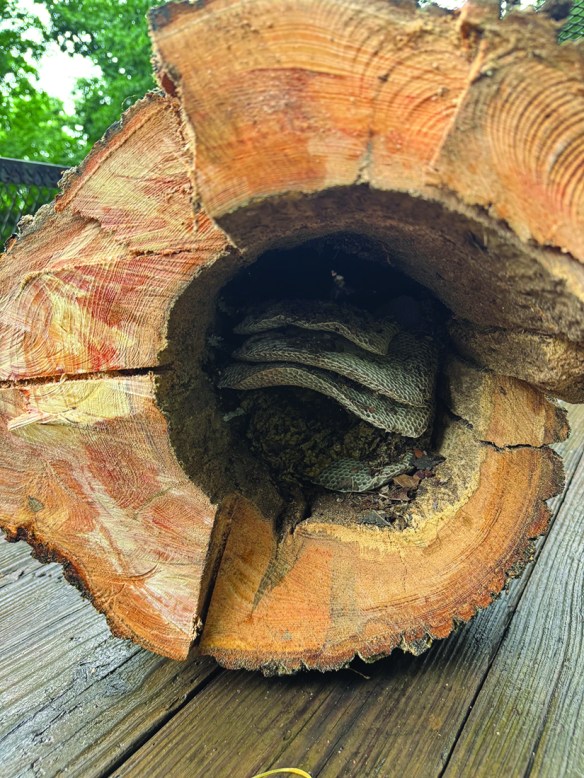
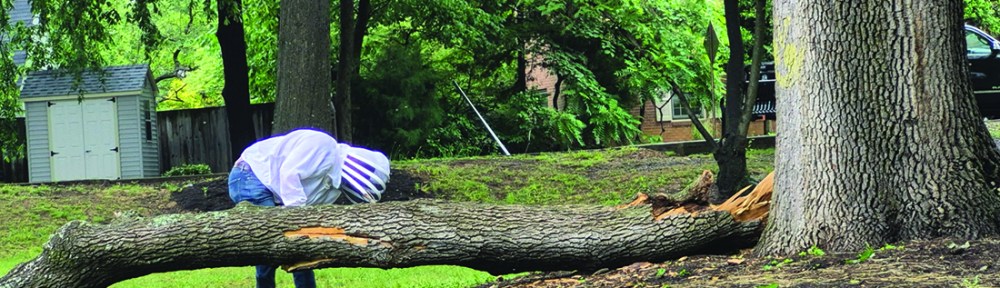
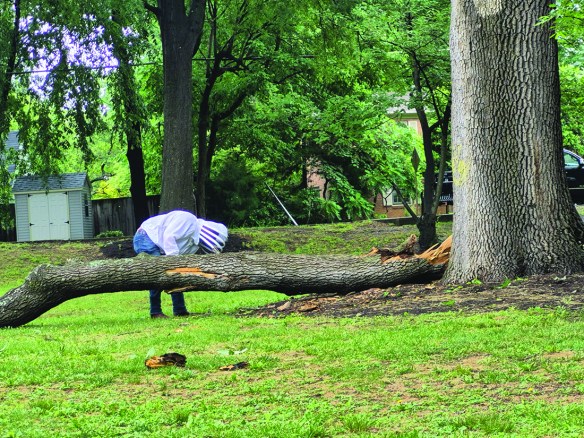
On May 23, a huge branch fell from our large Ash tree during a storm in Lyon Park. We discovered the branch housed a large nest of honeybees (Apis Mellifera or European honeybees). As Virginia has recently experienced major colony collapses—and the European honeybee is our official “state pollinator”—we decided to try save the bees. We called in NoVa Beekeepers. Beekeeper Brad Gamon assessed we would need a chainsaw and put the word out to beekeeper Scott Reid, who turned out the next day with saw and a trailer. Reid impressed us by sawing out the log containing the nest and bees, sawing it into quarters, reassembling it, and loading it for transport, while preserving the honeycombs and the all-important queen bee!! Reid assessed the nest contained 10,000–30,000 bees; he will relocate them into hives and help them recover.
I learned a lot about bees from Operation Save the Bees:
– Almost 90% of plant species require pollination by animals; bees are among the most important pollinators;
– Arlington Del. Patrick Hope is the one who got the bees designated as “state pollinator;”
– Bees need two things: a place to nest (like our huge Ash tree!) and flowers for food;
– 70% of species nest underground, the rest in hollow centers of shrubs/trees;
– Female bees spend their whole lives foraging on flowers, making them more fertile;
– Bees sleep several hours a night, and older bees need more sleep than young ones. They often pair off head-to-foot, both to say warm and to keep from falling from honeycombs or flowers while they are sleeping;
– Bees navigate back home initially using the sun and Earth’s magnetic field. As they near the nest, they use memorized landmarks, and finally use scent to zoom in on pheromone markers;
– Bees do not like wild temperature swings;
If threatened or harmed, the colony may “abscond” and abandon the nest;
– When any British monarch dies, royal bees are notified. Upon the death of Queen Elizabeth II, head beekeeper John Chapple said: “You knock on each hive and say, ‘The mistress is dead, but don’t you go. Your master will be a good master to you.”
Lyon Park residents no longer get to host this large bee colony, but in our own way, we respected the bees in similar fashion, finding them a new home so they can continue their mission to sustain Virginia crops and plants. And we learned to appreciate our own trees even more, discovering how they shelter the literal worker bees of our planet.

