By Anne Bodine
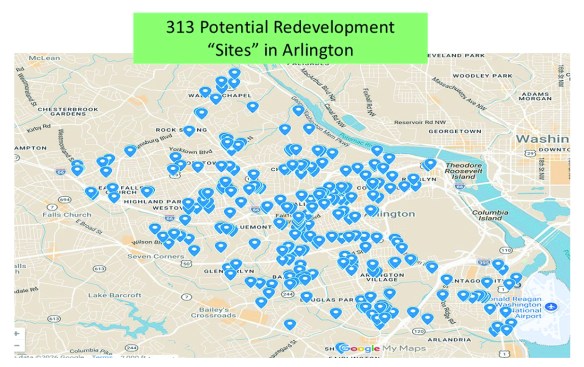
Governor Spanberger on April 13 submitted amendments to the Virginia Houe and Senate for a controversial “Faith in Housing bill” that would allow faith based and 501(c)3-based tax-exempt organizations who own property to gain significant new value from properties if they choose to develop them for new mixed use housing projects.
Many of the properties are in low-residential areas of commercial zones that do not allow much beyond low residential or low-commercial density, which often tops out at 3 stores and about 10 units of housing per acre. Arlington nonetheless has done approximately 6 church/non-profit conversions in the past 15 years, providing additional density for affordable housing. These were not done “by-right”; they involved extensive community and County Board inputs. The new bills if passed, will allow the mixed-use projects in residential and low-density commercial areas by-right, as was done for “expanded housing options” or EHO in 2023, removing the community/county board reviews of new permits.
There are preconditions:
- The property must have been owned by the non-profit for at least 5 years,
- 60% of the rental units must be available to household making 80% of AMI ($123,750 for a family of four);
- 60% of the ownership units must be available to households making 120% of AMI ($196,680 for a family of four);
- The affordable units must remain affordable at those levels for 30 years.
While there are additional conditions for properties in a revitalization zone or historic district, the basic allowance for these “mixed-use” projects (also allowing for day cares/cafes/ancillary uses) is for up to 20 units of housing per acre (u/a) at heights of 45’. (The current height limits in low density residential zones such as much of Lyon Park is 35’.) Richmond legislators are jockeying over amendments, including one that would limit the House/Senate versions of the bill that propose allowing any building within 500’ of such a proposed development to “confer” its height or density upon that new project, also “by-right.” We probably won’t know outcomes until late April. LPCA will briefly touch on this topic at its May meeting, but in-depth discussion will occur at the June LPCA meeting, so please join us. We will also discuss in June other new zoning laws that will affect requirements for onsite parking for singe family and multifamily home development.

