Saved by the Arlington County Fire Department

By Bob Hagemann

After 18 months of delays, supply chain disruptions, and ostensible labor supply shortages, we’re back home. The paintings and pictures have been hung, salvageable furniture has been restored, and most crucial lost items replaced. Yes, we’re back in our home that was saved by the Arlington County Fire Department (ACFD), for which we are eternally grateful. 
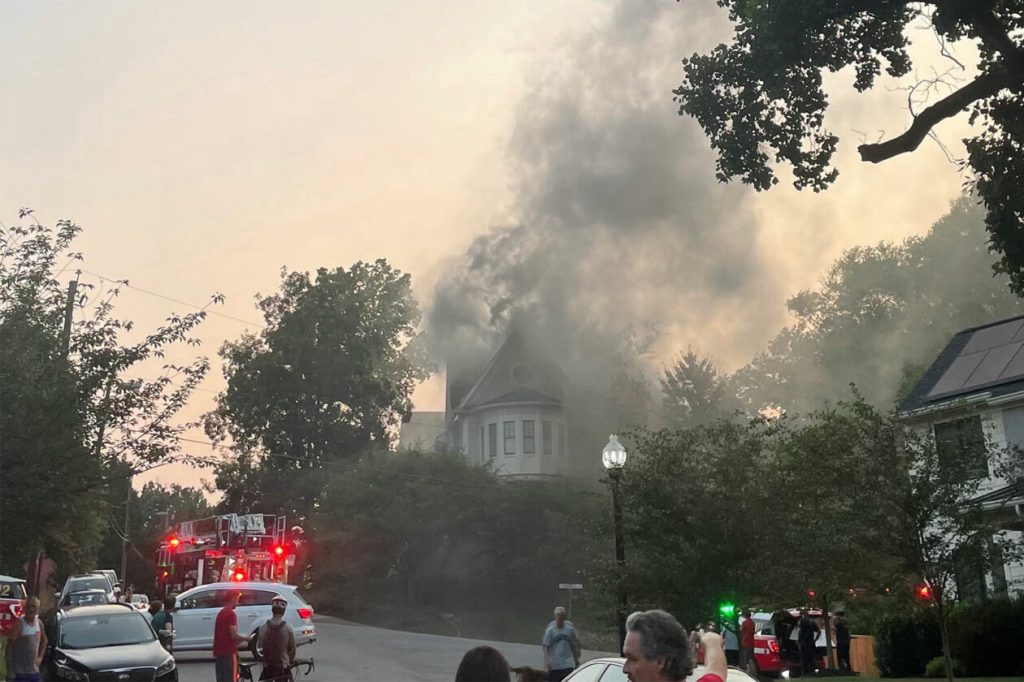
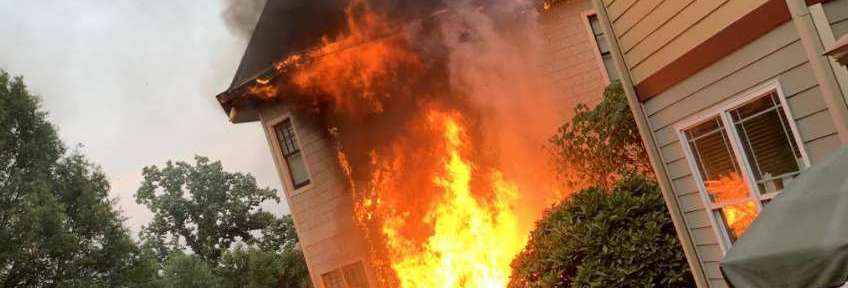
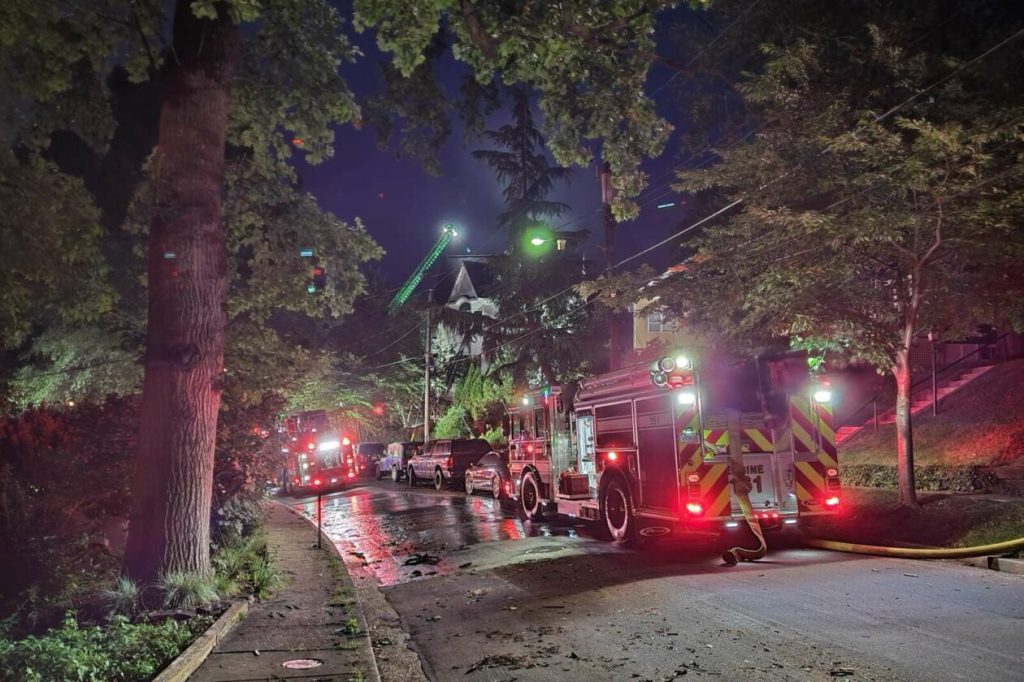
On July 6, 2021, our home in Lyon Park caught fire. The first sign of fire was at 8:02 p.m., right below the back door stoop, in the hardwood mulch. By 8:10, flames had reached the soffit. We frantically grabbed wallet, purse, and car keys, and ran shoeless to the garage to move our cars to the street. We could already hear the sirens, thanks to neighbors Ron and Kate’s instinctive 911 calls. By 8:15, ACFD was onsite to fight the flames and contain the conflagration. Because of the extreme, dry heat that day, a light but steady breeze, and the proximity of residences in the neighborhood, contingency planning warranted a large response. And boy did the ACFD come prepared! There were 5–6 engines and around 70 personnel engaged in the effort, including a “command” vehicle from which an officer coordinated the battle and monitored progress with walkie-talkie and a large whiteboard. In addition, well over a dozen vehicles were stationed on N. Fillmore Street, ready to swing into action in the worst of circumstances should the flames spread to adjacent homes. 

Several dozen curious and compassionate neighbors gathered to witness the event. Their sympathy was not only for our prospective plight of losing our home, but also for the brave firefighters struggling to contain a potentially explosive situation. Many neighbors sprang right into action, some distributing water, and others even burgers, to the firefighters. The combination of very dense smoke under the eaves and in the top floor loft, the high and rising inside temperature, and the flow of oxygen posed a serious risk of spontaneous combustion, and therefore a possibility of injury (or worse) to the firefighters in the house. Luckily, there were only 2 minor injuries among the firefighters: dislocated shoulders, I think. Our triangular 4–level house, situated on a knoll at the corner of two descending streets, posed special challenges to the firemen. Fortunately, the well-equipped department was able to reach the roof and pierce a hole to enable them to flood the house. By 12:30 a.m., the final spark and other threats had been eliminated, and the house was “secured,” pending the start of urgent remediation services 7–8 hours later. 

We were amazed not only by ACFD’s mastery of firefighting, but also its sensitivity to our own worries and emotional state. It’s hard to describe the emotions and thoughts that overwhelm you watching your home going up in flames. At one point early in the battle, one of the firemen asked if there was anything important that we needed urgently from the house. Yes! A cell phone had been left behind. Despite the risks, he immediately entered the home to search for the phone. Although he was unable to find it, he did not emerge empty-handed; he returned with our laptop computer, a pair of reading glasses, and a pill box. To boot, the Fire Marshall dropped by the next day to confirm everything was ok.

How did the fire start? We may never know for sure; the department’s assessment is neither made public nor released to us. There was hardwood mulch under the stoop, and it can apparently combust spontaneously. I wish I could say I hadn’t charcoal grilled that day, but I had. By 1:45 p.m., my brief cookout was finished, and I closed the grill. At 5 p.m. or so, the grill totally cold to the touch, I moved it a few feet away for storage. A bit more than six hours after grilling, the glow of flames appeared under the stoop, as captured by our security camera.
Some forms of education are costly, not only in dollar terms; this fire was instructional. Beds of hardwood mulch abutting one’s home should be avoided, or at a minimum warrant extra precaution. Having a security camera, even an inexpensive one, can be a very helpful forensic device. Flame-retardant siding is evidently well worth the extra expense. Of course, having adequate insurance is essential.

We remain in awe of ACFD’s response. We should all be grateful for their bravery and expertise. We are also extremely grateful to live among such wonderful Lyon Parkers. And we are of course thankful to neighbor Deb for letting us crash in her home at nearly 3 o’clock in the morning once all the activity on the street had quieted.

Oh! And by the way, we now have a gas grill!

A Grove of New Native Trees Planted Along Route 50

By Heidi Ananthakrishnan

In November, I coordinated with Arlington County to plant 130 native Virginian trees along the medians lining Route 50 (Arlington Boulevard) at N. Fillmore Street. The county is keen on restoring our tree canopy, which has been declining at an alarming rate due to new construction. Because trees not only offer cooling shade but help lessen the effects of flooding, our stormwater taxes funded these trees. 

The effect of the new trees on the landscape is astonishing. They give texture and depth to the bare road and grass. For those who live along Route 50, they will screen homes from traffic and lessen pollution and noise. The trees were planted in groves with a mixture of both large and small sizes. This was intended to create a natural forest look rather than a colonnade. The variety of trees, which include oak, bald cypress, American holly, Eastern redcedar, Eastern redbud, American beech, and the showy white fringe tree, present a welcome sight to passersby.

We know from long-time residents that Route 50 has been treeless since at least the 1930s, when it was still a dirt road. It’s exciting that trees grace this strip of land again for the first time in possibly a hundred years or more. Given the county’s eagerness to increase the tree canopy, the county welcomes suggestions from Arlington residents for the planting of trees in areas that can accommodate them.


You too can get more trees planted! Here is the link on the county website to put in a request: Tree Planting Program

Free Tree Applications Accepted Now!

By Bill Anhut, Lyon Park’s Tree Steward

Arlington County is losing overhead tree canopy primarily due to new home development and environmental causes. Lyon Park is one area of Arlington recently experiencing the largest decline in tree canopy coverage. When a large canopy tree is removed, it takes more than twenty years for newly planted trees to replace the lost tree’s oxygen production and rainwater control benefits. Removing a mature tree is a personal decision by a landowner, but the owner and neighbors can help remediate the loss of tree coverage by planting more trees near the fallen predecessor and in appropriate spaces within their own yards. 

Arlington County encourages tree planting in its citizen’s yards by offering two programs providing free trees: The Tree Canopy Fund and October’s Tree Distribution event. The Tree Canopy Fund Program is a developer-funded and volunteer-administered program that plants nursery-grade, native shade trees on private property. Applications are received twice a year, January 6, for Spring planting and June for Fall planting. To be eligible to receive a free canopy tree, (a $350-$450 value), a property owner must represent that the intended location is suitable for the planting of a large tree and promise to care for the newly planted tree (i.e., water weekly during its first year). Each request will be carefully evaluated by a grant review panel based upon site suitability and the species of tree requested.

Applications must be submitted by Friday January 6, 2023. Panel results will be announced in early Spring and the trees will be planted by contracted professionals several weeks later. At the time of planting, trees are typically 2” in diameter, approximately 8-10’ tall and are expected to grow to heights ranging from 20-100’ at maturity (depending upon tree species). The following species are available in the current cycle:

Large Shade Trees:

American Beech, American Sycamore, Red Oak, Scarlet Oak, Swamp White Oak, Sweetgum, White Oak, and Willow Oak

Medium Shade Trees: 

Bald Cypress, Black Gum, and Wild Black Cherry

The Program, in its 14th year, awards hundreds of trees annually. The review panel usually approves tree applications for open and sunny areas (particularly on the south or westerly property quadrants). Special consideration is given to locations where a previous canopy tree once stood.
I will again serve as the Lyon Park Civic Association coordinator to help consult on tree species, location within your yard, prepare and submit your application. Contact me by e-mail (BillAnhut@yahoo.com) or phone (301-908-8204) and notify me of your interest. Together, we will schedule a time for me to visit your home (between December 26 and January 5), to evaluate the planting location and agree upon a tree species to request. I will submit your application with other Lyon Park neighbors. Most applications I submit are approved. Won’t you help replenish Lyon Park’s tree canopy by contacting me today?

If You Want Gorgeous Pansies in the Spring, Plant Them Now!

By Elaine Simmons

Riotous spring pansies are well served by planning ahead.  If you have outdoor window boxes or winter proof pots, plant your pansies in these containers now with fresh potting soil (not topsoil).  They will look good this fall, now that the weather has cooled.  They will likely “wilt” a bit (and look rather sorry) in the colder months of winter but, unless we have truly bitter cold, these same pansies will normally spring back to life in March or April, earlier and with more vigor than if you plant them in the spring.  In this way you get two seasons of enjoyment out of the same plants.

Pansies disdain heat, so the short seasons of fall and early spring are when they flourish in this area.  When the pansies get leggy and spent in May or June, you can replace them with annuals that tolerate summer heat.  Right now, the nearby garden centers are well stocked with these plants.  Brighter solid colors like yellow, orange, or white will “pop” against your house, or try a combo of contrasting colors like purple, yellow, and white.  Pinch off spent blooms at the base of the stems to stimulate new flowers.

And don’t throw away the old potting soil!  I keep big pots of it in the garage to use in making compost, combining it with vegetable scraps, coffee grounds/filters, tea bags, and dryer lint.  After six weeks or so in bin, the depleted old soil is transformed into rich loam.