Trees, Trees, and More Trees!

By Natalie Roy

If you have been following our community listserv, you know our neighborhood, has concerns about the County’s new Circuit Tree Maintenance program. We were alarmed at the number of trees slated for removal in our neighborhood, the lack of specifics shared in advance about the program, and whether future replanting, pruning, and maintenance efforts will truly be robust. We were very disturbed by the spotty communications in advance of this major effort by the County, which will reshape our tree canopy landscape for years to come. 

As a result of the situation, LPCA took the following actions. We held a community Treeside Chat meeting with concerned residents and also participated in a virtual meeting with the County’s Urban Forestry staff, which was very much appreciated. The Urban Forestry staff, who are both certified arborists, made it clear that one of their key objectives is removing very unhealthy and/or dead trees that could be public safety hazards. We wholeheartedly agree with the County that very unsafe dying and dead trees should be removed

While the virtual meeting was very informative, it was too little too late. Many community members expressed concerns that the program will struggle to succeed due to miniscule funding levels and that there is a lack of confidence the County will conduct a comprehensive replanting effort. Since time is of the essence, Lyon Park sent a letter to the County Board and County Manager for an immediate stay of execution on the removal of key trees in our community, including the Gateway tree (pictured on this page) located in the N Fillmore Street triangle. There is no reason to rush after decades of County neglect. For a copy of the letter visit our website. 

In addition to inquiring about the tree contractor’s apparent lack of an Arlington business license, LPCA has also raised questions about whether the County is following the rules and proper procedures of Arlington County Code Chapter 67: Trees and Shrubs. As of now, the County has held firm that they will not delay or alter tree removal, even for trees for which we have requested a second opinion. LPCA is in the process of establishing an active tree committee and will continue to advocate for our community’s tree canopy and for a robust replanting and maintenance effort. If you are interested in getting more involved, please shoot me an email at lpcapresidentnur@gmail.com

Team Burns Trash Walk

By Tabitha Ricketts

If you’ve taken a stroll around Lyon Park on a Sunday evening, you may have crossed paths with the Burns family—on foot and on skates—out and about on a unique family mission: to enjoy the nice weather, and clean up our neighborhood. 

Always an active family, Kelly and Josh Burns have long embraced the tradition of a family walk after dinner. As often as weather and schedules allow, Micah and Levi strap on their helmets and grab their skates, scooters, or bikes to keep pace with their parents for a neighborhood stroll. One evening last spring, then-six-year-old Micah suggested an update to the tradition: picking up trash.

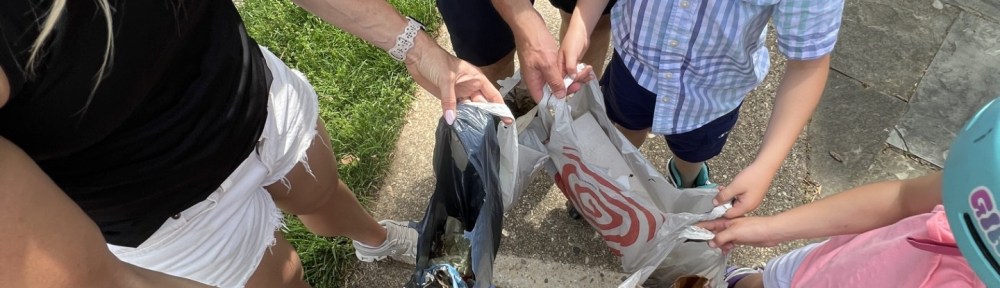
“Team Burns Trash Walks” are now a regular part of the family routine. The whole family sets out together on their usual routes through the neighborhood, sometimes deviating to higher-traffic streets with a higher trash yield. Each member of the family carries a plastic bag and hunts down scraps of litter like a lightly competitive game of “I Spy,” with extra cheers of victory for larger pieces of trash like a water bottle or chunk of styrofoam. The walks aren’t terribly long, but they have no problem filling up their bags, sometimes redistributing the trash if someone runs out of room. 

There are a few rules: they don’t touch cigarette butts, for example. The kids are careful of traffic, even when they spot a choice piece of trash just across the road. Navigating trash pick-up on wheels isn’t the easiest task, either, although the kids bounce up from each collection with limitless energy. And the task isn’t without its frustrations—the Burns were upset to actively witness littering in our neighborhood, and on Earth Day of all days! But the family keeps at it with good cheer and open hearts, folding their care for our community and the environment into their routines and core values. 

Not every family walk is a trash walk, but Team Burns is out cleaning up our streets more weeks than not. Sometimes the trash walk is a given; sometimes it’s specifically requested by one of the kids. After each walk, the Burns hold out their bags and survey their haul—bags full of good deeds and community care. It’s not their trash, but it IS their neighborhood—just like it’s all of ours. Micah recognized that at just six years old, and prompted a new family tradition to give back. Her example is an inspiration for all of us, the community, to take pride in our beautiful Lyon Park. Maybe this summer Team Burns won’t be the only team taking regular trash walks—I know you’ll see me out there!  

Join Us March 12th: Urban Forester will Discuss “Is Our Tree Canopy Growing?”

By Anne Bodine, VP of Development

Arlington covers approximately 26 square miles and the county’s Forestry and Natural Resources Plan (FNRP) calls for a total tree canopy of 40%.  Lyon Park covers about 300 acres, so a 40% goal gets us to 120 acres of canopy (think of it as how much area is covered by shade). But that’s not the whole story.

That Was Then.  Prior to 2024, we relied on data from four canopy surveys.  Three were done by the county (2008, 2011, 2016) and one was done in 2021 by the private company Green Infrastructure Center or GIC.   In the 2016 survey, the county noted that “Lyon Park, Yorktown, and Tara-Leeway Heights have seen the largest drops…of -11%, -8%, and -7% respectively.”  Below are the 3 most recent results for Lyon Park’s total canopy; if trends from these surveys continued, we’d have only 15% by 2031.  

201145%
201634%
202128%

This is Now.  Fast forward to 2023, when the County contracted a new survey and also reached back to incorporate existing surveys done by the U.S. Department of Agriculture for Virginia.  Arlington is now using only these studies (from 2014, 2018, and 2023) to document our canopy, and says they use more reliable measuring techniques (LIDAR which uses aerial imaging).  These studies show that Lyon Park’s canopy grew from 29% to 33% from 2014 to 2023, i.e. a net growth vs. net loss.  (NOTE:  This also contrasts with the GIC data above showing our canopy at 28% in 2023.)

To clear up any confusion, Arlington senior Urban Forester Vincent Verweij will be our featured speaker at our LPCA meeting on March 12, at 7:30 in Lyon Park Community Center.  You can also explore the new findings at https://geocortex.arlingtonva.us/Html5Viewer/index.html?viewer=ACMaps.HTML5#.  Add “trees” in dropdown box called “layers” and then enter “tree canopy change 2014-2023” to see the whole county.  You can also search for a specific address; it will show areas of loss in orange, areas with no change in dark green and areas with growth in light green.  Please join the discussion March 12, our trees are a key resource for the entire county! 

The Return of the American Chestnut Tree

By F. Gray Handley

If you visited Lyon Park about 450 years ago, before the Europeans arrived, you’d be in the middle of a majestic forest that sloped down to the Patawomeck River, the fourth largest along the East Coast.  That forest included giant oaks, maples and hickories—and it was dominated by massive chestnuts which were comparable to the redwoods of California.  These chestnuts, growing at the eastern edge of their range, were a keystone species providing nutritious food for animals and humans, building soil and helping create a remarkably diverse ecosystem.  They dominated and shaped the hills around Lyon Park itself, and you might have rested in the shade of a chestnut to drink fresh-flowing spring water near where our playground is today.  If you sat there quietly you might have been joined by forest bison, elk and wolves stopping by for a cautious sip.   

Of course, all that changed as European settlers moved in to clear fields, build houses and make roads out of native pathways to carry their farm products to ports along the river.  Many of these new settlements used the abundant chestnut, a durable hardwood resistant to rot and insects, for fences and buildings.  In a remarkably short time, the seemingly endless old growth forest was displaced by farms, towns and neighborhoods like ours.  Chestnuts were still welcomed and widely planted for their protective shelter, vigorous growth, high-quality wood and abundant delicious nuts.  Both in the countryside and in remaining mountain forests, the chestnut was still a predominant, critically important species.  

Then, early in the 20th Century, Chestnut Blight (a fatal fungal disease to which American Chestnuts have no resistance) arrived with the commercial import of Japanese Chestnuts.  Within 30 years nearly four billion American Chestnuts died in one of the largest and fastest species extinctions ever recorded.  This loss dramatically altered entire ecosystems.  But there was a glimmer of hope in that the blight did not completely kill the roots of some native chestnuts.  To this day, living stumps send up shoots, some of which survive for years.  In addition, remnant groves and individual trees have been found in pockets of its natural range and in other areas isolated from blight exposure.  Now, with the advancement of genetic technologies, blight resistant Japanese and Chinese Chestnut genes are being experimentally incorporated into the genome of American Chestnuts to increase their blight resistance.  This strategy and others being studied in universities and by the American Chestnut Foundation (TACF) offer hope that the American Chestnut may eventually return to our native forests.   

In 2020 and 2021, as part of Lyon Park’s centennial commemorations, members of our community worked with TACF to plant four American Chestnut saplings in our “urban forest” within Lyon Park—which, for the first time, returned the species to this part of its ancestral range while also enhancing our park with a remarkable native that vanished over a century ago.  These saplings, two of which have survived lawn mowers and other threats, are among the first hybrids made available for public planting by TACF.  Soon after our trees were planted, a small grove of their siblings was donated to the National Arboretum.  Over the next decade or so, with a bit of luck, these “returning” American Chestnuts will resist the blight to reach full maturity.  

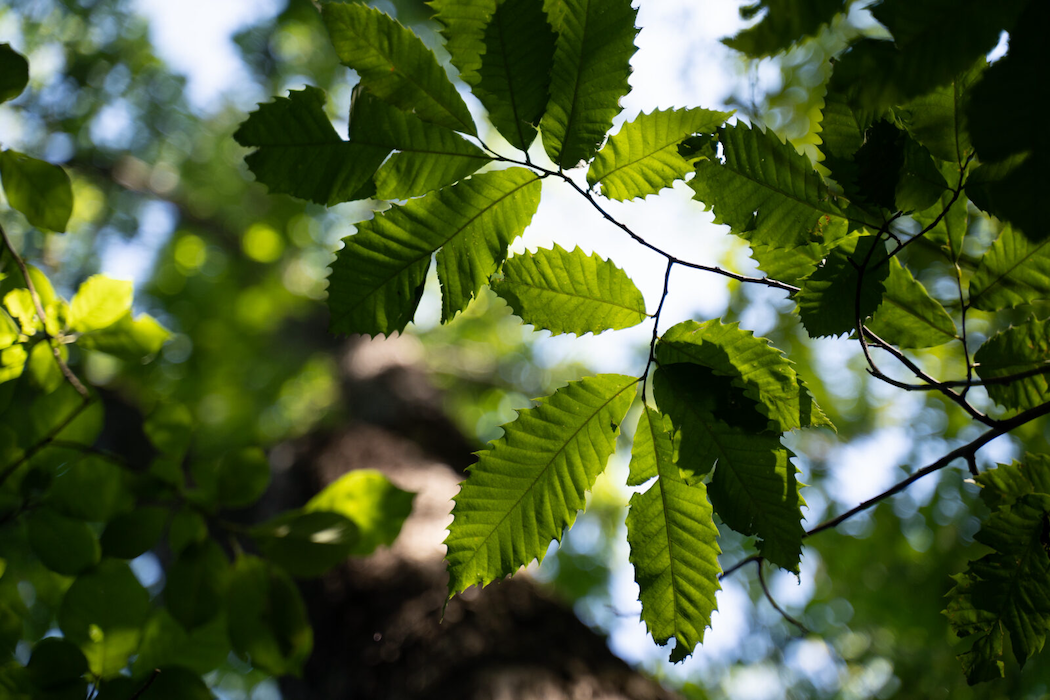
If you want to say hello to the Lyon Park Chestnuts, they are in the area of the park that is bounded by Fillmore and 4th – one is about 15 feet tall and the other, planted a year later, is two feet tall.  Most exciting, the older one produced nuts in 2023!  Our volunteer arborists hope to see more of this prickly output in 2024 and they may even try to sprout some for others to plant.  Please help us keep these very special trees healthy as our community makes a small but historic contribution to the return of the Patawomack Forest. 

New Stormwater Utility Fees Coming in 2024

By Kathleen McSweeney

Earlier this year, the Arlington County Board voted to implement a new Stormwater Utility Tax that will become effective in May 2024. The new tax is based on the amount of hard surfaces on a property such as buildings, roofs, driveways, and patios—anything that prevents water from seeping into the ground and creates runoff. The additional funds raised will pay for the maintenance of over 200 miles of sewer pipes, increases to system capacity, restoration projects, management of flood plains, and other
needed improvements. 

This new tax will replace the Sanitary District tax, which has been bundled within the County’s real estate taxes. The cost of this tax is $.017 for every $100 of assessed value. The new stormwater taxes will be listed separately on real estate tax bills after next May.

How can you tell what you may owe? The County used GIS-mapping to estimate that an average single-family home in Arlington has 2,400 square feet of impervious surface. This represents one ERU, or Equivalent Residential Unit, and there is a scaled system of billable units (see chart below) used to calculate the tax for each property. Initial estimates are that an ERU has a sample value of $230–250, though the rate will not be set until the County Board votes this Fall, and is dependent on the adopted budget.

Why is the County moving to this new tax structure? There have been additional demands on the stormwater system, and the County needs to raise additional revenue to pay for planned improvements, The shift to the Stormwater Utility tax is considered to be a fairer way to assess cost because it is based on the amount of impervious lot coverage, rather than a property’s value. The new fee is demand-based: the larger a property’s impervious surfaces, the more that property contributes to runoff and puts pressure on the system. There are some properties (places of worship, non-profits, and Federal buildings) that currently don’t pay the sanitary district tax. Those properties will likely be impacted by this new stormwater tax. 

The County acknowledges that property owners will be paying more under this tax structure, but there is a way owners can qualify for credits. Between November 1, 2023 and January 15, 2024, property owners are able to reduce the tax amount by making specific improvements to their properties in 2023 that reduce runoff. Additional information on the credit program, a (not-very-user-friendly) fee estimator by property, and FAQs may be found on the County’s Stormwater Utility Implementation page (go to https://www.arlingtonva.us and search for stormwater utility). 

Arlington at 15 MPH

By Aaron Schuetz

Arlington at 15 MPH

By Aaron Schuetz

I am a biker. My health and the planet’s health are two reasons I choose to cycle. And it isn’t just for my physical health. Psychologically, it is a great way to start my day by commuting to work. If the day goes poorly, I hop on my bike and not only get to work out the stress on the ride home, but I get an endorphin hit, fresh air in my lungs, and time to reflect and de-stress before I’m home.  

I want to share with you why it’s so awesome to be on a bike in this area—for commuting and recreation — and why you should do it, too! When we drive, we’re sealed inside a box with limited visibility, focused on quickly reaching our destination. When we walk, we’ve got full visibility, we experience the weather, and we can enjoy the beautiful houses, trees, and gardens of our neighborhoods but we cover less ground. Cycling is the sweet spot between these two. Instead of exploring a few new blocks while out walking, you can explore entire neighborhoods. You decide when to roll slowly, and when to push yourself on a climb. Those with electric assist get even more choices in how much they want to sweat.

During the pandemic, I rode 2/3 of all streets in Arlington, and 1/3 of all streets in DC. I found some ridiculous hills, very odd homes, amazing views, surprising history, and a great diversity of neighborhoods. Biking has helped me appreciate how wonderful it is to live in the DC area.

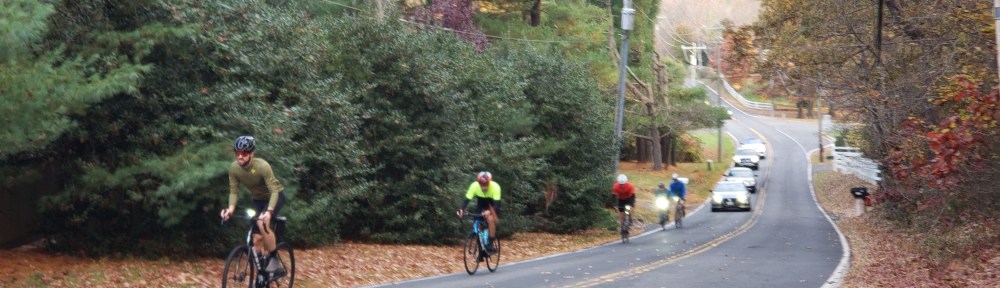
Though I love solo explorations, in the past year I’ve begun riding with some neighbors. This is not only fun but also motivating! It pushes us all to do more and explore more. We love riding in the hills of North Arlington and heading across the river for popular routes like MacArthur Blvd out to Great Falls, Rock Creek Park, Beach Drive, Sligo Creek and Anacostia Trail. We have biked the ever-popular Custis, Mt. Vernon, W&OD, C&O, and Capital Crescent trails. Beautiful tree-covered trails, iconic views, and robust exercise keep us pedaling through all four seasons.

Looking for support or inspiration? Arlington has some great resources.

Bike Arlington (bikearlington.com has some nice route suggestions and tools, including a “Bicycle Comfort Map” that helps you find routes appropriate for you and your family to get around Arlington.

The Washington Area Bicycle Association (waba.org) is a great education and advocacy group, and organizer of big rides. Many bike shops in the area organize group rides for various levels.

Capital Bikeshare is a great way to start. We have 3 stations in Lyon Park, and their e-bikes are really easy to use.

Our new bike shop, Vélocity Bike Co-op, on Pershing Drive can help get your bike back in shape, or help you find a new one.

I recently joined the county’s Bicycle Advisory Committee to encourage the county to make cycling safer and more accessible for residents, and because I would like to see more bike infrastructure in Arlington County. If you have suggestions or improvements you would like to see made, please reach out to me and I will submit them for discussion at a meeting. And if you want encouragement, ideas, or are interested in joining me for a weekend ride, email me at ajschuetz@yahoo.com. You can also follow me on Strava.

I hope to see more neighbors biking around the community on these beautiful fall days. And if you drive, thanks for sharing the road! Cycle on! 

Increasing Tree Resiliency

By Elaine Simmons

The sudden storm that walloped Arlington in late July will not soon be forgotten. Violent downbursts felled some of our most magnificent trees, many of which were oaks that came up by the root ball. This may leave some people wary of trees, but the benefits of large, healthy trees far outweigh the risks. Trees mitigate flooding, hold onto soil to reduce erosion, lower our utility bills, improve air quality—and of course are aesthetically pleasing. With the right trees properly planted and cared for, we can enjoy them more and worry about them less.

Our Extension Agent, Kirsten Ann Conrad, provided expert advice on increasing trees’ resiliency to storms. Trees should be under the regular care of a certified arborist, who will look for weak or damaged limbs and ensure proper, regular pruning. You should avoid construction and other soil-compacting actions near the roots and keep mowers and trimmers away from the tree.

Trees with deep, wide spreading root systems are less likely to blow over, so don’t plant a shade tree in an area confined by structures or pavement. In smaller areas, plant smaller native trees such as fringe tree, dogwood, American holly, and redbud. Trees planted in groups, rather than as single specimens, are more likely to weather high winds. Consider planting new trees in a grove, with several different types of trees grouped together. If you have existing single trees, plant additional trees and shrubs close by and mulch the entire area to create a landscape bed.

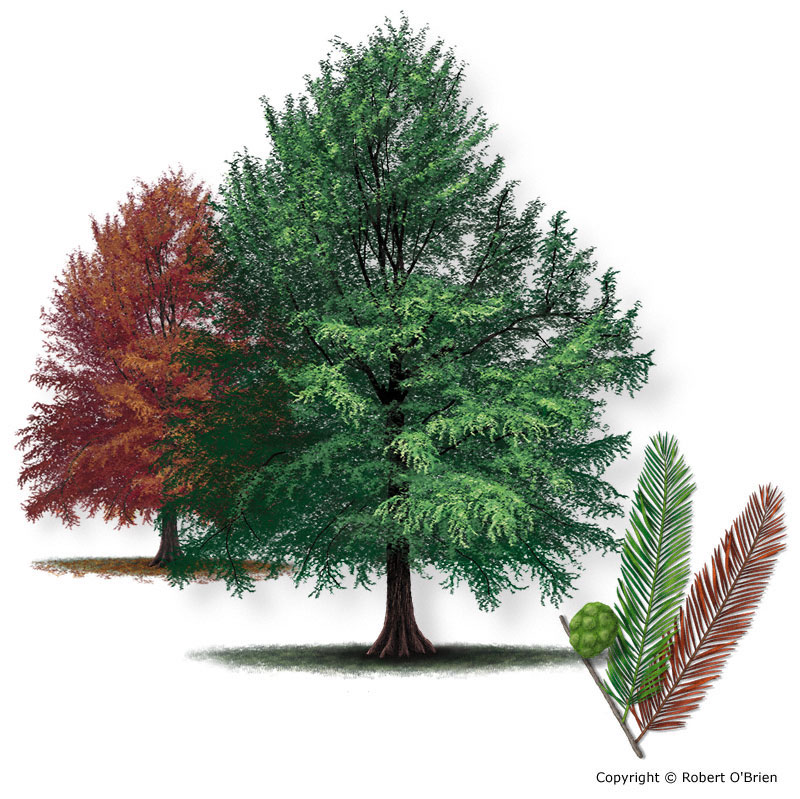
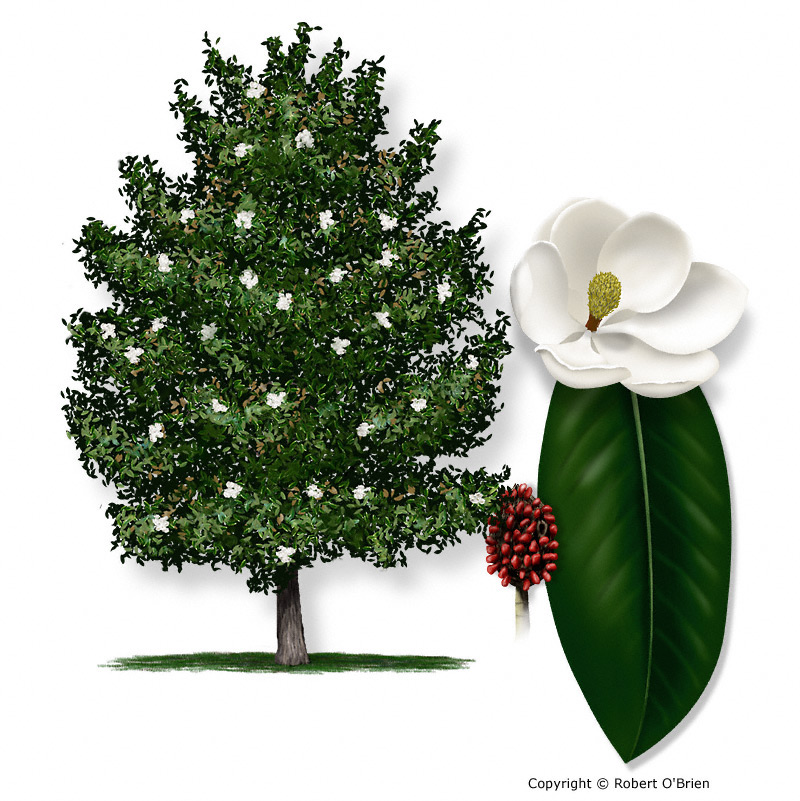
Some shade tree species are better able to withstand strong winds than others. Trees that are best at surviving hurricanes in southern states include southern magnolia and bald cypress.  Other large maturing trees that prove moderately to highly wind-resistant are hickory, persimmon, shumard oak, river birch, and black gum, also known as tupelo. All these species thrive here, but consult Lyon Park tree stewards for the best trees for your yard.

I love all these trees but if I had room for one more, I would plant an oak because oaks support more life-forms than any other North American tree genus and we desperately need to save native habitat in our neighborhood.

Laundry and Dishwasher Pods: Popular but Polluting

By Elaine Simmons

Laundry and dishwasher pods have quickly become consumer favorites. People love the convenience of the pre-measured packets for the dishwasher or washer. I used them for about a year until I realized that the laundry pods’ film wrapping—the part that supposedly dissolves—is made of polyvinyl alcohol (PVA), a plastic that several sources said is not fully biodegradable. 

One study showed that over 75% of intact plastic particles from laundry and dishwasher pods can be released into oceans, rivers, canals, and soil. In wastewater, this plastic film has the potential to absorb dangerous chemicals or contaminants, antibiotics, or heavy metals at high concentrations and then work their way up the food chain. 

Be aware that companies that make PVA pods often tout their environmental credentials, such as using plastic-free containers and avoiding harsh chemicals. There is debate over whether PVA completely dissolves under normal water treatment conditions but, as a layperson, I think the “no” side had a stronger argument. 

Thus, I stopped using pods and hope others will do the same. So now I only use tablets or powder. Blueland makes both laundry and dishwasher tablets with no PVA wrapper and I am happy with their products. There are other good options. According to the website Sustainable Jungle (www.sustainablejungle.com), the following brands are totally plastic-free, in terms of the container and the lack of PVA: etee, Bestowed Essentials, Ethique, Meliora, Dr. Bonners, Zero Co., and Dirty Labs.

Why Less Lawn is Better

By Elaine Simmons

Maintaining a thick, green lawn is a potent symbol of the American dream, but these lawns are an environmental wasteland, polluting ecosystems and producing greenhouse gasses.

Grass fertilizers, which typically contain large concentrations of nitrogen and phosphorous, release compounds like nitrous oxide, a greenhouse gas almost 300 times more potent than CO2. Fertilizers also wash off lawns, into storm sewers, and eventually flow into the Chesapeake Bay, where they poison animals and create algal blooms that result in oxygen free “dead zones.” Weed killing herbicides often contain toxic chemicals that have been linked with cancer; these chemicals also run off into our waterways. Another major polluter is the gas-powered mower, which the EPA says produces 11 times the CO2 emissions of an average new car in a given span of time. 

Consider removing at least some of your lawn and, ideally, planting native plants that support butterflies, bees, and birds. You can expand your plant beds yourself or hire a landscaper to do more extensive work. I have done both. To expand my plant beds, I covered the grass with overlapping sheets of newspaper (roughly 4–5 sheets thick) topped with 2–3 inches of compost and leaf mulch. The process is quite easy and within 2–3 months the grass was gone. Alternatively, a landscaper can skim off the grass with a shovel. It took 2 guys about 30 minutes to remove what was left of my front yard turf. 

For determining what to plant instead of grass, consult the NovaRegion website. Avoid English ivy, vinca (periwinkle) and pachysandra, which are invasive and will crowd out native species. English ivy is the worst because it kills trees.

Grass-free lawns can be beautiful, as with this property in Lyon Park. Besides esthetics, the benefits are many!


A Solid Idea

By Heidi Ananthakrishnan

Some years ago, while traveling for work, I became conscious of the enormous amount of plastic travel sized bath product bottles prevalent in the travel industry. I remember being intrigued upon seeing an online reference to “bar shampoo,” a solid form of shampoo that looks like a bar of soap. Because it offered a solution to the plastic problem, I decided to venture into the world of bar products.

I have tried a few brands—Ethique and J.R. Liggett’s—and could hardly believe I hadn’t done it earlier. They were just as luxurious as liquid shampoos, and the packaging was nothing but a minimal paper wrap. And because they are in a concentrated form, they last longer than liquid products. This makes their use a simple way to reduce environmental impact, considering the emissions of trucks and ships that transport thousands of bottles of products made mostly of water. As a bonus, bar products don’t require the chemical preservatives that some liquid products need to prevent contamination. 
I used to think recycling bath product bottles was the best I could do but making and breaking down plastic expends energy. Completely eliminating the need for plastics is even better. And why stop with shampoo? My foray into bar shampoo has extended to concentrated bar conditioner and cleaning solutions (just add hot water), shaving bars for my husband, melting detergent sheets,
and solid toothpaste bits. And of course, I never stopped using good old bar soap. Who knew that humble bar soap, the original cleaning product, would become the inspiration for so many clever and environmentally friendly bath products?