Know the Basic Rules of Recycling

By Elaine Simmons

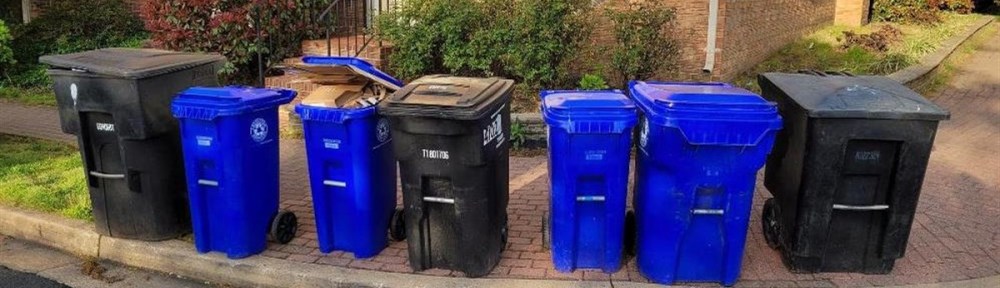
If you stroll around the neighborhood on collection day, you will unfortunately see many blue recycling bins filled with items that will not be recycled. A major problem is that people put plastic bags full of plastic or metal containers directly in the bin. The County has made clear that any item in a plastic bag will be treated as trash. So if you collect your plastic and metal containers in a plastic bag, remove these items from the bag on collection day and place the items directly in your blue recycling bin. Then put the plastic bag in your trash can or reuse it as a trash bag. Never put plastic bags of any kind in your blue recycle bin.

This rule also applies to the County’s impressive new composting program, where you can place any food item in your green yard waste bin and it will be “cooked” and turned into loam. You can use the light green compostable bags to collect food waste or you can put food items directly in the bin. You can also collect food waste in a paper bag. Compostable bags and paper bags can go in your yard waste bin. Do not put plastic bags of any kind in your yard waste bin. You can buy compostable bags on-line or at the nearby MOM’s Organic Market on Lee Highway.

Finally, if you rake more leaves than your yard waste bin can hold, put the leaves in paper yard waste bags. This way the leaves will be turned into mulch. Do not collect leaves in plastic bags. The County provides free paper yard waste bags at various locations such as Thomas Jefferson Middle School. Home Depot and COSTCO sell paper yard waste bags.

The theme: limit use of plastic bags to collecting garbage. Environmentally speaking, the fewer plastic bags you use, the better.

A Community Conversation

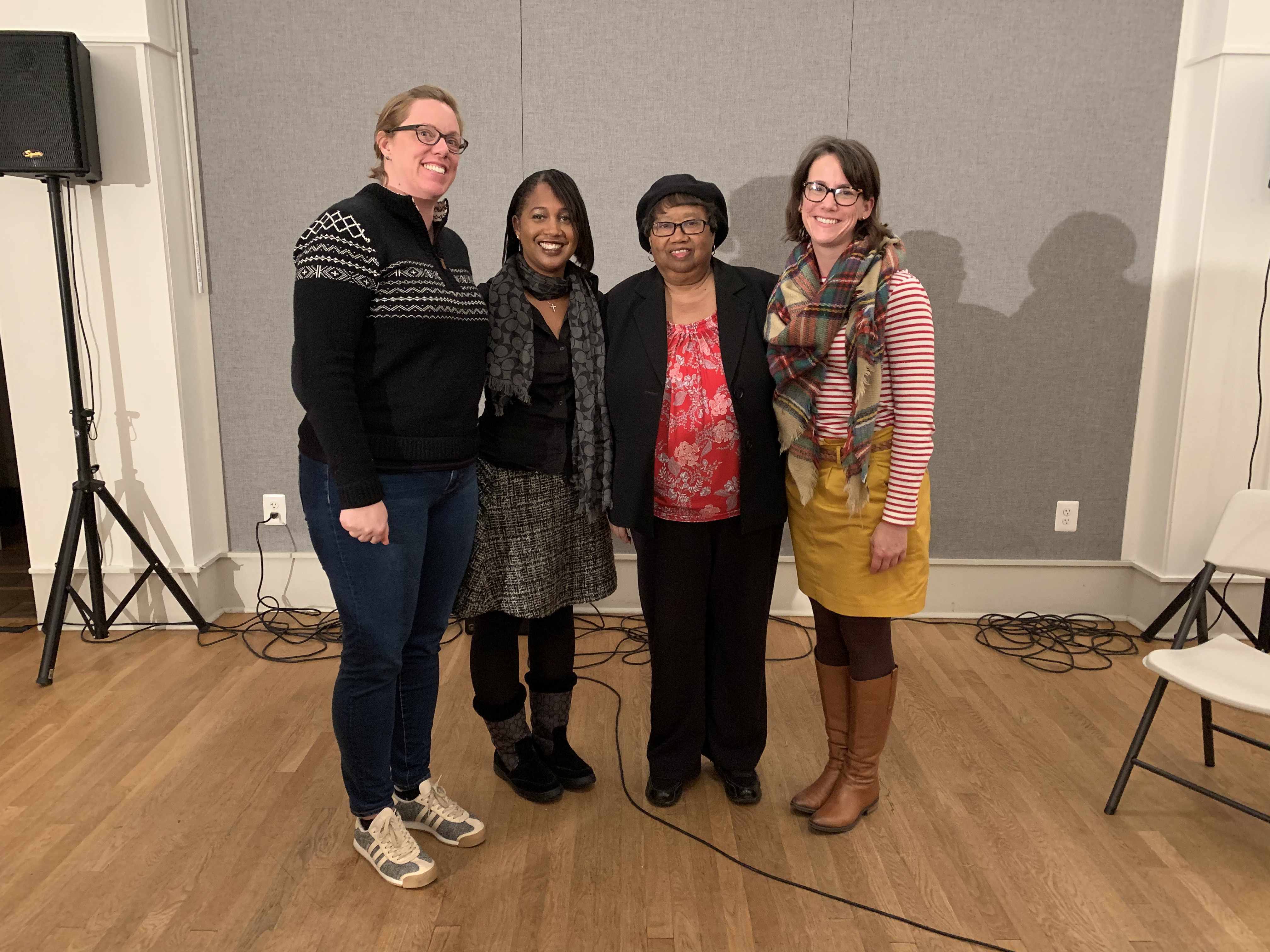
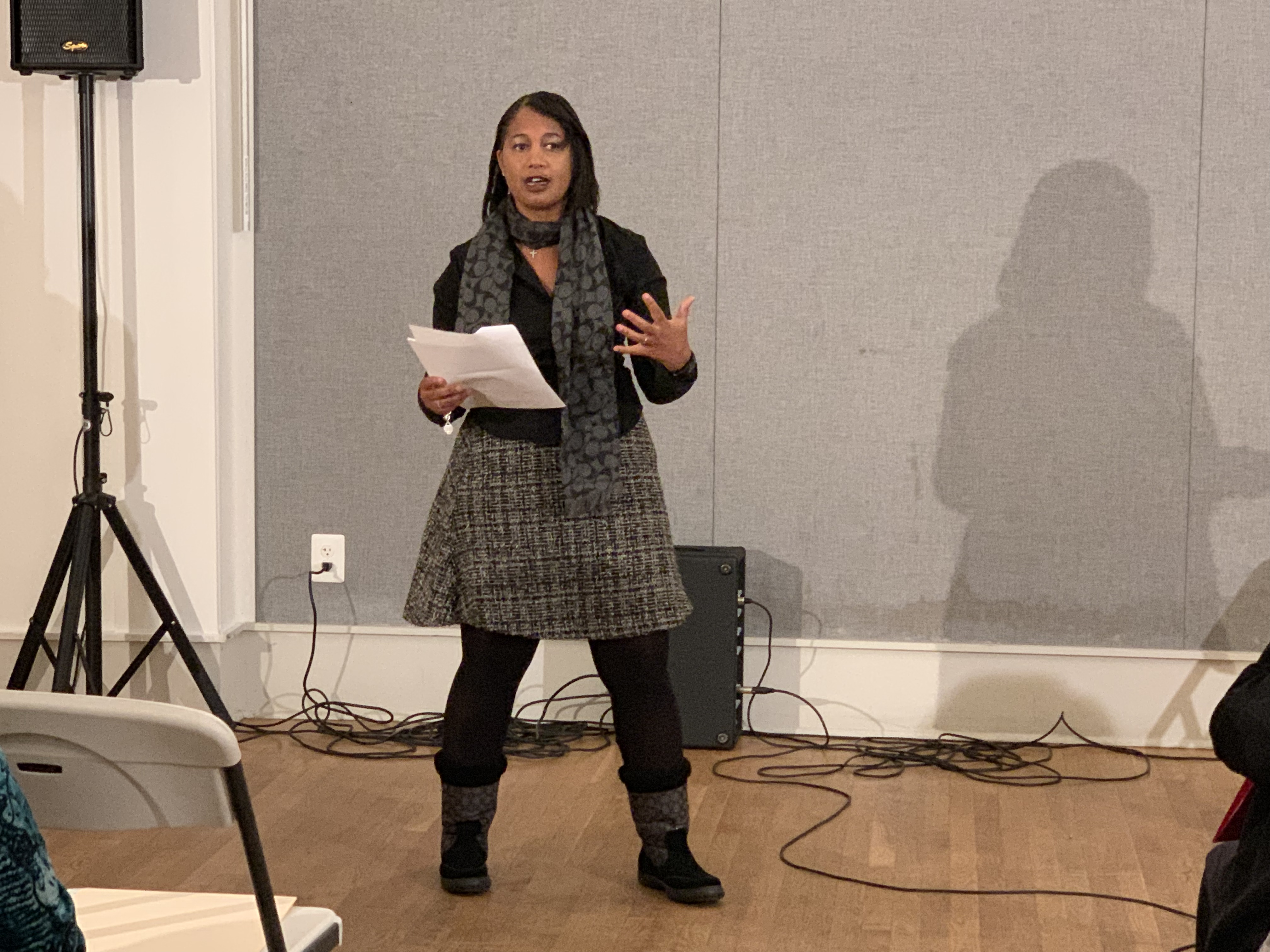
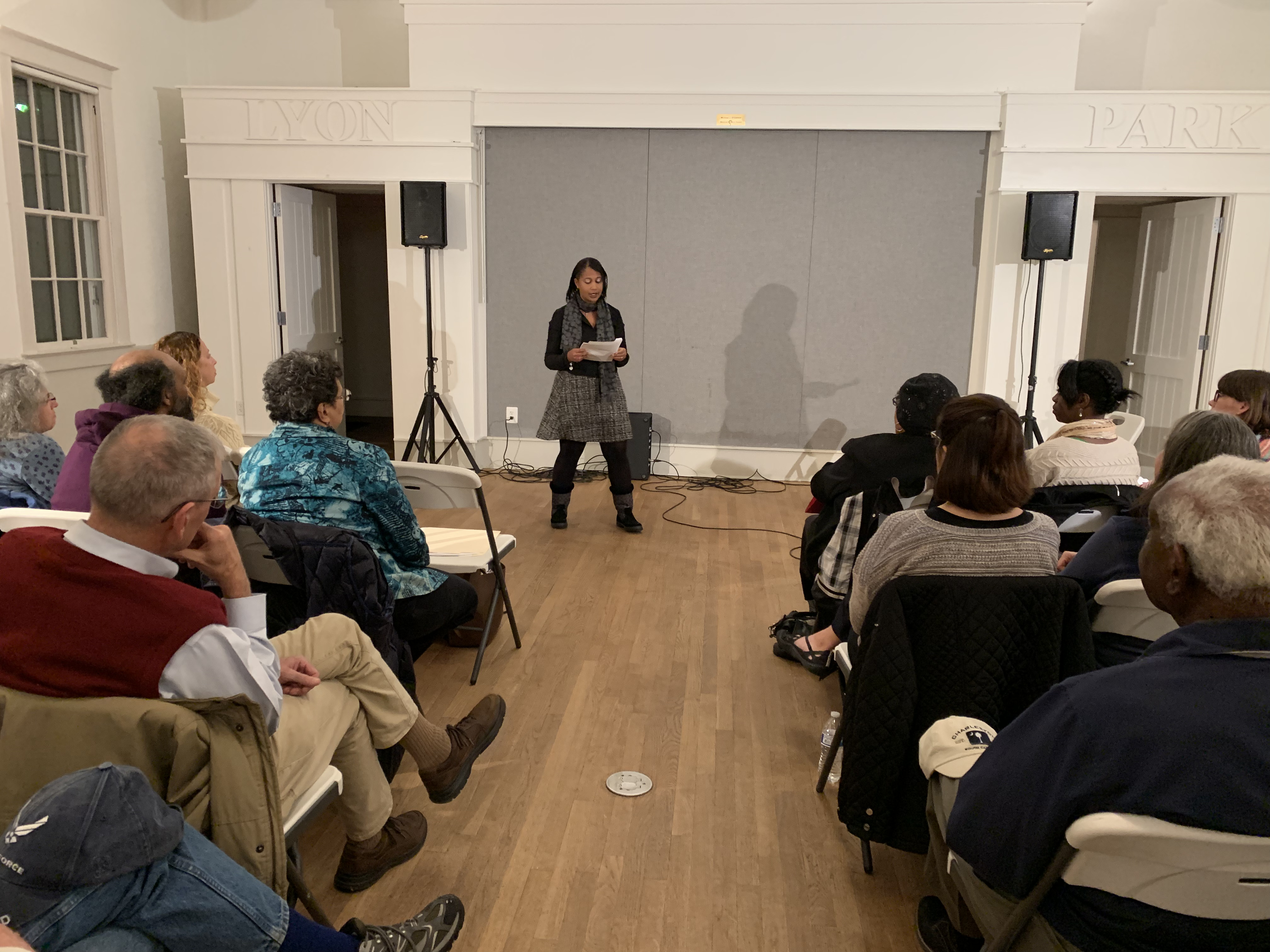
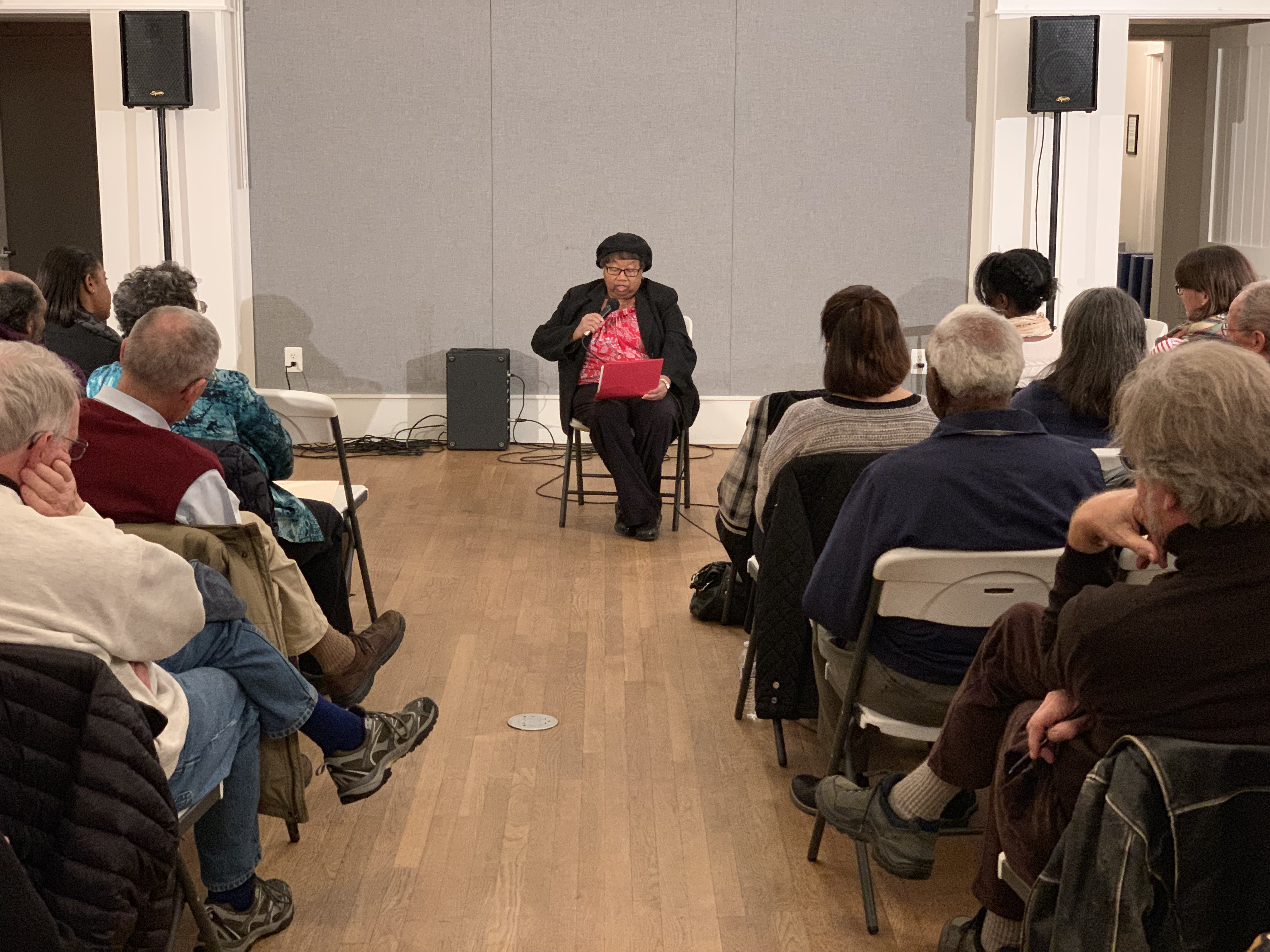
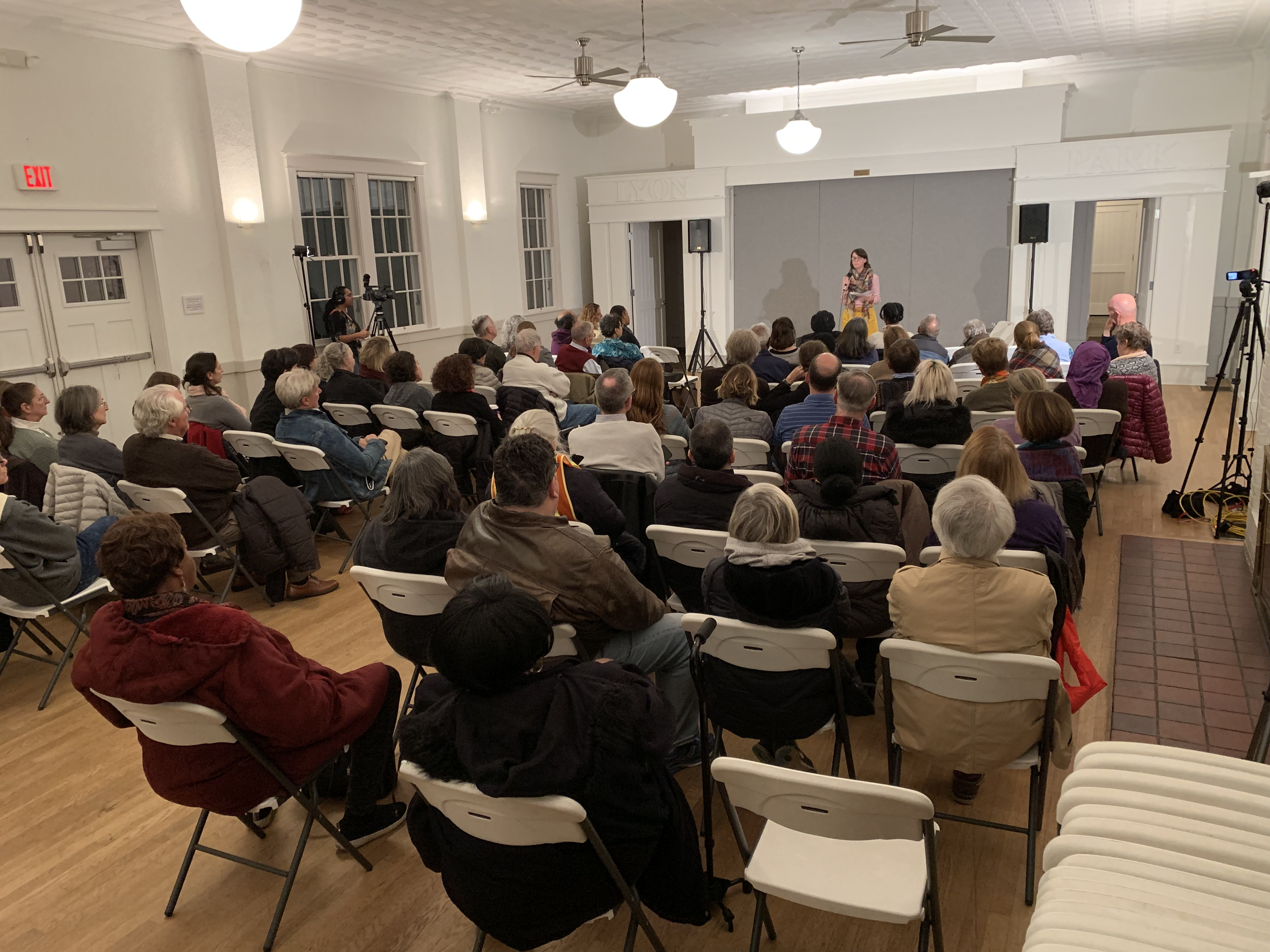
On November 13th our community came together for an evening of history and storytelling that explored the racial covenants that were part of many Lyon Park land deeds when the neighborhood was founded one hundred years ago. Although the language varied, many of the deeds in Lyon Park (as well as other neighborhoods in Arlington) contained covenants prohibiting sale to people who were “not Caucasian”. We heard from Dr. Lindsey Bestsbreurtje, a curatorial assistant at the National Museum of African American History and Culture and author of the dissertation, “Built by the people themselves- African American community development in Arlington, Virginia, from the Civil War through Civil Rights.” She provided context of the political climate in Arlington, who Frank Lyon was, and described African American communities in Arlington at the time of Lyon Park’s founding. Veronica Dabney shared the story of how racial covenants affected her community. She was raised in Green Valley at a time when her family and neighbors would have been barred from buying a home in many neighborhoods in Arlington. In 1969, the year after the Fair Housing Act of 1968 outlawed racial covenants, Veronica purchased a home just beyond the fence that separated Green Valley from the rest of Arlington. Finally, we heard from Dr. Bev-Freda Jackson, an Adjunct Professorial Lecturer at American University’s School of Public Affairs; Department of Justice, Law and Criminology. She provided information about how historic patterns of discrimination are highly correlated with contemporary aspects of discriminatory practices, affecting the way that we live today.

Zitkala-Ša Ribbon Cutting Ceremony

On a cool and breezy Saturday morning, members of the County Board, the County Manager, County Parks staff, and Lyon Park neighbors gathered at Zitkala-Ša Park to celebrate its opening.

The October 23rd event was made all the more special with the attendance of three of Zitkala-Ša’s descendants who flew in to attend the ceremony. Holly Bonnin Ogle, great-granddaughter of Zitkala-Ša and two of Holly’s children, Elizabeth and Justin, attended the opening ceremony. Arlington’s poet laureate, Holly Karapetkova, wrote a poem entitled Vanishings for this event. A framed copy of the poem was presented to the family by Thora Colot on behalf of the County and our civic association.

After the celebration at the park, Gary and Kit Putnam, who live in Zitkala-Ša’s old house, provided the family with a tour of the home and hosted them for lunch. Special thanks to the neighboring Wu family for providing cupcakes at the ribbon cutting – it was a welcome and tasty surprise!

Neighbor Profile:  Doorways for Women and Families

Community members who were concerned that there was no safe space in Arlington for families in crisis founded Doorways in 1978. The organization aims to address the interconnectedness among the cycles of sexual assault, domestic violence, and homelessness, and help survivors avoid having to choose between staying with abusers or facing homelessness.

What began as a single shelter to support families in crisis has since grown into a wide range of programs and pathways for people of all ages and genders. Doorways envisions a community where all people live free from violence and have safe and stable housing. Every year, the organization provides shelter and housing for more than 200 people and helps them achieve safety and stability. Doorways also supports hundreds more adults, youth, and children through their 24-hour domestic and sexual violence hotline ([703] 237-0881), mobile advocacy services, court advocacy, hospital accompaniment, individual and group counseling, and prevention programming.

  • 94% of Doorways Safehouse households did not return to abusive living situations.
  • 74% of family home households obtained permanent housing post-shelter.
  • 99% of children with social-emotional issues received services and counseling.

Services like these have been essential throughout the COVID pandemic, with many families experiencing financial and emotional strain, loss of employment, and eviction. The Doorways Family Home team in our neighborhood has supported families throughout this period to ensure that members of our community receive shelter, housing, and comprehensive support.

Doorways is a non-profit organization supported by donations from neighbors (including United Way and Combined Campaigns), matching corporate gifts, gifts, and in-kind giving. To learn more about Doorways, including ways to volunteer and help, visit www.doorwaysva.org

Development Update

by Aaron Schuetz

Arlington County has changed rapidly over the past few decades, but with Amazon coming, change seems to have accelerated. Many of us who have been here for more than a decade find things have changed in both good ways, and bad. Gone are many of the modest neighborhood homes built for the federal workforce. Gone are many small commercial buildings with surface parking lots. As we continue to urbanize and up-build, we have gained a lot and have welcomed many more people into our community. But we’ve also lost a lot. We might be losing the sense of community that has been so important to many who choose to live in Lyon Park. Striking a balance and deciding when to ride the wave, and when to push back against it, can be challenging.

When I first became involved with the LPCA and Development issues, the 2201 Pershing project was just beginning. Concern about how development would change our community and ensuring it would be an asset was foremost. A decade later, what do you think? Do you like it? Do you pine for what used to be there? Do you wish there was even more? Well, more is coming. Just across Pershing Drive, the Days Inn site is being prepared for redevelopment. The County just approved changes to the General Land Use Plan, paving the way for a similarly large development. These two developments will define a “Gateway” into our neighborhood. While a decade ago, the 2201 building was deemed by many to be “too large” for being so far from the metro, Arlington staff now considers an even larger building to be OK. At the same time, even more effort is being put into how that building’s “massing” is arranged on the site—both in how it relates to the neighboring houses and apartments, and also in how it “feels” for pedestrians walking the street. We’ve invited the owner/developer to come to our January LPCA meeting to present their plan for this site. Our engagement can help them design something that is a neighborhood asset. We can’t ask them for a community swimming pool, but we can make suggestions and raise our concerns about traffic, retail, open space, and affordable housing. I hope you can make that meeting.

Just outside our neighborhood, there’s lots more happening. Most important for us, the Silver Diner/Joyce Motors block will be redeveloped with a hotel on the point closest to the metro, and two residential buildings that border 10th Street. While the block involves two separate developers, they are working together on certain aspects (like a single underground parking structure). The largest issue for our neighborhood is how it affects Ashton Heights. While the development is on the far side of 10th street from Ashton Heights, the County seems to be softening about some height tapering issues, meaning the building could “tower over” 10th street. That would be in stark contrast to Ashton Heights’s single-family dwellings (although some commercial sites border 10th with residential set back). I’ve been working with other Civic Associations to push back on the County’s decisions like these, because later, developers will use them as a precedent for developments that are in our neighborhood.

In addition, Arlington is considering updates to the Clarendon Sector Plan. This plan (now 15 years old) created the overall vision for Clarendon’s redevelopment. It has helped guide the area’s growth and success, even if many of us miss the old Clarendon and feel “too old” to hang there now. The Sector Plan includes the sites I mentioned, and nearby sites (St. Charles Church, the Fire Station, and the Wells Fargo bank site) that will soon be redeveloped. While some people believe parts of the plan need tweaking (like incorporating Arlington’s Vision Zero plan for making streets safe for everyone, not just cars and trucks), others are unhappy that County staff seem to be undermining parts of the plan. My biggest concern is that the fire station block, which was once designated as a future park space, will likely not become a park. In Rosslyn, the great new fire station is integrated into a new development, which freed up county land. The Arlington Fire Department seems not to be interested in pursuing a similar solution in Clarendon, preferring to rebuild the station on the current site.

Environmentally Safe Ways to Control Mosquitoes

By Elaine Simmons

With hot, humid weather comes a plague of mosquitos. We can take steps to reduce mosquito populations without harming “good” critters like bees and butterflies.

  1. Eliminate standing water. Unfortunately, mosquito larvae can live in as little as one teaspoon of water. Black, ribbed, flexible downspout extenders hold water and are thus a prime culprit, even if they are sloped downhill. Blocked gutters are also a major problem, as are tarps (like on pools or cars), toys, bird baths, trash and recycling bins, watering cans and wheelbarrows, and pots and saucers. Check and empty these sources every two to three days.
  2. Treat your rain barrel. Rain barrels are great for saving on water, but they are major mosquito breeding grounds. To avoid this, buy mosquito “donuts” or dunks, which last for months, or add ¼ cup of any type of cooking oil to your barrel per week, or secure fine mesh netting to the top with bungee cord.
  3. Avoid mosquito spraying that harms other bugs. Many companies claim that their insecticide treatments for your yard only harm mosquitoes, but critics disagree, saying that chemicals typically used to cause paralysis and death in mosquitoes (pyrethrins or pyrethroids) kill monarch caterpillars (even weeks after spraying), bees, and fireflies. These chemicals can also kill arthropods, such as spiders and centipedes. Losing these critters means reducing a food source for some birds. Finally, critics claim these insecticides are toxic to certain earthworms.
  4. Try natural sprays to repel mosquitoes in your yard. Alternatives to insecticides are products such as Garlic Barrier, with its considerable amount of natural sulfur providing a repellent. According to reviews, Garlic Barrier smells extremely strong for 30-60 minutes but then the smell goes away; the repellent lasts several weeks.
  5. To avoid being bit while outside, cover up and spray yourself with mosquito repellent. The EPA has approved DEET; it’s been around for decades and breaks down quickly, so does not harm the environment. Alternatives to DEET include plant-based products that contain oil of lemon eucalyptus (OLE).
  6. Finally, use a fan at your outdoor gathering. The fan disperses the carbon dioxide you exhale, so fewer mosquitoes are attracted to you in the first place. Also, mosquitoes are weak fliers and can’t compete with the “wind” from the fan.

An Evening with Wilma Jones, Author of My Halls Hill Family: More Than a Neighborhood

On Thursday, May 13, join Lyon Park, Glen Carlyn, and Ashton Heights Citizens’ Associations for an evening with Wilma Jones, a fourth-generation resident of Arlington’s Halls Hill neighborhood and author of My Halls Hill Family: More Than a Neighborhood. Wilma will share stories of growing up in the historically-Black neighborhood of Halls Hill.

Halls Hill was a segregated Black neighborhood that got its start in the mid-1800’s when 327 acres of land was purchased by Basil Hall for a plantation. Following the Civil War, the neighborhood became completely African American, with a population of residents that were descendants of slaves. It was later walled off and fenced in by developers with the permission of Arlington County Government from the early 1900’s until the 1960’s. Wilma’s family has called Halls Hill home for four generations. Her brother, Michael Jones, was one of four 12-year-old Black students to integrate public schools in Virginia in 1959. My Halls Hill Family tells the history of the neighborhood from its inception in 1866, until the County government, in a display of institutional racism common for the time, closed their neighborhood school in 1966.

Wilma is a top performing corporate information technology sales director during the day and is president of her own management consulting firm, Wilma J, LLC where she works with organizations to support development of a healthy and engaged staff. She is also a popular keynote speaker and workshop leader. Wilma is an author of three books, a grant consultant, civic activist, and nonprofit board member. In her volunteer activity she works with organizations supporting underserved communities to impact positive change.

The program, which is part of Lyon Park’s Dialogues on Race and Equity program, will take place on Thursday, May 13, from 7:30 to 9:00 pm.  Ms. Jones will speak for about 45 minutes and answer participants’ questions for the balance of the time.

Any resident of the partnering neighborhoods who wants to take part must register in advance.  A confirmation email along with the Zoom link will be sent immediately afterward.

Those who wish to read Wilma Jones’ book before the program can order it (available in Kindle and paperback editions) at https://amzn.to/3d6Trsr.  (There are also four copies in the Arlington County Library – and several people on the waiting list.)

Civil Rights Icon from Arlington

By Elaine Simmons

It took a visit to the Civil Rights Museum in Greensboro, NC to learn about a hometown hero. Joan Trumpauer Mulholland, a civil rights activist and a Freedom Rider, attended Nottingham Elementary and spent much of her adult life in the Barcraft neighborhood. 

Joan Trumpauer’s mother was a segregationist from Georgia who sent Joan to Duke University, which, in 1960, was segregated and seeped in southern culture. But early on Joan rebelled against white supremacy. She joined the lunch counter sit-ins in 1961 (first started in 1960 in the Greensboro Woolworth by four Black men from North Carolina A&T University) and then dropped out of Duke after being pressured to stop her activism. She was the first white woman to enroll at Tougaloo College, a historically black college in Mississippi, graduating in 1964. 

Joan returned to this area and worked with activists like Stokely Carmichael on the Freedom Rides, in which Black and white activists traveled together to challenge the segregated buses and bus stations of the South. She also participated in the 1965 Selma to Montgomery march. 

To end segregation in Arlington, Joan joined Howard University students in trying to integrate the lunch counter of the Drug Fair drugstore in Cherrydale, at Peoples Drug at the corner of Lee Highway and Old Dominion Drive, and at a Woolworth’s in Shirlington. 

Joan and her fellow protestors faced violent white mobs and incarceration for their peaceful efforts to end systemic racism. An iconic photograph shows enraged whites reacting to Joan and other protesters (including one of Joan’s professors from Tougaloo) while the protestors sat calmly at a lunch counter. According to one account, the protesters were “doused in food, cut with broken glass, hit with brass knuckles, and burned with cigarettes. The police stood by while men were kicked and punched, and women were yanked from the counter by their hair.” 

In connection with the Freedom Riders, Joan and others were arrested and incarcerated for two months in cells previously occupied by Death Row inmates at the notorious Parchman Farm at the Mississippi State Penitentiary. In Arlington, she and fellow protestors were shot at by angry mobs and were counterpicketed by local Nazis wearing swastikas. She and her fellow protestors were hunted by the Ku Klux Klan and at one point, Joan was deemed mentally ill for trying to eliminate white supremacy. Joan eventually worked and raised five sons on Taylor Street in the Barcroft area. She has been the subject of many documentaries and articles, but perhaps this local hero deserves more recognition from the governments of Arlington County and the Commonwealth.