Nearly all our residents participate in recycling, but many blue recycle bins contain items that don’t belong there. Plastic bags are a major no-no, since they get tangled in recycling machinery. Anything in plastic bags is discarded as trash. Here is a list of items that should not go in your blue recycle bin:
Does Not Belong in Blue Recycle Bin
Where Can it Go?
Plastic bags, bubble wrap
Select grocery stores* take clean, dry plastic bags or put in trash
Glass of any kind
Put in the big metal bin at the Quincy Recycling Dropoff on Washington Blvd, near W&L High School, or put in trash
Plastic less than 4 inches
Goes in the trash
Disposable drinking, coffee, and condiment plastic cups/tops and plastic plates
Goes in the trash
Styrofoam
For the highly motivated recycler, EPS Recycling in Crofton MD takes Styrofoam. Google them for more info. They do not accept packing peanuts
Styrofoam packing peanuts
Parcel Plus in the Lee Harrison shopping center accepts packing peanuts for reuse. Other packaging/mailing stores may also
Food and food tainted paper products
Put all food and food tainted paper in your beige, countertop compost bin; transfer to your green yard waste bin for pickup
Wire hangers
Drop off at select dry cleaners** if in good shape for reuse or put in the trash
Shredded paper
Goes in the trash
Plastic eating utensils (e.g., forks)
Drop clean utensils at The Lamb Center for the homeless in Fairfax City for reuse or put in put the trash
Several months ago, after a lively discussion at an LPCA meeting, the association’s co-presidents encouraged a group of Lyon Park tree lovers to form the Lyon Park Tree Group to explore how to save or boost our precious tree canopy.
Our Canopy is Shrinking! Lyon Park lost 11% of its canopy from 2011-2016, the highest percentage of any large civic association in Arlington. The canopy reduction from 2000-2016 was a worrisome 23%. Here are additional key facts that drive the mission of our group:
Lyon Park Area and Tree Canopy
Total land area
30 acres
Potential tree canopy cover
59%
Actual tree canopy cover
34%
Land area that could be covered with canopy but currently is not
25%
Based on 2017 county data
Trees are vital to human and planetary health, and we need more, not less of them. Trees cool and raise the value of our homes, they absorb stormwater and pollutants, they control erosion, sequester carbon, offer stress relief/shade, and provide habitat for birds and other animals. Despite these crucial qualities, we are well below the landscape space that could be planted with trees. As the table above indicates, 25% of the land in Lyon Park could be covered with canopy but is not.
To increase our canopy, the Lyon Park Tree Group has taken the following actions:
Begun identifying lots where we will approach owners to ask if they would like to receive one of the free trees available through Arlington’s Tree Canopy Fund;
Met with two Alexandria women who increased the canopy in their neighborhood by almost 300 trees via outreach to neighbors. We hope to launch a similar effort in mid-September;
Coordinated with the Virginia Department of Transportation and Arlington’s Urban Forestry Office to green a section of Route 50 near Cambridge Courts with 129 new trees;
Created an interactive map of the trees in Lyon Park, showing approximate age and species/genus. We were helped by group member and Lyon Park tree steward Bill Anhut. We drew on a 100-year-old map showing the full scope of waterways – part of the Long Branch of the Potomac River – that transected the park back in the day.
But the volunteer Tree Group can’t do this alone. Community involvement is key to restoring canopy. You can get new trees for free for your property through the Tree Canopy Fund, you can help get more trees planted on other properties, or you can volunteer to save trees via activities such as cutting invasives. Email Lyonparkeditor@gmail.com if interested. Read the Arlington County Tree Canopy Report.
This is not about billionaires’ vanity projects in space, it is about the process of getting solar panels on our roof and dropping our electric bill to zero. Arlington County has, on average, 201 sunny days per year. Why let that sun go to waste? Why not use it to save money and reduce your carbon footprint?
Our solar experience began when my spouse saw a sign in a neighbor’s yard with the name of the company that had installed their panels. I chatted with the neighbor and then contacted the company.
To my initial irritation, the rep wanted our home address before we could set up an appointment. However, in our first Zoom call with the company, they produced an image of our home’s roof, showed the exact panel design, predicted the impact of the growth of our trees on energy production, and determined the exact cost–all in the first meeting! We signed a contract in February, and the system was installed in May – a 10kW system with 25 panels.
The Feds still allow a 26% tax credit for solar systems, so comparing the cost of the system (minus the credit) to our annual electric bill allowed us to calculate how many years it would take to “pay off” the upfront cost of the panels. There are two ways your personal electrical production can save you money:
You will remain connected to your power company, but your electric meter will be changed to a “net meter.” If your panels produce less electricity than you use, you will still draw (and pay for) power from the grid. If you produce more power than you use, the net meter puts it into the grid and your next bill will be reduced by the value of that electricity. In other words, you won’t get cash for over-producing, but you will get credit.
You will be invited to sign a contract related to Solar Renewable Energy Credits (SRECs). SRECs help utilities meet state regulations that require a certain percentage of electricity be produced from renewable sources. Power companies buy and sell them, and SRECs allow you to sell credits for the energy you produce.
Our system is easy to monitor with a cell phone application. Despite what my wife says, I do NOT check our energy production rates every day. Well, maybe sometimes.
Be aware that several considerations will affect the financial impact of a solar system. First, since the panels have a guaranteed 25-year life, our company required a roof inspection before installation to make sure the solar panels won’t outlast the roof. Second, our house was built in 1920, and our electrical panel required an upgrade to accommodate the solar panels ($1800). Finally, we added an electric vehicle charger to the system ($2200) so the sun can power our future car as well.
You can explore savings on your own by going to this website: https://www.novasolarmap.com/. Simply enter your home address and a map will show an image of your neighborhood, your roof, an estimate of annual savings on your electric bill and the reduction in your carbon footprint. I hope you will check out the website and consider how you might help the environment and your pocketbook.
I moved to Arlington in 1952 with my sister and parents from Bedminster, New Jersey. While it was a good opportunity for my father’s career, it must have been a bit of a shock for my mother leaving behind a big house with 88 acres that had been General Knox’ headquarters during the Revolution for a two-bedroom apartment in Lee Gardens (now Woodbury Park). My sister and I, however, despite trading fields, a barn and a hayloft for playgrounds, friends, and even storm sewers, found it great fun and loved it from Day 1. Our brother was born in 1953, and my sister and I, at the ages of 9 and 10 were allowed to take him in his stroller to Lee Shopping Center on Pershing Drive at Route 50 to pick up groceries for my mother at Lee Market. My father would stop at Lee Bakery for doughnuts after church on Sundays – and birthday cakes and other celebrations always consisted of baked goods from Lee Bakery. Years later, they catered my wedding.
We moved to Lyon Park in 1954, which as I remember looked pretty much the same as it does now, with the exception that houses were not being torn down to be replaced. Neighborhoods were tree-lined with sidewalks to ride bikes and skate. There were some businesses in Lyon Park at Pershing Drive and Washington Boulevard – a restaurant that we always called “Eat” due to the sign outside (it’s now Texas Jack’s – and a favorite of ours). I remember my grandfather and uncle coming to visit and telling my mother they’d take my sister and me for an outing. They gave us money for ice cream, but it turned out we spent the whole time waiting for them in the car while they went into “Eat” for beer!
We loved Lyon Park, with its proximity to the shops: in Clarendon – JC Penney’s, Murphy’s, Sears, shoe stores, etc.; Virginia Square shopping center with Kann’s Department Store, where I worked while I was in college, as well as the bus line down Wilson Boulevard where we would catch the bus to go into Washington to shop. Rosslyn, as many people will remember, was mostly pawn shops. My only recollection of Rosslyn as a child is the streetcar, which we would take to meet my father downtown at his office for dinner. Parkington (now Ballston), I remember for more shopping – I worked at McCrory’s while in high school, and of course, Hecht’s, with its huge wall of glass with messages – and probably ads.
I went to St. Charles from second through eighth grade, then to Bishop O’Connell for high school. Schools (at least mine) were racially segregated during the 1950s. I remember our first black classmate in 5th grade. Sister Marion explained ahead of time that this young lady was joining us, and we were expected to treat her with respect. I remember friendship with her was something to which we all aspired. Back in the 1950s during the Cold War, we would have air raid drills fairly often, where we would have to crouch down under our desks with our hands behind our necks. Looking back, I wonder why educators put us through that trauma (and it was, and to some extent remains) as I sincerely doubt that exercise would prevent harm in the case of a nuclear attack.
We rented in Lyon Park, moving to our 4-bedroom house in Ashton Heights in 1960, and I believe my parents paid about $17,000; they sold it around 1970 for about $26,000. My husband and I purchased our first house nearer to Falls Church in 1967 – a 3-bedroom, 1-1/2 bath – for $28,000, and my father was shocked that we paid so much!
We lacked a lot of what kids these days have. Most moms – not all – stayed home; as a rule, families had one car and one television. We did not have structured activities but were free to roam and to play what and with whom we wanted. It was an amazing place to grow up – and for that matter, it’s an amazing place to grow old!
By Natalie Roy (Bicycling Realty Group | KW Metro Center) and John Eric (Compass Real Estate)
Lyon Park is one of DC’s most desirable areas, as it provides the best of urban/suburban living with its easy access to stores, shops, and restaurants. Not to mention that the commute to many jobs is very easy. Numerous corporations have chosen Arlington to host their corporate headquarters, which will only continue to drive up the desirability of our neighborhood.
Pricing in Lyon Park generally sits on the higher side, and our current market inventory is still bearing that out. Limited inventory always means high prices. The COVID era created a hyperactive sellers-market, with much more demand than inventory. Remote-working professionals wanting to improve their living situation, historically low interest rates and low inventory set the market on fire. For competitively priced homes, multiple offers, waived contingencies, and escalations over list price were the norm. Offers made sight unseen and contracts done in one day were not unusual. Home prices skyrocketed, increasing 20%-30% in just over two years.
However, we are seeing an easing in the market due to inflation concerns as well as the rise in interest rates. While there is still competition, home inspections and financing contingencies have returned, and if a home is not competitively priced or presented well, it will sit longer on the market. Buyers are becoming pickier because of the cost of the home (price + interest).
Housing inventory continues to be a challenge. In June, active listings in Arlington were down again by 20% from the same time last year. With a decrease in supply, one would expect to see an increase in average prices, and in fact the average sales price in June was up a slight 2% in the past year. Unit sales were down by 21%, pushing Months of Supply up to a moderate 1.5 (this means it would take about 1.5 months for all available inventory in our market to sell). The average days a house sits on the market experienced no change, continuing to hover around three weeks.
At the end of the day, unless you are an investor, you should worry less about resale value and more about what kind of home you will enjoy living in. If the past is any indicator, this region is very resilient. It has been able to weather many economic downturns and should be able to do so in the future.
The gardening term “crepe murder” has been called the high crime of horticulture. If refers to turning crepe myrtles or other trees into ugly stumps by indiscriminately cutting the ends of healthy branches. This practice creates stress on the tree, can lead to decay, and destroys the natural form of the tree. No one should do this to any tree.
Large shade trees should be pruned by reputable companies with trained arborists specializing in tree care; these are different from a lawn service. Smaller ornamentals are suitable for select trimming by owners, but it is important to know what you are doing. Websites such as the International Society of Arboriculture (Trees Are Good), extension services from universities such as Oregon State or Clemson, and even commercial websites such as Fiskers provide good information on basic principles of pruning: tools, techniques, when to trim and what to trim.
You can also call a local arborist in for a walk-through for all your trees to learn more about what to trim and how. Some people hire consulting arborists, who are paid to evaluate your trees but not to do any tree work, because such professionals don’t have any incentive to recommend unnecessary tree work. If cost is an issue, you can Google Tree Stewards of Arlington and Alexandria, a group of volunteers who have gone through classroom and field training on how to plant and prune trees. Tree Stewards are not professionals and can’t advise on tree diseases and cannot do extensive pruning, but they love to give free advice.
Often the pruning problem starts when the tree is planted in the wrong place and gets bigger than the owner desires. Thus, it is important to know the mature size of trees before you install them, since no tree should be topped because it is too big.
What should you trim? Weak, dead, or diseased wood is fair game. Crossing branches are also candidates for pruning. Very select trimming is also acceptable to increase air circulation and penetration of light. But please, the less you trim the better and be aware that poor pruning can wound a tree in such a way that it is damaged forever. Pruning can be like giving someone a bad haircut; there’s always one more cut you need to make. So please be careful and remember that it is much more expensive to remove a large ailing tree than it is to take proper care of it throughout its life.
After more than two years of pandemic-induced hardship and the loss of many local businesses, it is heartening to see new ones opening around Arlington. Sukha Center, located in Clarendon, is one such newcomer. Located in the heart of Clarendon, Sukha (meaning “good place” in Sanskrit) is a unique approach to a yoga studio with practice offerings from Ashtanga, Vinyasa and Rocket to the less typical Budokon — a fusion of martial-arts, yoga, mobility, and meditation. The studio includes a rooftop space overlooking the DC Metro area, which enables practice under the stars.
When the previous studio shuttered, the building owner sought another yoga studio to balance out nearby occupants — Pure Barre, Orange Theory, eateries. Enter co-owners Ahmed Jabali-Nash and Damion Moss: local athletes who combined their expertise in yoga and martial arts to and create the only Black-owned yoga studio in Arlington. After 8 months of planning, recruiting, renovating, and navigating the county’s permit maze, the team decided on a “soft opening” last February, timed with Black History Month, giving them an opportunity to attract locals through word-of-mouth and build a membership base before the official opening in June.
The philosophy of the studio is to “offer authentic yoga, regardless of the style, and to build a healthy community of practitioners who are comfortable being themselves in a space that promotes the belief that yoga is for everyone.” Says Jabali-Nash, “You don’t have to look a certain way to practice yoga.”
A unique element of Sukha Center is an in-house Lertified Physical Therapist (who is also a yoga instructor). According to Moss, “Our physical therapy gives our members answers to questions and treatment for pain and mobility limitations that come from a life of the daily grind.” Referring to a recent #1 ranking of our county by the American College of Sports Medicine, Moss said, “Arlington is an ideal location for this unique studio, because residents are serious about pursuing health through exercise. To be voted the fittest city in America is something special.”
“We are interested in being an integral part of the Clarendon Community and look forward to welcoming more residents into our space,” said Jabali-Nash. The studio will take part in this year’s Clarendon Day festivities on September 24, so stop by and give them a try!
Have you ever accidentally bumped into a glass door? You’re not the only one.
Bird collisions with glass kill up to a billion birds a year in the United States. After such an impact, birds usually die or face life-threatening injuries. These collisions mainly affect songbirds during their spring and fall migrations, when they are exhausted and hungry. We often do not see dead birds near windows because scavengers quickly consume them. According to the American Bird Conservancy (ABC), the only thing more lethal than window collisions are habitat loss and domestic cats. While we may imagine glass-covered skyscrapers to be the worst death traps for birds, half of all collisions occur on homes and buildings up to three stories in height. The other half mostly occur on buildings up to 11 stories. The reason birds collide closer to the ground is because they feed there. Glass that reflects vegetation is the most dangerous, as birds think they are flying toward trees or bushes. This often happens at windows located across from bird feeders, baths, or fruiting trees.
Thankfully, this is one conservation issue we can easily do something about. ABC identifies cost-effective retrofits to glass that do not impede the view from inside. One of the easiest fixes is the most common: window screens. Others run the gamut from decorative decals to frosted tape to stencil-rolled paint to stained glass. Even having your first-grader make pat- terns with a window crayon on the outside of the glass could save lives. The company Acopian Birdsavers sells cords that hang outside windows and sway in the breeze, adding an element of calming movement to an outdoor view.
Lyon Park sits in the path of the Atlantic Flyway, a major migratory bird route connecting Canadian Arctic breeding grounds with South America. The Audubon Society estimates 500 species of birds ply this aerial freeway. Birds have lost much habitat along this route due to development and deforestation, which has decimated their populations. North America has lost 29% of its birds since 1970. That is more than one in every four birds. With such battered populations, every bird we save is a feather in our cap.
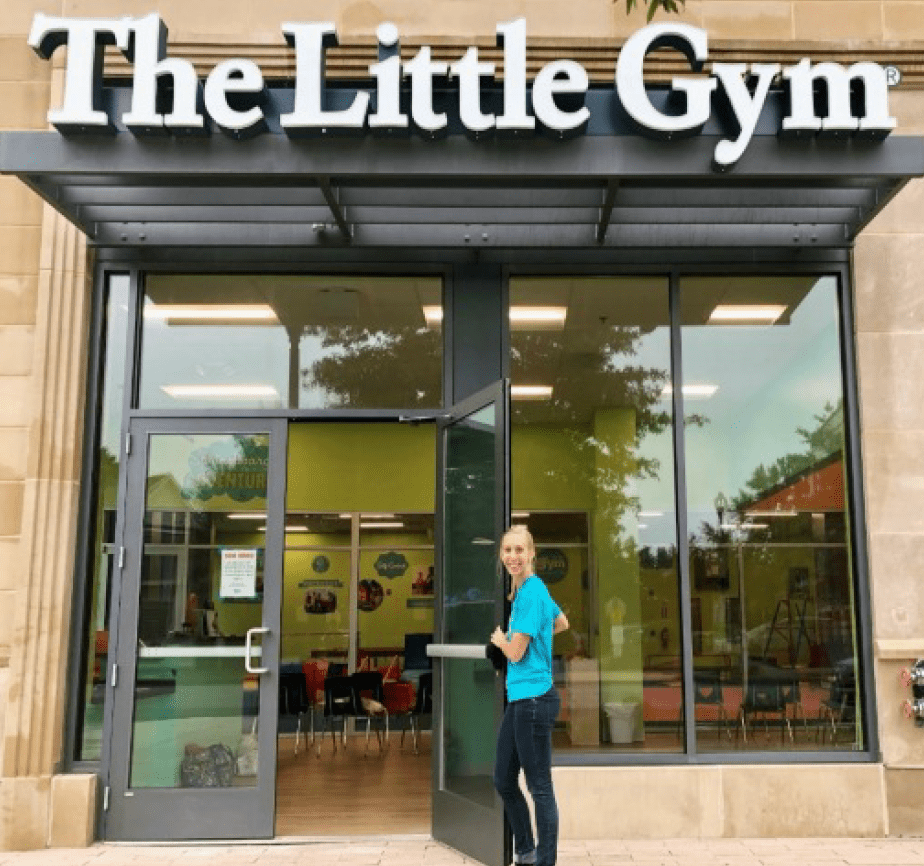
We are an independently owned noncompetitive children’s gymnastics facility that uses physical activity as a tool to provide social, emotional, and cognitive growth opportunities for children ages 4 months to 12 years. We offer year-round enrollment-based classes, camps with flexible scheduling options, monthly parent survival nights, and birthday parties on the weekends
What do you want the community to know about your establishment?
We have a passion for helping kids become confident in their bodies, independent thinkers, and thoughtful toward others. We love being such an integral part of our families’ lives and are always eager to see new faces! We accept new students year-round and summer camp enrollment is currently open. We are all about “Serious Fun” and helping kids shine as who they are!
What do you love about Lyon Park?
We have loved being part of the Lyon Park community since opening in 2018. The community is family-friendly, walkable, and fun! Lyon Park has a lot to offer like excellent parks, playgrounds, and restaurants. We have appreciated Lyon Park’s support and we look forward to continuing to serve the community.
Categories
Contact Information: The Little Gym Emily Hunt (Gym Director) 2209 North Pershing Drive, Arlington Va Phone: (703) 201-1058 Text: (202) 831-3380 tlgarlingtonva@thelittlegym.com Parking: Free garage located between Bonchon and Paisano’s
Lyon Park is listed on the National Register of Historic Places, #03000437? In 2003, a group of dedicated neighbors put together a successful nomination to create the Lyon Park Historic District through the Virginia Department of Historic Resources. Our community met National Register criterion A (an event, series of events or activities, or patterns of an area’s development) and Criterion C (A building form, architectural style, engineering technique, or artistic value, based on a stage of physical development, or the use of a material or method of construction that shaped the historic identity of an area). Criterion B, for those who are curious, requires association with an important person, so please let us know if any previous presidents have slept in your home!
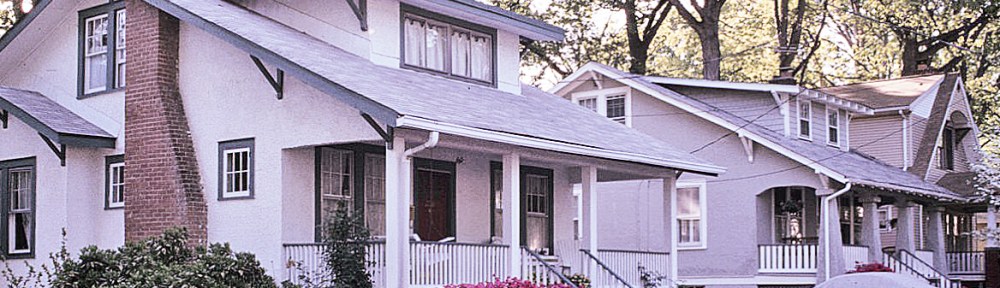
Lyon Park is an example of the enormous growth that occurred in and around Washington DC, following the first World War. Architectural styles in the neighborhood reflect community planning and development, with a proliferation of Craftsman Bungalows, American Four Squares, Colonial Revivals, and especially pre-fabricated kit homes (Sears Bungalows) which were perfect for Lyon Park’s modest lots. Even the garden apartments were important contributors, meeting the needs of young professionals flooding to the nation’s capital.
At the time of the review of Lyon Park’s nomination, there were 1,165 structures that positively contributed to our Historic District approval and 329 non-contributing structures. The Lyon Park Community House, built by and for the community in the mid 1920s, was a critical contributing structure. During the 2015 renovation, great care was taken to meet the Secretary of the Interior’s Standards for the Treatment of Historic Properties. That is why, for example, the framing of the added kitchen and restrooms spaces are smaller than the original building, making it visually clear which part of the building is dominant (original). That is also why the roof material of the sunroom is different from the original part of the building, to better show that it is a later addition to the main hall.


 lyonpark.org