By Laureen Daly
What do you call two flowers on a date?
A budding romance!
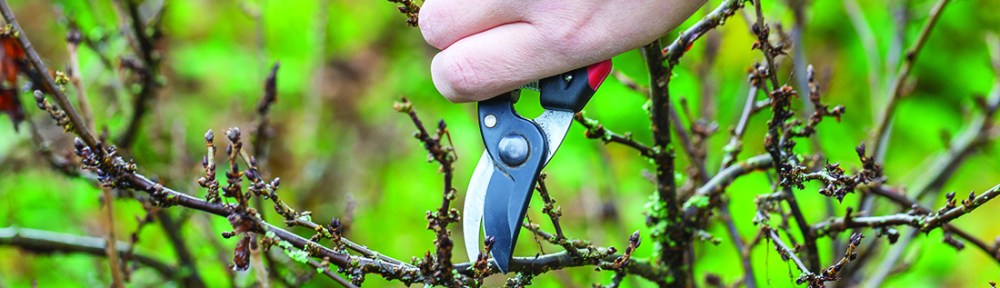
If you’re like me, you forget when to prune what. So here is a reminder that February/March is the right time for some plants and not others. The rule of thumb for shrubs and trees that flower in the Spring, before the end of June, is to prune them right after their blooms have finished. These include forsythia, azalea, Virginia sweetspire, quince and rhododendron. If you prune these in winter, you risk removing their flower buds for the Spring season.
Summer flowering plants bloom after the end of June. These shrubs and trees should be pruned in the Winter or early Spring before new growth starts. Our weather, which goes up to 50 degrees for a few days every month makes it harder to find plants’ “dormant” period, but generally you want to prune the following in February/March before it warms up in Spring:
- Hybrid tea and shrub roses should be pruned to 12”–18,” with cuts made just above a healthy bud at a slight angle. This encourages maximum growth and beautiful blooms.
- Liriope that has turned brown can be cut back to encourage fresh growth.
- Fig Trees can be pruned when dormant, if needed. I have to prune mine to keep it a reasonable size in my small yard and to keep the fruit within reach. Experts say remove branches that cross, space out the branches to allow light and air movement, remove suckers, and remember to cut back to a node or a branch (do not cut half way between nodes).
- Similarly prune crape myrtles, if needed, to remove cross branches and allow space between branches to encourage 3–5 main trunks. Don’t commit “crape murder” by topping the tree!
For more Information see Fairfax County Master Gardeners, fairfaxgardening.org/prune-or-not/.
 lyonpark.org