Lyon Park Stumbling Stones Dedication

By Natalie Roy

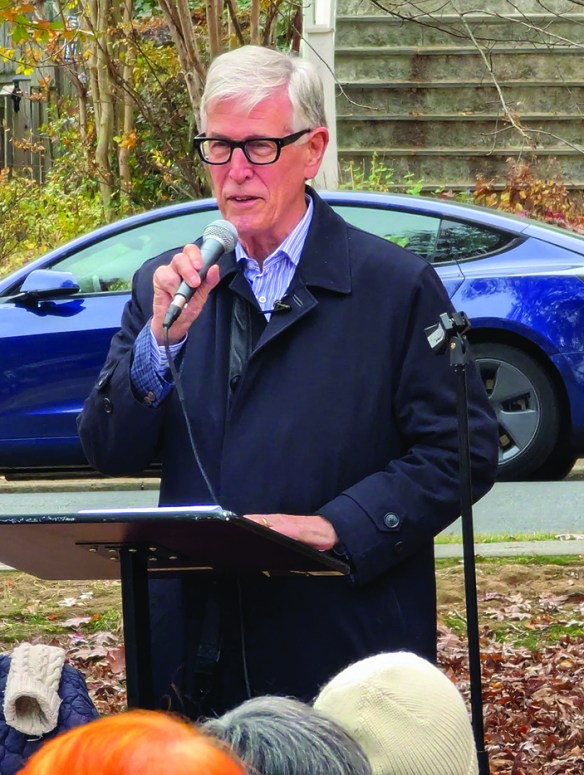
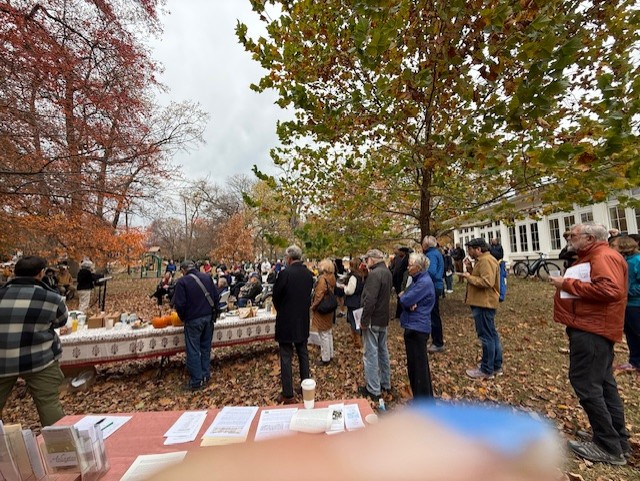
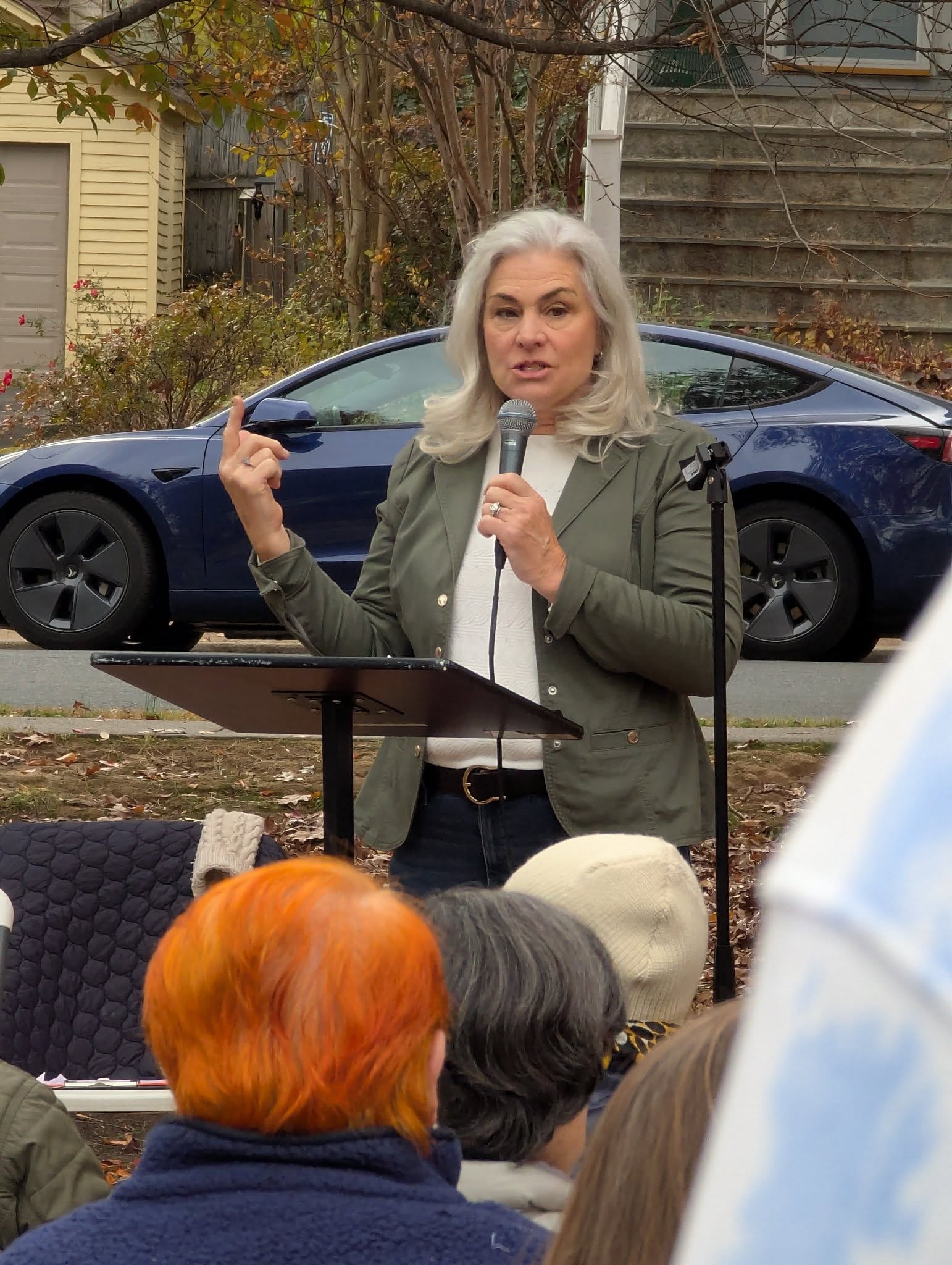
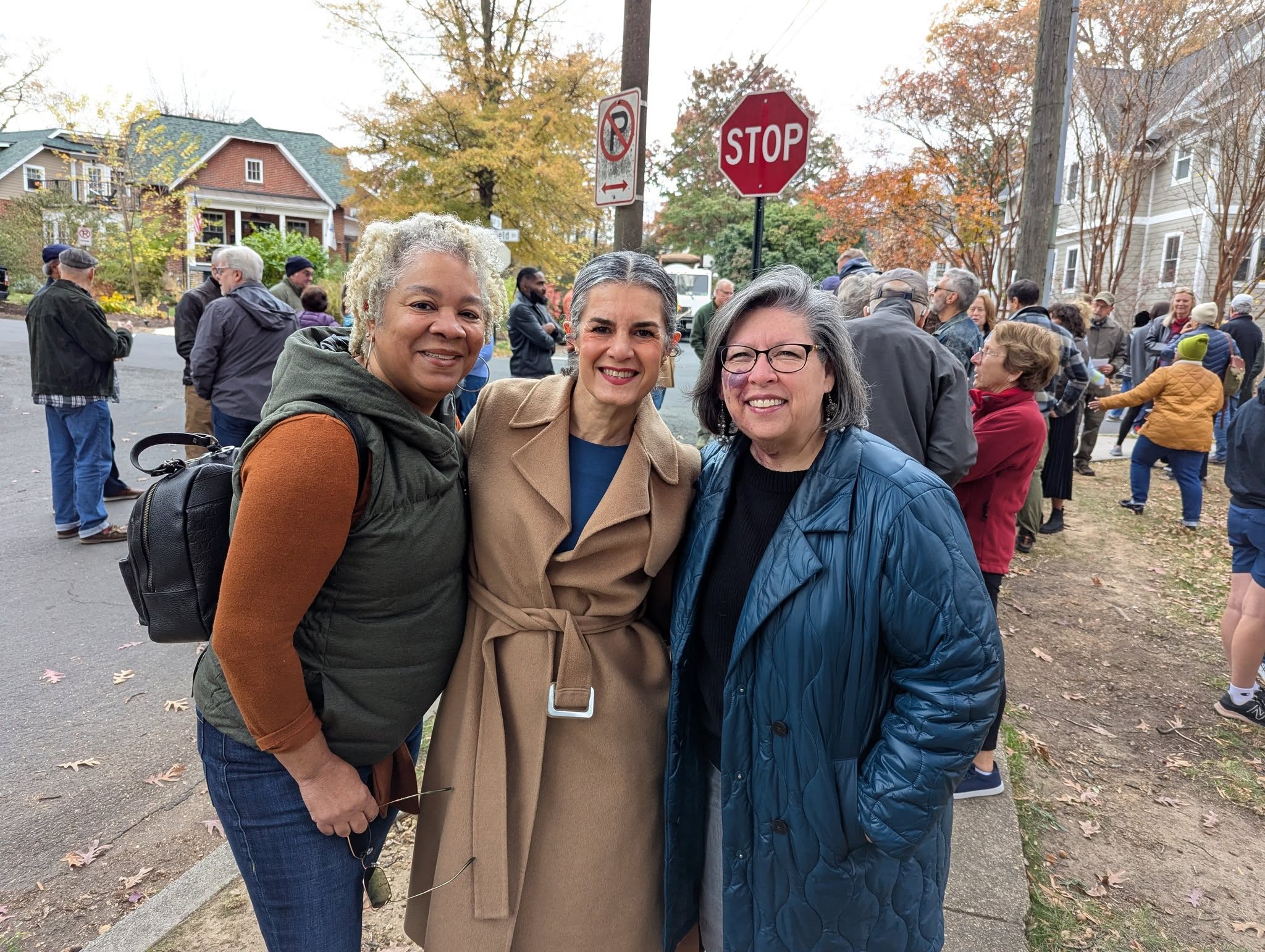
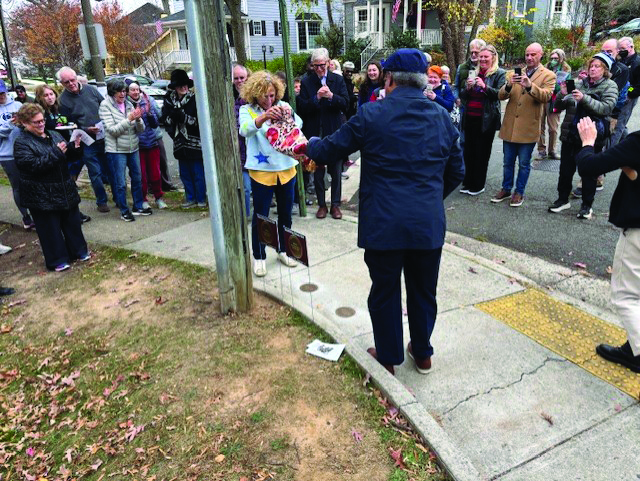
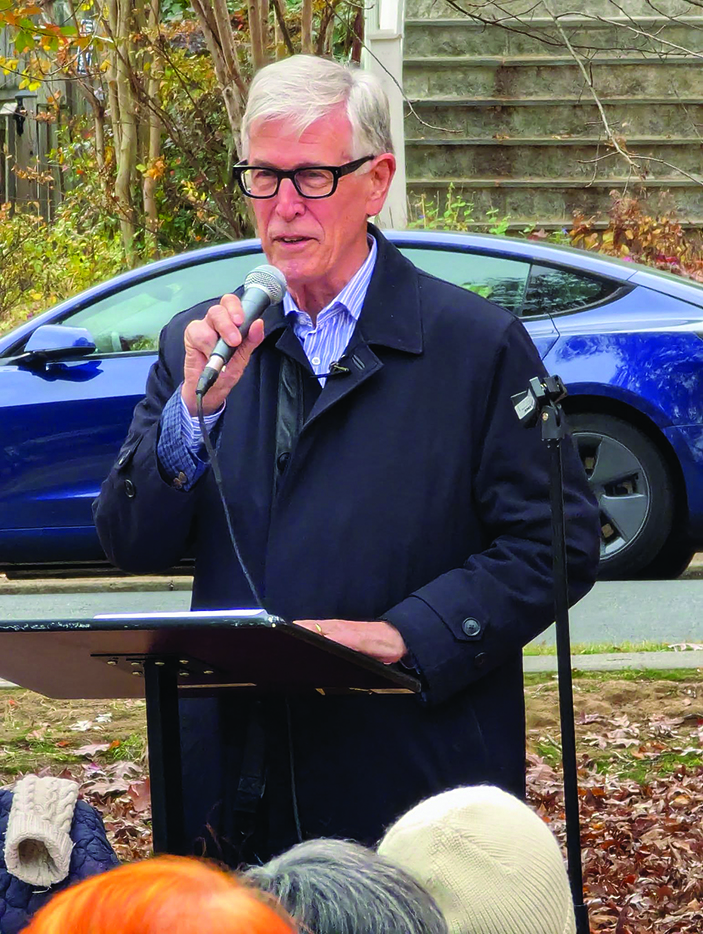
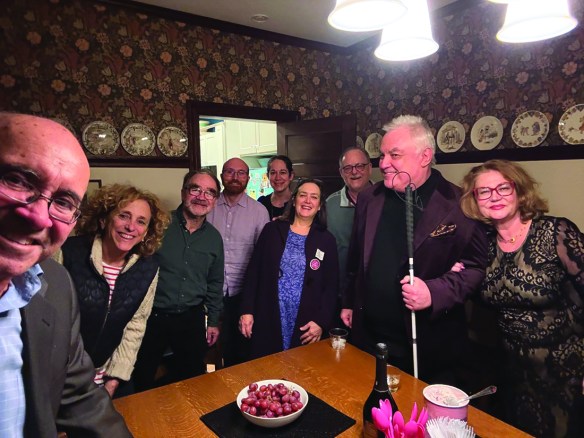
Lyon Park was extremely proud to be a part of the Memorializing the Enslaved in Arlington Project (MEA), aka Stumbling Stones. This groundbreaking initiative is co-led by the Arlington Historical Society and the Black Heritage Museum of Arlington. It is the first program of its type being conducted in the South, to commemorate the names and lives of those long erased by history. Lyon Park’s Stumbling Stones dedication honored two enslaved men, Orville and Jackson, born almost 200 years ago, who lived and worked in an area that is now Lyon Park. The beautiful stones were placed on the southwest corner of Lyon Park, on 4th Street North and N Garfield Street. 

The idea of bronze plaques, and the Memorializing the Enslaved effort, is modeled after the project conceived by German artist Gunter Demnig to honor Holocaust victims by placing 10-centimeter brass plaques known as Stolpersteine or “stumbling stones,” at the sites where Holocaust victims once lived. Today, more than 100,000 Stolpersteine can be found throughout Europe constituting the largest decentralized monument in the world. Michele Norris’s June 3, 2021 op-ed article in the Washington Post, “Germany Faced Its Terrible Past. Can We Do the Same?” prompted interest to recognize and honor those in Arlington who suffered grave wrongs. As the Talmud states, “A person is only forgotten when his or her name is forgotten.” 

More information on the two men being recognized can be found on page 7. You can also find more information on the MEA program here: https://arlingtonblackheritage.org/history/mea-project/

We always need to learn from our history, the good, the bad and the ugly. That famous quote, that “those who cannot remember the past are condemned to repeat it,” rings true, especially in these current turbulent times. The MEA program is a core part of a much larger effort to ensure real and lasting change. We have come a long way but there is so much more to do. 

Lyon Park Stumbling Stones: Background on Jackson and Orville

By Natalie Roy

Jackson and Orville were enslaved by Bushrod W. Hunter, a Lieutenant in the US Navy and the owner of the “Brookdale” estate, 400 acres of land that makes up today’s Ashton Heights, Lyon Park, and Arlington Heights neighborhoods. Bushrod oversaw a second estate, Abingdon (now National Airport). The plantation was owned by Bushrod’s brother Alexander Hunter, but upon his death in 1849, Bushrod’s son, also Alexander, inherited the property. Alexander was a minor so Bushrod legally operated Abingdon until Alexander turned 18 years old. From 1851–1859, tax records indicate that at various times, Bushrod Hunter enslaved between 18 and 36 people at his two estates. On the 1860 census, Bushrod enslaved 20 people.

Jackson, or Jack, was born around 1830 and grew up at Abingdon. On Alexander Hunter’s probate inventory, taken to tally his possessions at the time of his death, Jackson was listed as a 20-year-old enslaved man worth $450. Jackson labored at both the Brookdale and Abingdon estates. Bushrod Hunter’s diary entry of March 12, 1861, indicates that Jackson was farming at Brookdale that day. The entry read, “Started 3 two horse plows in the far field for oats. Jack finished sowing clover seed at Brookdale, 3 carts hauling manure.”

Orville was born around 1827. While little is known about his life, his appearance in an 1857 newspaper advertisement in the Alexandria Gazette provided invaluable information including his name, physical appearance, and relationships. The advertisement was placed by Bushrod who offered a $50 reward for the “apprehension of his servant man, Orville.” Orville had gone to visit his wife, “who lived with the widow of the late Mr. Towers but had not returned.” Research did not reveal where in the District of Columbia-Northern Virginia region Widow Towers lived. It was common for enslaved people to leave or temporarily “run away” from their place of enslavement to visit loved ones from whom they had been separated. In the body of the advertisement, Bushrod describes Orville’s appearance. [He] is a mulatto (not very bright) and about 30 years of age, short and stout, with a broad face and (I think) a scar on the forehead.” It’s unclear whether Orville was captured and forced to return to Bushrod Hunter’s estates. 

Thank you for helping honor the lives and contributions of Jackson and Orville. Memorializing the Enslaved in Arlington hopes you have gained a greater understanding of Arlington’s complicated past. 

Business Spotlight: Club Pilates

During August, a new-to-Clarendon exercise studio opened up (in the former Urban Kempo space) called Club Pilates. It is a full-body, reformer-based workout studio that holds classes seven days a week. It requires for you wear grippy socks, but every other piece of equipment you need is provided for you.

What is pilates (pronounced puh·laa·teez)? It is a low-impact, full-body workout system developed by Joseph Pilates that focuses on controlled movements to build core strength, flexibility, and posture. It involves precise exercises, mindful breathing, and a strong mind-body connection to create balanced and stable muscles—increasing your mobility, balance, and strength.

What makes the classes different at Club Pilates than other Pilates-type classes you may have taken (like mat classes) is that a portion of each class uses a specialized piece of exercise equipment called a reformer. The reformer has a bed-like frame with a sliding carriage, and is connected to springs that provide resistance. It is used to perform a wide variety of exercises that build strength, flexibility, and balance by pushing and pulling against the resistance provided by the springs. The machine is known for being low-impact, making it suitable for beginners, athletes, and those recovering from injuries.

Club Pilates incorporates the use of other equipment as well, including spring boards, Bosu balls, hand weights, squishy balls, TRX, Exo-Chairs, and other items, allowing for the instructors to provide a unique (and non-boring!) exercise experience during each class. 

Interested in giving it a try? The studio offers a free 30-minute introductory class multiple times a week, which introduces their state-of-the-art equipment, studio, workout, and amazing staff. Classes are held seven days a week, starting as early as 5:30 a.m. and running until as late as 8:30 p.m. Please see the full schedule on their website for more details.

Club Pilates Clarendon (3000 Washington Blvd., entrance is at 10th Street N and N Highland Street). Phone number is (571) 517-8219. Visit their website https://www.clubpilates.com/location/clarendon for class descriptions and more information

Lyon Park at the Kennedy Center

By Susan Robinson

I was playing pickleball with the indefatigable Natalie Roy a few months ago, when she suddenly exclaimed, “I have an idea!” As it turns out, her idea was a winner. 

As many of you know, I am the principal harpist of the Kennedy Center Opera House Orchestra, now in my 31st season. And some of you may have noticed that my workplace is often in the news these days! 

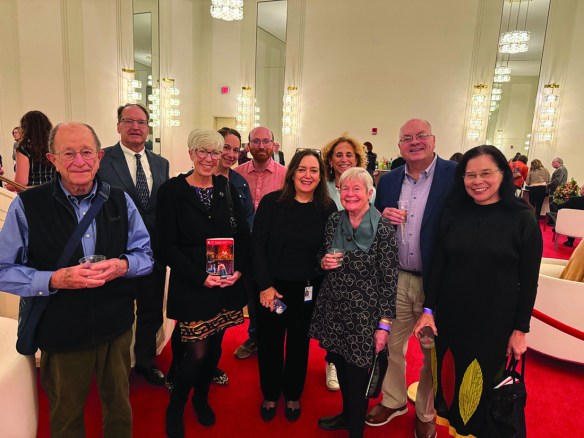
Natalie’s idea was a neighborhood “Night at the Opera.”  The WNO Audience Development team loved the idea and ran with it. Residents enjoyed a generous ticket discount and an intermission champagne toast. In October, we brought about twenty friends and neighbors to a WNO performance of Verdi’s Aida, mingled at intermission, and then enjoyed an early dinner back in the neighborhood at Texas Jack’s. A few days ago, a group of thirty was wowed by the WNO’s The Marriage of Figaro, and we gathered for cake and (more) champagne after the show here at my home. It was great fun to walk through the Grand Foyer and the Opera House and see friends and neighbors everywhere, and to get to know new neighbors as well. At our recent outing I was able to introduce two residents of the 600 block of N. Kenmore St. to one another!

Figaro was particularly meaningful to me—since I don’t play the opera I was able to enjoy it as an audience member. The house was packed, full of buzz, and familiar faces. The performance was engaging and rapturously received—it was so moving to witness my place of work functioning just as it is intended to, bringing resonant musical experiences (Figaro is, after all, a tale that celebrates the fundamental humanity of people of all walks of life) to a large and appreciative audience.  

I would love for anyone reading this to understand that the Kennedy Center is just a building, but its beating heart is its two primary constituents: The Washington National Opera and The National Symphony Orchestra. These incredible pillars of the DC arts community are presenting their current seasons as originally planned, their own boards of directors and fundraising machinery intact. If these institutions are lost, they are likely gone for good. The musicians of the Kennedy Center, along with the hardworking crews, and support staff (five labor unions are represented in the building) all appreciate the continued support of the community.

I hope to have more such opportunities in the spring! I am more than happy to answer your questions, or share our musicians’ talking points. Email me at susan@ibischambermusic.org

Local Author in the News

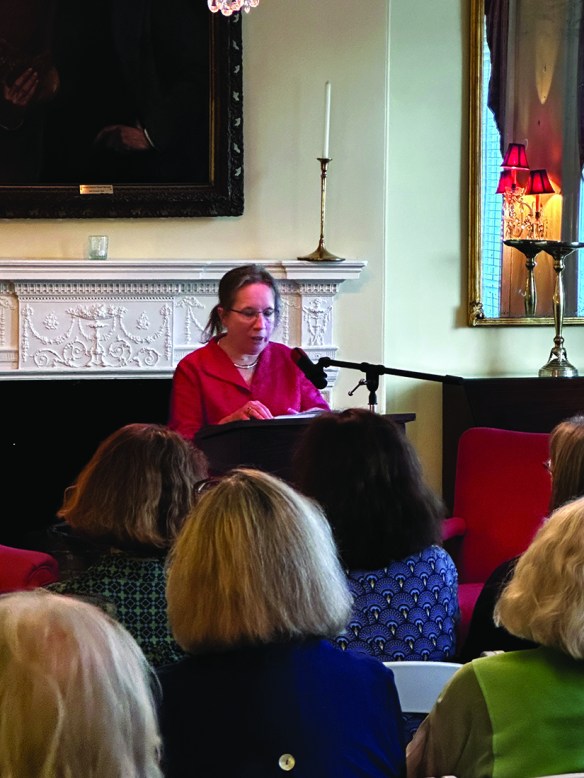
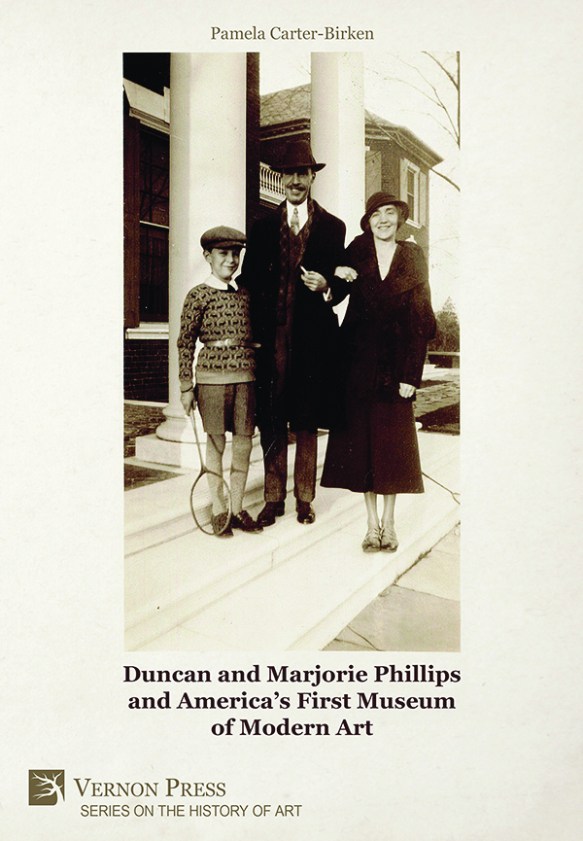
Pamela Carter-Birken, Lyon Park resident and author of Duncan and Marjorie Phillips and America’s First Museum of Modern Art (Vernon Press), delivered a captivating presentation at the historic Arts Club of Washington, located in the President James Monroe House, in September.

Her book explores the legacy of Duncan and Marjorie Phillips, founders of The Phillips Collection, widely regarded as America’s first museum of modern art. During the event, Carter-Birken highlighted how the Phillips family not only collected art but also cultivated a cultural home where artists, staff, and the public could engage deeply with modern art.

The Arts Club of Washington was honored to host Dr. Pamela Carter-Birken in the historic President James Monroe House, where she delivered a captivating presentation on the Phillips family, founders of The Phillips Collection. Her presentation revealed not only the art that graces the museum’s walls, but also the people—collectors, artists, and dedicated staff—who shaped it into both a cultural treasure and a home. With lively storytelling, she illuminated the intertwined lives of Duncan and Marjorie Phillips alongside the many others who built and sustained the Collection. The evening left our audience with a deeper appreciation of the Phillips family’s contribution to America’s cultural legacy. Her book is a remarkable testament to how art, literature, and history continue to shape the human experience and enrich our cultural life.

— Jameson Paul Freeman, President,
The Arts Club of Washington

The evening underscored the relevance of Carter-Birken’s book for scholars, students, and art enthusiasts seeking to understand how modern art entered the American cultural landscape. The Phillips Collection, founded in 1921, remains one of the most significant institutions for modern art in the United States, and Carter-Birken’s work provides a nuanced look into the lives of its founders and the community they fostered.

Duncan and Marjorie Phillips and America’s First Museum of Modern Art is available from Vernon Press in hardback, paperback, and e-book editions. 

Trees, Trees, and More Trees!

By Natalie Roy

If you have been following our community listserv, you know our neighborhood, has concerns about the County’s new Circuit Tree Maintenance program. We were alarmed at the number of trees slated for removal in our neighborhood, the lack of specifics shared in advance about the program, and whether future replanting, pruning, and maintenance efforts will truly be robust. We were very disturbed by the spotty communications in advance of this major effort by the County, which will reshape our tree canopy landscape for years to come. 

As a result of the situation, LPCA took the following actions. We held a community Treeside Chat meeting with concerned residents and also participated in a virtual meeting with the County’s Urban Forestry staff, which was very much appreciated. The Urban Forestry staff, who are both certified arborists, made it clear that one of their key objectives is removing very unhealthy and/or dead trees that could be public safety hazards. We wholeheartedly agree with the County that very unsafe dying and dead trees should be removed

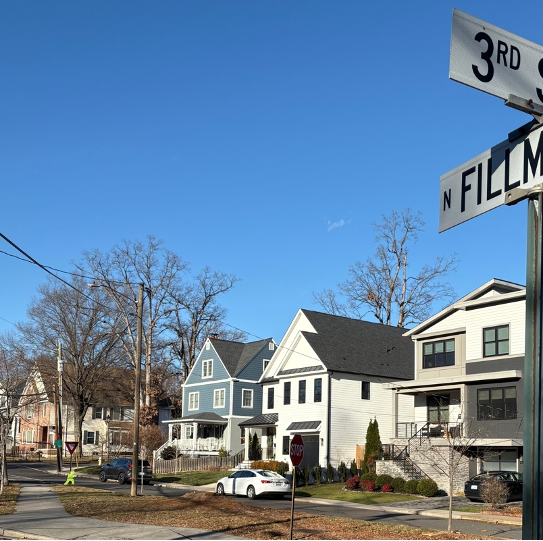
While the virtual meeting was very informative, it was too little too late. Many community members expressed concerns that the program will struggle to succeed due to miniscule funding levels and that there is a lack of confidence the County will conduct a comprehensive replanting effort. Since time is of the essence, Lyon Park sent a letter to the County Board and County Manager for an immediate stay of execution on the removal of key trees in our community, including the Gateway tree (pictured on this page) located in the N Fillmore Street triangle. There is no reason to rush after decades of County neglect. For a copy of the letter visit our website. 

In addition to inquiring about the tree contractor’s apparent lack of an Arlington business license, LPCA has also raised questions about whether the County is following the rules and proper procedures of Arlington County Code Chapter 67: Trees and Shrubs. As of now, the County has held firm that they will not delay or alter tree removal, even for trees for which we have requested a second opinion. LPCA is in the process of establishing an active tree committee and will continue to advocate for our community’s tree canopy and for a robust replanting and maintenance effort. If you are interested in getting more involved, please shoot me an email at lpcapresidentnur@gmail.com

How the New Tax Laws can Benefit Lyon Park

Benjamin Franklin’s musing that “in this world nothing can be said to be certain, except death and taxes” might sound pessimistic, but what if those inevitable taxes could benefit the LPCC?  Would paying taxes be a little more palatable if they  helped fund a playground renovation, installation of audio/visual equipment, refinishing the floors, or more community events at the LPCC?

New tax laws make it advantageous for those who take the standard deduction to donate in 2026 to the LPCC (a 501c3 charitable organization). Starting in 2026, for the first time, cash gifts up to $1,000 for single filers or $2,000 for married couples filing jointly can be deducted in addition to the standard deduction. For those who claim itemized deductions, the new rules become more complex. Beginning in 2026:

Only donations that exceed 0.5% of adjusted gross income (AGI) will be deductible. If you make $250k in household AGI, that means your first $1,250 in charitable donations will not be deductible. Donations to the LPCC made in 2025 are fully deductible

All deductions for taxpayers in the highest marginal bracket (37%) will be capped at a rate of 35%. This means that if you donate $1000 to the LPCC in 2025, you can deduct $370, but if you wait until 2026, you can only deduct $350

The temporary 60%-of-AGI deduction limit for cash gifts to public charities will become permanent. It was set to expire and revert back to a limit of 50%. So if you are planning to donate 60% of your adjusted gross income to the LPCC, you can deduct it all and we support that!  

Donors can still avoid capital gains tax by gifting appreciated stocks or other assets held for longer than a year. In fact, donating appreciated stocks yields a double tax benefit – you avoid paying capital gains by not realizing the gain AND you can deduct the full fair market value of the donated stock. 

So please consider spending your tax dollars in your own community by donating to the LPCC in 2025 and 2026. Checks can be mailed to: LPCC at 414 N. Fillmore Street, Arlington, VA 22201. Cash donations can be made at https://lyonpark.info/donate. For more information on how to donate appreciated stocks, other assets or to make a substantial cash donation, contact the Board of Governors at LPCCGovernors@gmail.com. Thank you!.