
By Kathleen McSweeney
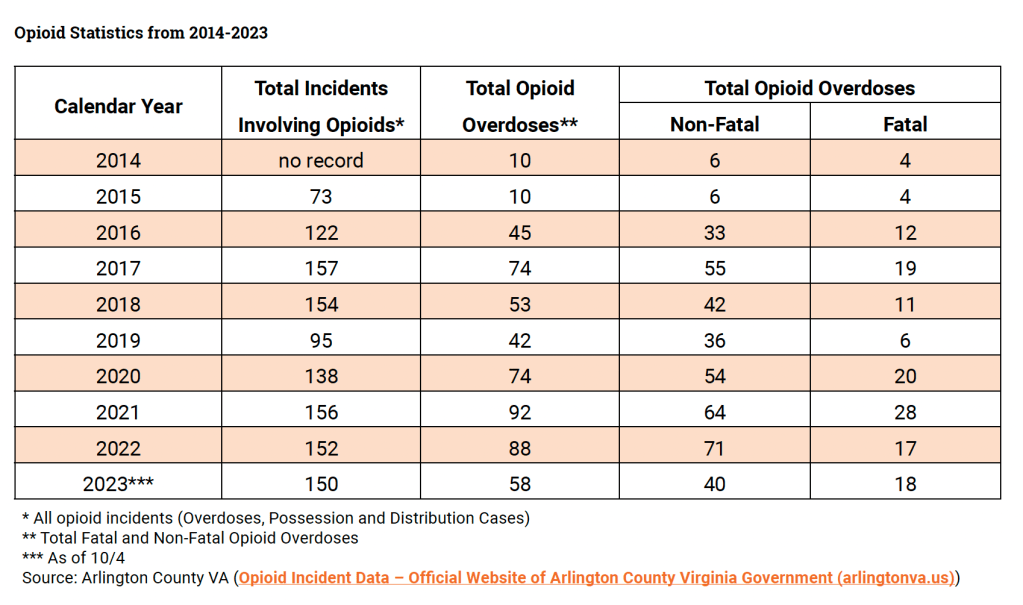
Communities across the country have been experiencing issues with youth substance use and mental health issues, and Arlington can learn from their actions. One action is harm-reduction, which aims to stop or reduce the worst outcomes. Examples of this include conducting training on the use of naloxone (commonly known as Narcan) to reverse the effects of an opioid overdose, and providing fentanyl test strips so a substance may be tested for the existence of fentanyl in a variety of drugs and drug forms (pill, powder, and serums). Interventions to prevent substance abuse is another approach that must include the entire community – families, schools, and community-based organizations. A public service campaign to provide education and facts about the dangers of substance use, and to assist families in understanding the risk factors for substance use, and establishing healthy communication, rule-setting, and monitoring is an important first step. Likewise, community services that offer trauma-informed counseling programs,
and activities widely available to youth as an alternative to drug use, are all elements of responsive
community action.
The Arlington Schools Hispanic Parent Association (ASPHPA) has been advocating for action since last year. After a 9th grader died in February 2023, they held a march and sent letters to the County and the School Board to demand action. The County Council of PTAs held an expert forum in March to explore the breadth of the issue and suggested actions. ASHPA circulated a survey and received over 180 responses from immigrant and refugee families to identify the barriers to participation in Parks and Recreation programs. Following more overdoses in schools and the death of another student in September, an advocacy group—comprised of ASHPA, the County Council of PTAs (CCPTA), the local chapter of the League of United Latin American Citizens (LULAC), Virginians Organized for Interfaith Community Engagement (VOICE), and the Arlington Branch of the National Association for the Advancement of Colored People (NAACP)—have been engaging Arlington County (especially human services, parks and recreation staff and the police) and Arlington Public Schools on this issue. This coalition has requested action on dropping barriers to participation in sports and recreation activities (in terms of costs, program limits, and web-based sign-ups), increased supervision at local community centers, and a drop-in teen center with programmed activities, skill-building, and sufficient transportation to and from neighborhood schools.
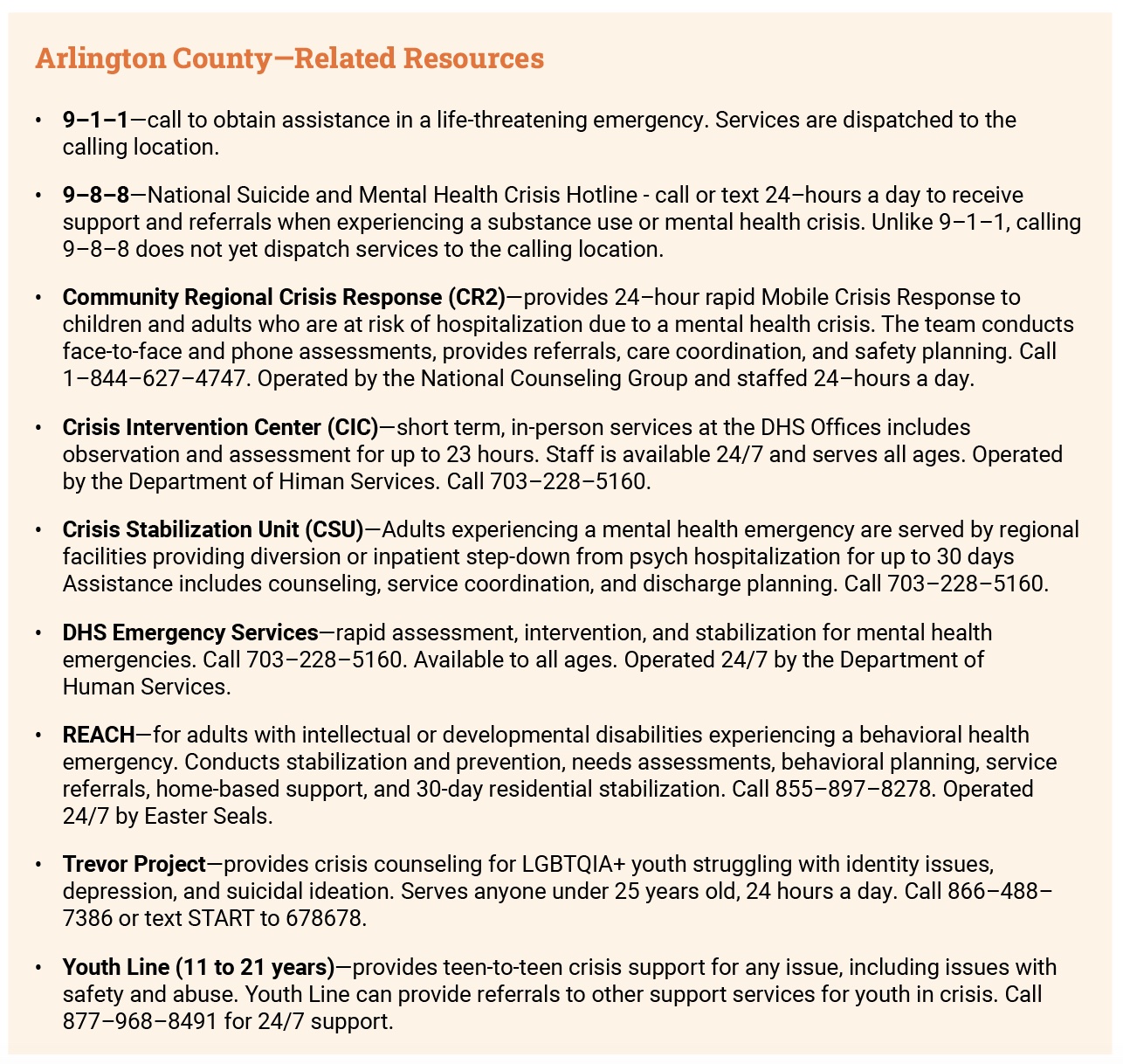
How has Arlington responded so far? The County’s Arlington Addiction Recovery Initiative (AARI) has been busy providing free training and distributing naloxone supplies throughout the community over the past year. This summer, Arlington Public Schools (APS) made naloxone doses and training available to teachers and staff. Narcan is available in the school nurses’ offices in our middle and high schools. In summer 2023, the School Board changed APS’ policy to allow students to carry naloxone in school. Also this summer, the Department of Human Services (DHS) on Washington Blvd opened and staffs a 24–hour drop-in Crisis Intervention Center to stabilize children and adults who are experiencing a substance use or mental health crisis. And at the County Board meeting held on November 14, 2023, the Board dedicated $750,000 in end-of-year closeout funds to fund some of the prevention ideas being suggested by advocates—including extending Parks and Recreation after-school programming to students and starting a public awareness campaign. These actions have been important first steps in addressing this growing crisis in our community.




 lyonpark.org