New Stormwater Utility Fees Coming in 2024

By Kathleen McSweeney

Earlier this year, the Arlington County Board voted to implement a new Stormwater Utility Tax that will become effective in May 2024. The new tax is based on the amount of hard surfaces on a property such as buildings, roofs, driveways, and patios—anything that prevents water from seeping into the ground and creates runoff. The additional funds raised will pay for the maintenance of over 200 miles of sewer pipes, increases to system capacity, restoration projects, management of flood plains, and other
needed improvements. 

This new tax will replace the Sanitary District tax, which has been bundled within the County’s real estate taxes. The cost of this tax is $.017 for every $100 of assessed value. The new stormwater taxes will be listed separately on real estate tax bills after next May.

How can you tell what you may owe? The County used GIS-mapping to estimate that an average single-family home in Arlington has 2,400 square feet of impervious surface. This represents one ERU, or Equivalent Residential Unit, and there is a scaled system of billable units (see chart below) used to calculate the tax for each property. Initial estimates are that an ERU has a sample value of $230–250, though the rate will not be set until the County Board votes this Fall, and is dependent on the adopted budget.

Why is the County moving to this new tax structure? There have been additional demands on the stormwater system, and the County needs to raise additional revenue to pay for planned improvements, The shift to the Stormwater Utility tax is considered to be a fairer way to assess cost because it is based on the amount of impervious lot coverage, rather than a property’s value. The new fee is demand-based: the larger a property’s impervious surfaces, the more that property contributes to runoff and puts pressure on the system. There are some properties (places of worship, non-profits, and Federal buildings) that currently don’t pay the sanitary district tax. Those properties will likely be impacted by this new stormwater tax. 

The County acknowledges that property owners will be paying more under this tax structure, but there is a way owners can qualify for credits. Between November 1, 2023 and January 15, 2024, property owners are able to reduce the tax amount by making specific improvements to their properties in 2023 that reduce runoff. Additional information on the credit program, a (not-very-user-friendly) fee estimator by property, and FAQs may be found on the County’s Stormwater Utility Implementation page (go to https://www.arlingtonva.us and search for stormwater utility). 
Arlington at 15 MPH

By Aaron Schuetz

Arlington at 15 MPH

By Aaron Schuetz

I am a biker. My health and the planet’s health are two reasons I choose to cycle. And it isn’t just for my physical health. Psychologically, it is a great way to start my day by commuting to work. If the day goes poorly, I hop on my bike and not only get to work out the stress on the ride home, but I get an endorphin hit, fresh air in my lungs, and time to reflect and de-stress before I’m home.  

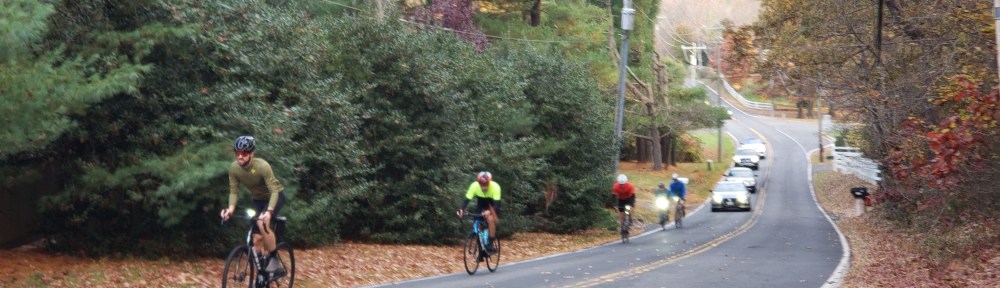
I want to share with you why it’s so awesome to be on a bike in this area—for commuting and recreation — and why you should do it, too! When we drive, we’re sealed inside a box with limited visibility, focused on quickly reaching our destination. When we walk, we’ve got full visibility, we experience the weather, and we can enjoy the beautiful houses, trees, and gardens of our neighborhoods but we cover less ground. Cycling is the sweet spot between these two. Instead of exploring a few new blocks while out walking, you can explore entire neighborhoods. You decide when to roll slowly, and when to push yourself on a climb. Those with electric assist get even more choices in how much they want to sweat.

During the pandemic, I rode 2/3 of all streets in Arlington, and 1/3 of all streets in DC. I found some ridiculous hills, very odd homes, amazing views, surprising history, and a great diversity of neighborhoods. Biking has helped me appreciate how wonderful it is to live in the DC area.

Though I love solo explorations, in the past year I’ve begun riding with some neighbors. This is not only fun but also motivating! It pushes us all to do more and explore more. We love riding in the hills of North Arlington and heading across the river for popular routes like MacArthur Blvd out to Great Falls, Rock Creek Park, Beach Drive, Sligo Creek and Anacostia Trail. We have biked the ever-popular Custis, Mt. Vernon, W&OD, C&O, and Capital Crescent trails. Beautiful tree-covered trails, iconic views, and robust exercise keep us pedaling through all four seasons.

Looking for support or inspiration? Arlington has some great resources.

Bike Arlington (bikearlington.com has some nice route suggestions and tools, including a “Bicycle Comfort Map” that helps you find routes appropriate for you and your family to get around Arlington.

The Washington Area Bicycle Association (waba.org) is a great education and advocacy group, and organizer of big rides. Many bike shops in the area organize group rides for various levels.

Capital Bikeshare is a great way to start. We have 3 stations in Lyon Park, and their e-bikes are really easy to use.

Our new bike shop, Vélocity Bike Co-op, on Pershing Drive can help get your bike back in shape, or help you find a new one.

I recently joined the county’s Bicycle Advisory Committee to encourage the county to make cycling safer and more accessible for residents, and because I would like to see more bike infrastructure in Arlington County. If you have suggestions or improvements you would like to see made, please reach out to me and I will submit them for discussion at a meeting. And if you want encouragement, ideas, or are interested in joining me for a weekend ride, email me at ajschuetz@yahoo.com. You can also follow me on Strava.

I hope to see more neighbors biking around the community on these beautiful fall days. And if you drive, thanks for sharing the road! Cycle on! 

Updated Vaccines for This Fall and Winter

By David Robeck

Respiratory virus season is this fall and winter, and new protections are available against three of the most common causes of hospitalization: COVID-19, influenza (flu), and respiratory syncytial virus (RSV). Protect yourself, your loved ones, and your community by getting your recommended vaccinations.

The distribution of COVID-19 vaccines changed this September as these products moved onto the commercial market and an updated version was released. These new vaccines are well adapted for currently circulating variants, such as XBB sub lineages. The new COVID-19 vaccines are available at no cost for most people through their private health insurance, Medicare, and Medicaid plans. Adults without health insurance and adults with insurance that does not cover COVID-19 vaccines are also eligible for free COVID-19 vaccinations. Visit vaccines.gov to find a provider that offers no-cost COVID-19 vaccines. Options in Arlington County to get your COVID-19 vaccine include your healthcare provider, federally qualified health centers, CVS, and Walgreens.

The flu virus evolves and everyone over 6 months old, with rare exceptions, should get a flu vaccine annually. Each year different strains of the virus circulate, and the flu vaccine is updated. Flu vaccines are available in Arlington County. RSV is a common respiratory virus. While most cases are mild, RSV can be serious. Infants and adults over 60 years of age are at higher risk from RSV. The CDC recently approved the RSV vaccine for people over 60 and pregnant people. Additionally, a monoclonal antibody called nirsevimab is approved for children 8–19 months to protect against the worst outcomes of RSV. Learn more on the CDC website: http://www.cdc.gov/respiratory-viruses/index.html.

We can protect ourselves and each other from these three vaccine-preventable diseases this season. You may get these vaccines at the same appointment. Schedule your appointment today!

Neighbors Making A Difference: Nick Ruge and the We See You Foundation

“A nonprofit is as strong as the community that holds it up. Together, we can do more than we can do alone.” This quote is on the website of the We See You Foundation, the brainchild of 19-year-old Nick Ruge, a resident of Lyon Park.

When thinking about what inspired him, Nick recalls this incident as the catalyst for the creation of the Foundation: “During a visit to New York City, I was affected by a homeless gentleman sitting on the sidewalk with a sign that read “I feel invisible.” I crouched down so I’d be on his eye level, so he knew I saw him, and offered some food, chatted for just a moment, and touched his shoulder. I wanted him to know that he matters. After that and other similar encounters, I knew we needed to do something to make the homeless feel valued, and the We See You Foundation was born.”

Nick’s concern led him to begin volunteering with local non-profit PathForward (formerly Arlington Street People’s Assistance Network) serving meals on Sunday evenings for several years while he was in middle school and high school. At 17, he decided to create a non-profit to continue the work. He still collaborates with PathForward, often partnering with them to make bagged meals and bed bundles for distribution to people who need them. 

The effort is a family affair—Nick’s brother Jake serves as the President; his mom, Lisa, is the Treasurer; and his dad, Andy, is one of the Board members. Lisa notes that she loves the work because it is another way the family can spend time together. “The Foundation really is about being kind and showing respect. That’s something everyone can do.”

If you would like to support the Foundation, you can see their Amazon Wish List, make donations, and more by visiting the website: https://weseeyoufoundation.org.

Increasing Tree Resiliency

By Elaine Simmons

The sudden storm that walloped Arlington in late July will not soon be forgotten. Violent downbursts felled some of our most magnificent trees, many of which were oaks that came up by the root ball. This may leave some people wary of trees, but the benefits of large, healthy trees far outweigh the risks. Trees mitigate flooding, hold onto soil to reduce erosion, lower our utility bills, improve air quality—and of course are aesthetically pleasing. With the right trees properly planted and cared for, we can enjoy them more and worry about them less.

Our Extension Agent, Kirsten Ann Conrad, provided expert advice on increasing trees’ resiliency to storms. Trees should be under the regular care of a certified arborist, who will look for weak or damaged limbs and ensure proper, regular pruning. You should avoid construction and other soil-compacting actions near the roots and keep mowers and trimmers away from the tree.

Trees with deep, wide spreading root systems are less likely to blow over, so don’t plant a shade tree in an area confined by structures or pavement. In smaller areas, plant smaller native trees such as fringe tree, dogwood, American holly, and redbud. Trees planted in groups, rather than as single specimens, are more likely to weather high winds. Consider planting new trees in a grove, with several different types of trees grouped together. If you have existing single trees, plant additional trees and shrubs close by and mulch the entire area to create a landscape bed.

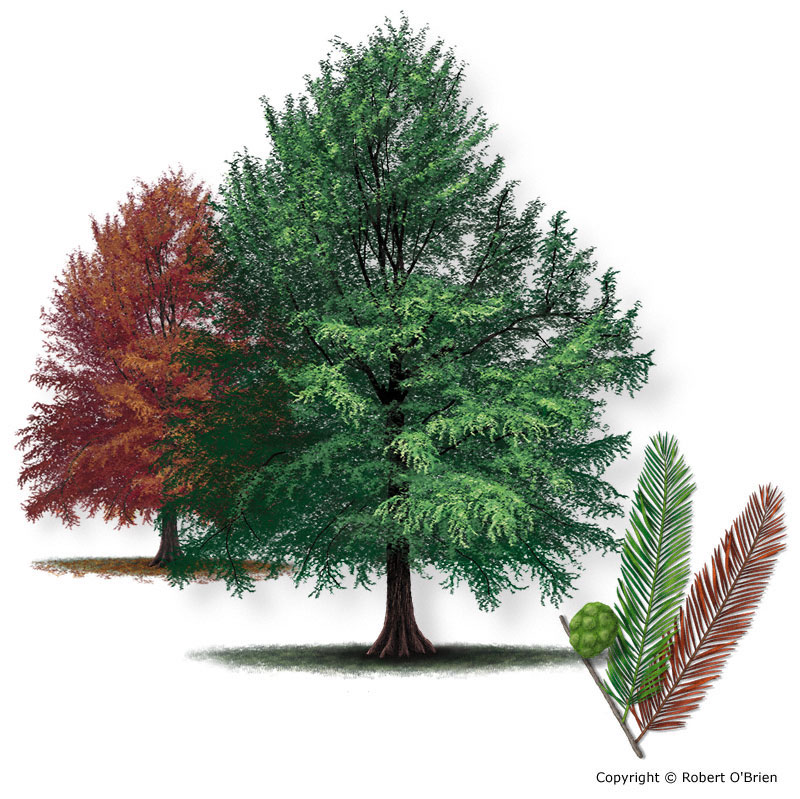
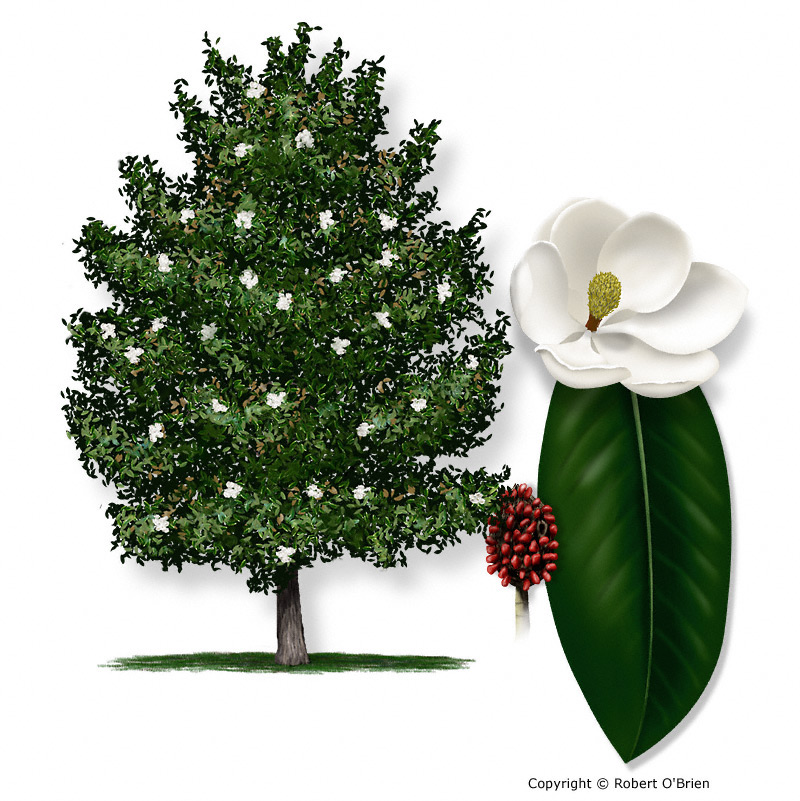
Some shade tree species are better able to withstand strong winds than others. Trees that are best at surviving hurricanes in southern states include southern magnolia and bald cypress.  Other large maturing trees that prove moderately to highly wind-resistant are hickory, persimmon, shumard oak, river birch, and black gum, also known as tupelo. All these species thrive here, but consult Lyon Park tree stewards for the best trees for your yard.

I love all these trees but if I had room for one more, I would plant an oak because oaks support more life-forms than any other North American tree genus and we desperately need to save native habitat in our neighborhood.